• Profile
  • Press
  • Contact

Alexander Pincus

  • Profile
  • Press
  • Contact

How a Billion Oysters Are Set to Change New York’s Harbor

Via The New York Observer, written by Yissca Schiff :

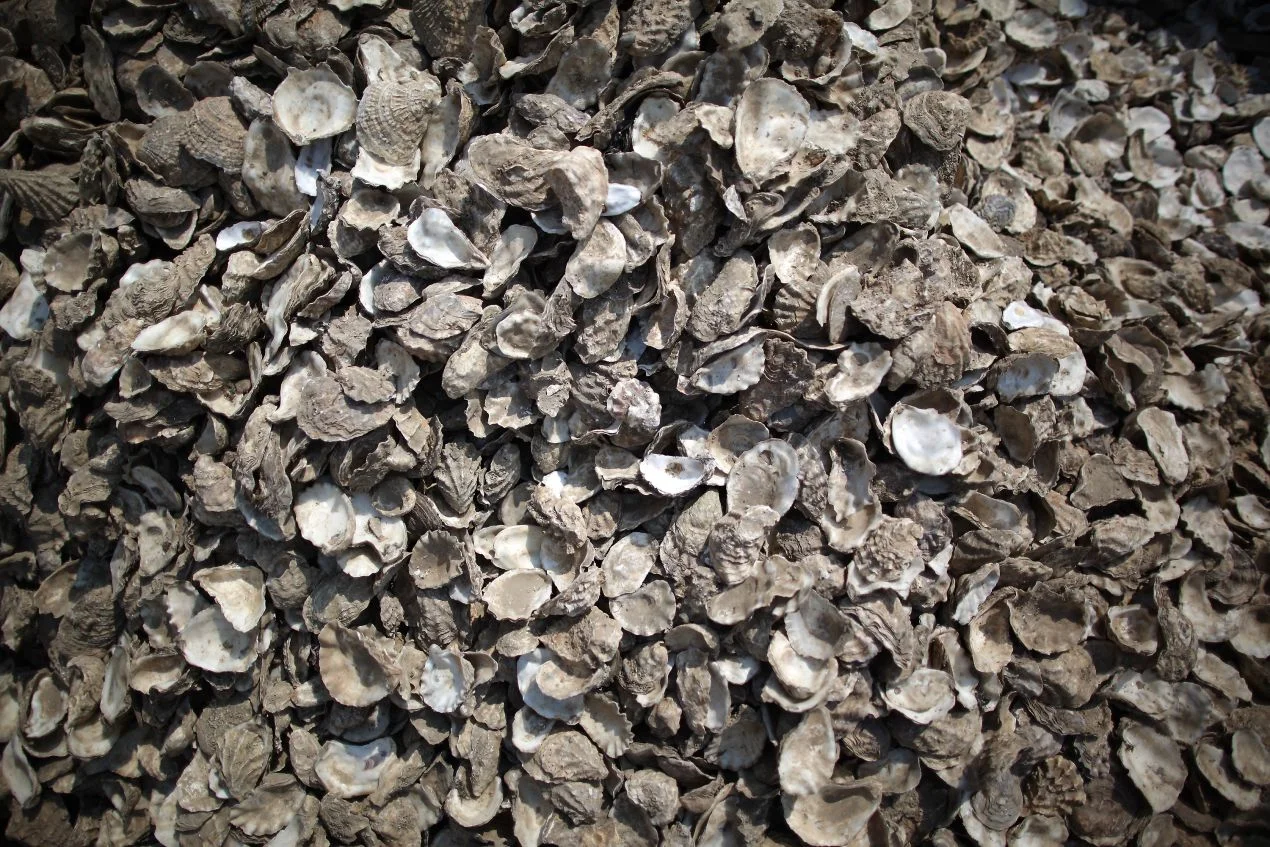
New Yorkers eat up to half a million oysters in local restaurants every week. However, what most people probably don’t know is that after they’ve shucked and guzzled, those empty oyster shells go on to help the city.
Not only did oysters used to be the native keystone species of New York Harbor, but they also act as water filterers, provide habitat for other marine species and attenuate wave energy. Enter the Billion Oyster Project (BOP), the ever-expanding operation that is spearheading the race to reinstate oysters and reefs to the city’s harbor.
Formally established in 2014, BOP is a non-profit ecosystem restoration and education project that endeavors to restore one billion live oysters to New York Harbor by 2030. By securing would-be discarded oyster shells from top regional restaurants, curing and preparing them for reuse to grow new oysters—up to 20 per saved shell—to build habitat, the aim is to improve the quality of both the Harbor and the city.
“Billion Oyster Project aims to restore a sustainable oyster population and reignite a passion and appreciation for the Harbor by engaging New Yorkers directly in the work of restoring one billion oysters,” BOP director Pete Manilowski, Director of BOP, told the Observer.
To date, the Billion Oyster Project has reclaimed and recycled 250,350 pounds of shell, and restored an astounding 17,000,000 oysters. Oysters are ecosystem engineers, helping to clean up the quality of the water—one adult oyster filters 40-50 gallons of water a day. In other words, if you put a billion of them on the bottom of the Harbor, that’s a heck of a lot of water cleanup. According to Samuel Janis, the BOP School Programs Manager, the state of the Harbor, the city’s main natural resource, is currently “much better than it has been probably in the last 150 years.”
Harbor and marine life have suffered disproportionately over the last century, degraded by pollution. However, since the passing of the Clean Water Act in 1971 prohibited the dumping of raw sewage and refuse into the Harbor there has been an emergence of large-scale restoration. BOP is determined to return the Harbor to the most productive waterbody in the North Atlantic and reclaim its title as the oyster capital of the world. Teaming up with organizations from all over the city over the past couple of years, the project has become a yardstick for the state and condition of New York Harbor.
“Oysters provide a concrete example of where New York has been, where it is now, and what we can do to get our ecosystem back,” said Elisa Caref of the River Project, which has been working for 30 years to expand awareness and conservation of the Hudson River Estuary and New York Harbor, and is also one of BOP’s many partners.
Over 50 of the city’s restaurants are now involved in the Shell Collection Program, donating their oyster shells each week for reuse. The OysterHood, another partner of BOP, organizes oyster-related social dining events for the oyster aficionados and “adventurous foodies of New York,” raising a greater awareness of food sources. “[We’re] building stronger connections between consumers, the habitats that support our food production and the producers themselves,” Kevin Joseph, CEO and co-founder of OysterHood, told the Observer.
“People realize that not only can they have fun and eat fancy food,” Manilowski said. “But they can also help restore the environment while they are doing it.”
Referred to as a “lighthouse project,” BOP has captured the imagination of a wide variety of people from all over New York. Something, says entrepreneur and marketer for the OysterHood Rudi Ehrlich, “that the rest of the country should be looking to.”
The project’s roots rest with the New York Harbor School, a public, maritime Career and Technical Education (CTE) high school on Governors Island. Surrounded by water that’s utilized as its “living classroom,” its students are “the primary workers and planners” said Susannah Black, Communications Coordinator for the New York Harbor Foundation. They perform an active role in BOP—their six CTE programs, which include aquaculture and ocean engineering and robotics, conveniently represent the six fields necessary for large-scale oyster restoration.
Cris Pupello, 17, is approaching his senior year at NYHS and recognizes the significance of the opportunity. “We built these oyster restoration cages with our own hands. We all help each other out to achieve one goal, it all fits together”, he said.
“[They] have a tight grasp on this complex information and the work they are doing,” Manilowski said. “At BOP, there’s a commitment to involving young people in every aspect of the work.”
Now working with 54 different schools the city, BOP is capturing the excitement of students and teachers alike. 320 middle schoolers on June 10 gathered for the annual Symposium, a 50% increase from last year, all presenting their oyster restoration research, and sharing their excitement for the project. Intrinsic to the Billion Oyster Project’s mission of restoration is the ethos of stewardship and the passing on of that care and responsibility for the local environment.
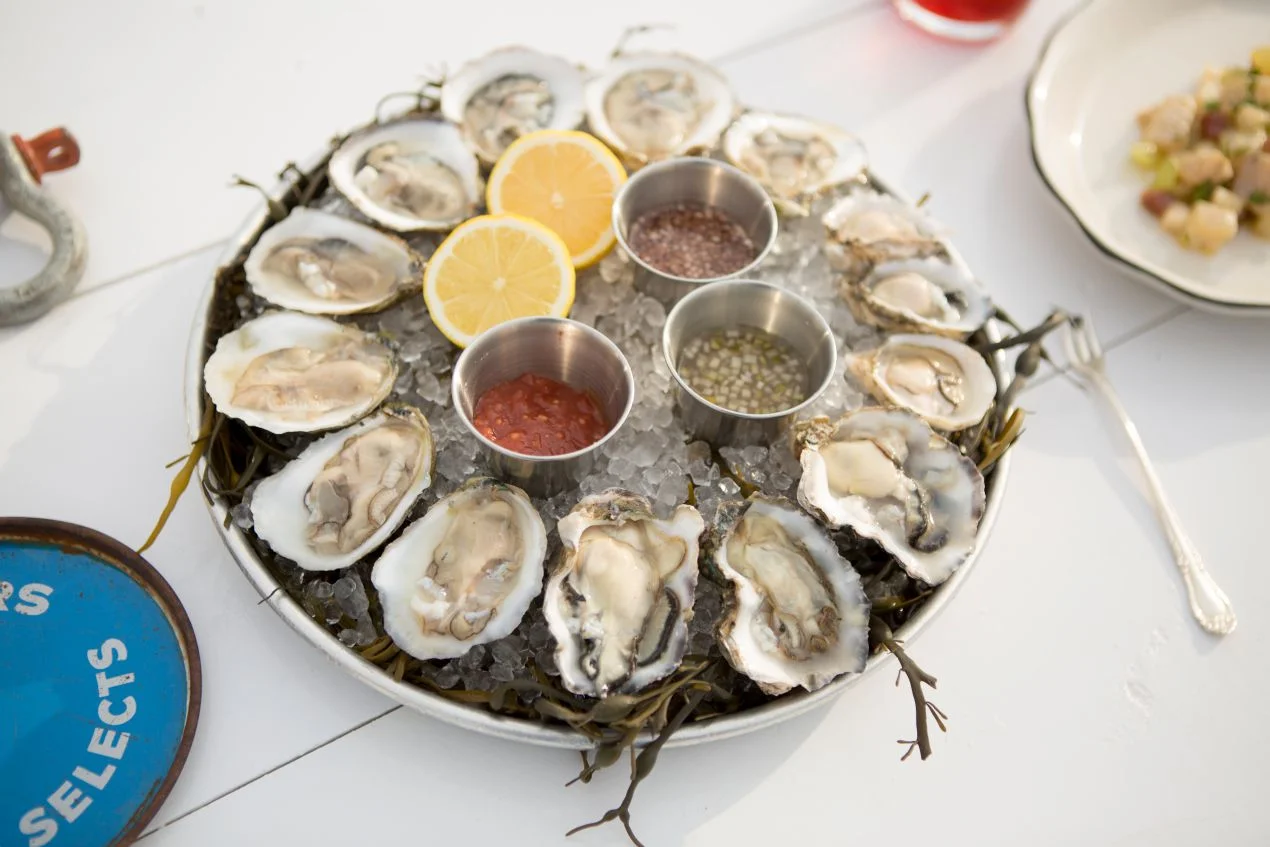
The seasonal floating bar Grand Banks, which serves up oysters aboard an historic wooden schooner, is one of the many restaurants partnering with BOP.
“We want to be able to eat the fish that swim beneath our boat and to once again pluck oysters out of the Hudson and eat them on the spot,” Alexander Pincus, co-founder and CEO of Grand Banks told the Observer. BOP’s work and intention marks a watershed in the history of the city’s environmental efforts, galvanizing students, scientists and foodies alike for a common cause. “Restoring the oyster life, and in turn the overall health, of New York Harbor, benefits everyone in New York,” Pincus said.
Last week, BOP announced they are kicking off a new Community Reefs program, with several new reef sites around the city already getting underway this summer, to join the pilot reef off Governors Island. This intiative will not only accelerate the process of restoring one billion oysters to New York Harbor, but it will also enable more of the public to be involved. The aim is to bring people down to the shoreline and get them involved in the hands-on work of restoration and reef monitoring.
For Black, the future of BOP is in education. “If all we did was restore the oysters, got them all back into the harbor, but without building a culture of stewardship and without building the skills of maritime life and marine science understandings in the next generation of New Yorkers, that wouldn’t be a success,” she said. “So it’s really building the next generation that we’re interested in, as much as building the reefs.”
tags: The New York Observer
categories: The New York Observer
Thursday 07.28.16
Posted by Alexander Pincus
 

Have You Discovered the Best Oyster Bars in New York City?

Via The New York Observer, written by Zachary Weiss:

In the last few moments of summer, reap the seasons rewards by enjoying the best foods on offer. While most consider raw oysters to be a tried and true aphrodisiac, I prefer to think of them more as a summer snack staple. Thus, rather than spending your last summer Friday packing into the Jitney with the masses, belly up to one of these awesome oyster bars. 
1. Grand Banks The “next big thing” in experiential New York bars, Grand Banks, takes guests aboard a schooner docked in Tribeca. Pay a visit to this hotspot before it becomes more sardine-packed than The High Line.
2. Grand Central Oyster Bar Brooklyn It may not be located inside the actual midtown transport hub, but Grand Central Oyster Bar’s Park Slope locale makes for an even better oyster-filled happy hour devoid of commuter (and tourist) traffic. 
3. The Bar Room The Bar Room, tucked uptown on 60th St between Park and Lexington, serves up quality cocktails and $2 every day from 4-6 PM. The earlier you arrive, the more likely you are the actually score some before they sell out.  
4. The Mermaid Inn The Mermaid Inn’s three locations in the Upper West Side, Greenwich Village, and The East Village are the brain child of restauranteur Danny Abrams, and have been known to pack to the gills on a summer Friday. The small spot also offers $1 oysters every Monday starting at 5 PM through the evening. 
5. Lure Fish Bar The subterranean Soho boîte, where Mets pitcher Matt Harvey once crafted a sushi roll for me, is a mecca for all things seafood-not just oysters! 
6. Blue Water Grill  This mainstay located on Union Square first opened in 1996, and formerly operated as the Metropolitan Bank, which is still visible in the eatery’s soaring ceilings and power lunches.
7. Hudson Malone Hudson Malone proprietor Doug Quinn is the master cocktail maker, formerly of PJ Clarke’s, who recently opened this new eatery with the eye for a no-frills dining experience.The bi-level space is slightly hidden on 53rd St, thanks to a sign that simply reads “Eva Dress Shop,” but keep an eye out for dim gas lanterns outside. He refers to it as “a real New York joint.” Mr. Malone also has a knack for remembering all of his customers. 
8. Maison Premiere This Williamsburg cocktail den and oyster bar offers an oyster happy Monday-Friday from 4-7pm, as well as on Saturday and Sunday from 11am-1pm. Maison Premiere’s selection of oysters changes daily, and a select 15 varieties are available for $1-$1.25.
tags: The New York Observer
categories: Press, Archive
Thursday 09.03.15
Posted by Alexander Pincus
 

Is an Unconventional Music Venue with a Jagged Design the Last Hope for Williamsburg's Art Scene?

OMW in New York Observer

Via The New York Observer, written by Matt Chaban:

If Bedford Avenue is the main street of modern day Williamsburg, North Sixth Street is the hipster haven’s Broadway. Home to the first proper grocery store (Tops), concert venue (Northsix), swap meet (Artists and Fleas) and grotesque theme restaurant (Sea), North Sixth Street has long been the grand stage of Williamsburg.
Now performing on North Sixth Street (even if Northsix is long gone, replaced by a Manhattan concert conglomerate) is the Original Music Workshop.
Conceived by Kevin Dolan, a former tax attorney who also happens to be an organ virtuoso, the Original Music Workshop seeks to provide a venue bridging new and old Williamsburg, sustaining music of all types for all ages. As the rest of the neighborhood continues its inexorable gentrification, Mr. Dolan hopes to preserve a tiny corner of Williamsburg cultural past, as well as one of its historic industrial buildings.
“It’s amazing you can knock down anything and build whatever you want,” Mr. Dolan said in an interview. “I’m hopeful that at least the south side of this block will still maintain its feel into the future.”
The project began three years ago, in a small townhouse Mr. Dolan had hoped to turn into his perfect music space. He met local Williamsburg architecture firm Bureau V through a mutual acquaintance, and when they realized Mr. Dolan had far greater ambitions than his small site, they set about finding one. “A very interesting part of the project was that, after the house, we were, with the help of ARUP, very involved in the design of the entire concept,” said Alexander Pincus, one of the principals of Bureau V. “There was no programming, no building, no agenda for at least a year.” ARUP is the acoustical engineer on the project.
The designers set about scouring Brooklyn and parts of Manhattan until they found an old sawdust factory on the corner of North Sixth and Berry streets, a century-old sawdust factory—a painted sign near the roof still reads “NATIONAL SAWDUST,” which the facility produced at least until the 1940s, as old photos show. (For those confused by the concept of a sawdust factory, it was used for heating.)
“I don’t believe in fate, but the location, the architecture, everything about it was just ideal,” Mr. Dolan said. It was not an easy negotiation, though. “Even in the doldrums of the market, that real estate wasn’t cheap.” There were two other bidders for the property, which meant Mr. Dolan had to pay over ask, be he believes the seller ultimately chose him because of the project he planned there was more than another tear-down. “I think I got it on the merits of the use,” he said.
According to city records, Mr. Dolan paid $2.33 million for the former factory, and he said the entire project will cost about $15 million. The building had been vacant for a decade, but before that it had been producing those tiny colored pebbles that fill fish tanks, and was still full of them when the task of renovation began.
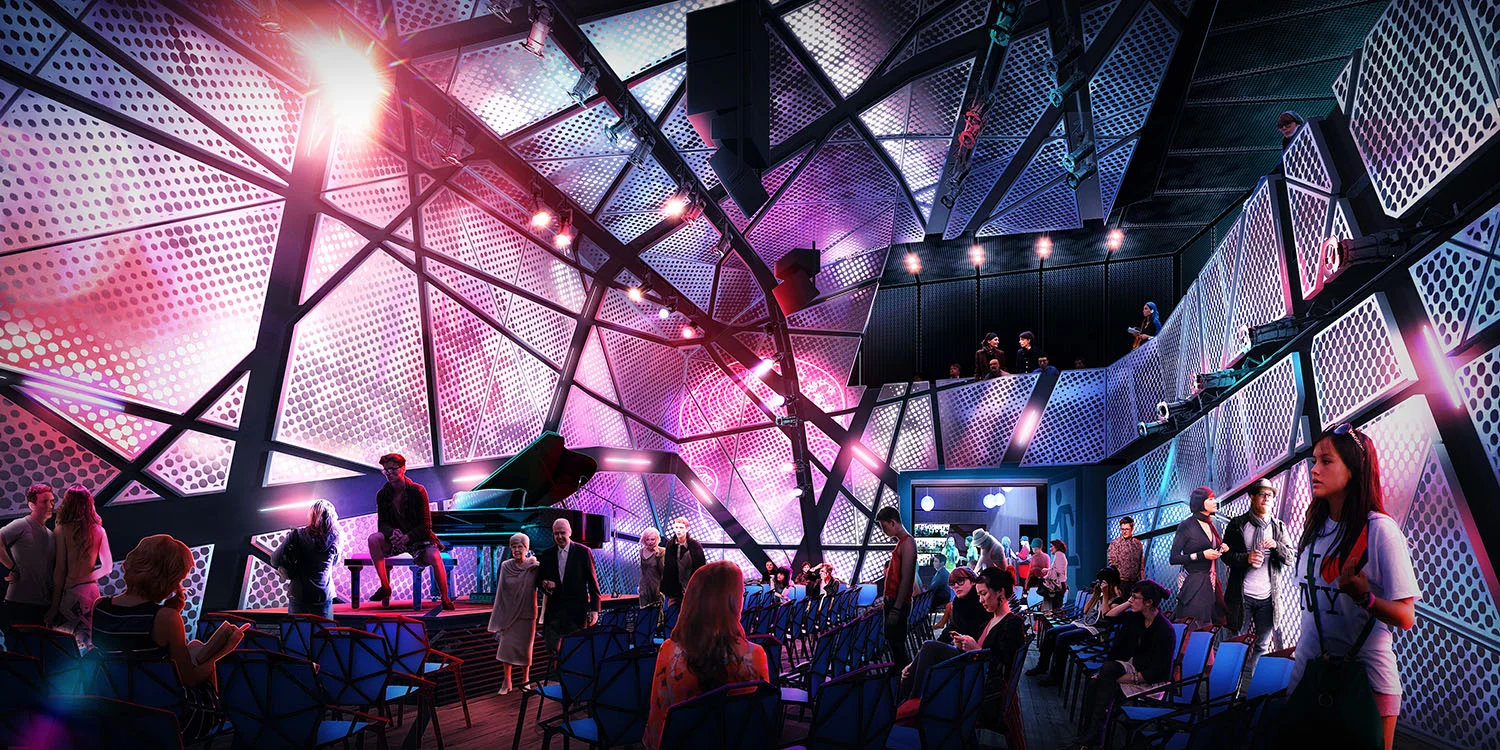
The former factory will continue to be a production facility of a sort. More than just a concert venue, Mr. Dolan is set on creating what he called an “A-to-Z support structure” for modern musicians. The space will also accommodate rehearsals and recordings, with room for up to 70 musicians during record sessions. For performances, a movable stage will accommodate between one and a dozen performers, with seating for 120 to 180 guests, up to 350 standing.
“It is a facility for which there is a tremendous need, it will be 24-hours a day, 7-days a week” said Paola Prestini, the celebrated young composer who was just named the creative director for the Original Music Workshop. Ms. Prestini said too often similar rehearsal and recording spaces were only open limited hours or had inferior acoustics. “What we’re trying to do with our project is serve the needs of the 21st Century artist,” she said.
The performers will cut across a wide artistic swath, from classical to jazz to electronica. The Observer suggested Le Poisson Rouge, the cutting-edge venue in Greenwich Village. Mr. Dolan responded that “that’s close, but we’re looking at one stratum down, the next big thing, though we will also be working with established artists from time to time.”
To that end, the Original Music Project is hoping to foster new talent through mentoring and residency programs, where artists can call the new space home for a series of time, working on new work or helping others form their own compositions.
This will all be achieved in a revolutionary space conceived by Bureau V. Mr. Dolan said he greatly preferred the old music halls of Europe. “I certainly do not want a black-box theater,” he said.
“Too often the space disappears, and Kevin did not want that, he wanted the space to be present, part of the performance” Peter Zuspan, another Bureau V principal, said. “With this, it’s kind of just a room—no fly space, no wings, no curtains, just a room. It’s a very classical idea.”
And yet the focus remains on new artists, new ideas, the cutting edge, which is certainly exposed in the design of the space. While the exterior of the building remains intact, inside is a mass of steel beams metal mesh, all with exacting perfomative standards. “This is not some historical pastiche,” Mr. Pincus said. “We’ve got 15-inch-thick brick walls, which you could never afford to build these days. The building is still very purposeful.”
Affixed to the brick interior is carefully crafted acoustic paneling, which is overlaid with the metal lattice. This not only supports the mesh but also contains all electrical, lighting, pass-throughs and all other elements required for performance and recording. The shape may look random, even haphazard, but it was all carefully tailored through hours upon hours of precise computer modelling, one of Bureau V’s specialties. (The firm is working on a similarly unusual residential development next door, which is still in the early planning stages.)
The bi-level space also includes a restaurant, still being developed. So the musicians and the crowd really do have everything. “We want to nurture artists who have not yet made it onto the other stages of New York,” Mr. Dolan said.
tags: The New York Observer
categories: Press, Archive
Tuesday 04.24.12
Posted by Alexander Pincus
 

The Power of Christ Compels You… to Plug In: Architect Alex Pincus Crucifies the Power Adapter

Via The New York Observer, written by Matt Chaban:

New York architect Alex Pincus was, like most architects, daydreaming about a mundane problem—unattractive wall sockets—when he had a touch of divine inspiration.
“It’s an architectural problem that bothers me, because it’s ugly, there’s no good solutions, and even the ones that are out there aren’t very compelling,” Mr. Pincus told The Observer earlier this week. “And I was thinking about different patterns of sockets that were interesting to me, and I tried to change it up. And I had this vision of a cruciform grid of plugs, on the floor or on the wall. At some point, I remember looking at this standard, 1990s, sorta cream-colored power strip, thinking of how ugly it was, and that’s when the idea came to me.”
What came from this design daydream was Higher Power, a cross-shaped power strip that is both arch and attractive, not to mention functional. By adding two armatures to a standard-looking power strip, those bulky plugs for the laptop and the alarm clock now all fit without blocking any of the other sockets. Mr. Pincus described it as the dumb idea that he simply could not shake, so he created a rendering and posted it to his website last year. Someone at Boing Boing noticed it, and from there it got picked up by Wired and bounced around the Internet for weeks. “When it shut down my website, that’s when I realized this could be real.”
Over the past year, Mr. Pincus and his friend and collaborator Rob Howell, a South Carolina developer (they call their outfit Means of Production), have been refining the design in partnership with a Kentucky electrical engineer. They have sourced materials, prototyped, even found a Chinese manufacturer to make the thing. The hope is to have 5,000 Higher Power surge protectors on store shelved for $29.99 by this May. All it will take is $27,500 on KickStarter, of which they are currently one-third of the way there since launching their campaign last week.
Mr. Pincus said he hopes this can become a mass object that still has appeal for the design cognoscenti. “It would be great to have it at Target, but I wouldn’t mind having it at Moss, either,” Mr. Pincus said, referring to the ostentatious Soho shop. “That’s where the gold-plated one comes in, gold-plated limited edition.” Like the project itself, the limited edition idea is meant only half-jokingly. “It’s actually pretty simple, because the guts are the complicated part, the wrapper’s pretty easy. I’ve already got a couple wrappers around my house. Nothing out of gold, yet, but it’s pretty simple.” An 18-karat option is currently on offer for the top Kickstart of $5,000. It will be one of an edition of five, and the creators promise to hand-deliver it anyone in the United States.
If it seems like Mr. Pincus is winking as he describes his vision, he insists the project is as earnest as a congregation’s prayers. He recognizes the potential humor in his creation, but as his dramatic and rather sardonic Kickstarter video shows, crosses have indeed been a part of the design canon for millenia. “I’ve always had an interest in religious iconography, it’s always held a special appeal to me and it’s appealed to me in architecture and photography,” Mr. Pincus said.
“I didn’t want to make it kitschy. I like kitsch, but it’s not how I design.”
The proof is in the response to the piece. Not only has it been worshiped by designers and techies but also Christians across the country. “What I’ve found pretty eye-opening throughout the process is that everyone looks at it through their own eyes,” Mr, Pincus said. “So if you’re an ironic, jaded person, it’s funny and you can laugh at it. Yet I’ve literally gotten emails from multiple ministers and pastors saying that they love it and it would be a great tool for fellowship with their congregations, and I’ve had Christians ask me if they could use it as a logo for their ministry.”
“I’ve tried to be not non-committal but open to various meanings and interpretations,” he added. “And I think that’s a lot more fun than just making a kitschy joke piece. Which is why there’s not a menorah yet.”
tags: The New York Observer
categories: Press, Archive
Thursday 12.15.11
Posted by Alexander Pincus