• Profile
  • Press
  • Contact

Alexander Pincus

  • Profile
  • Press
  • Contact

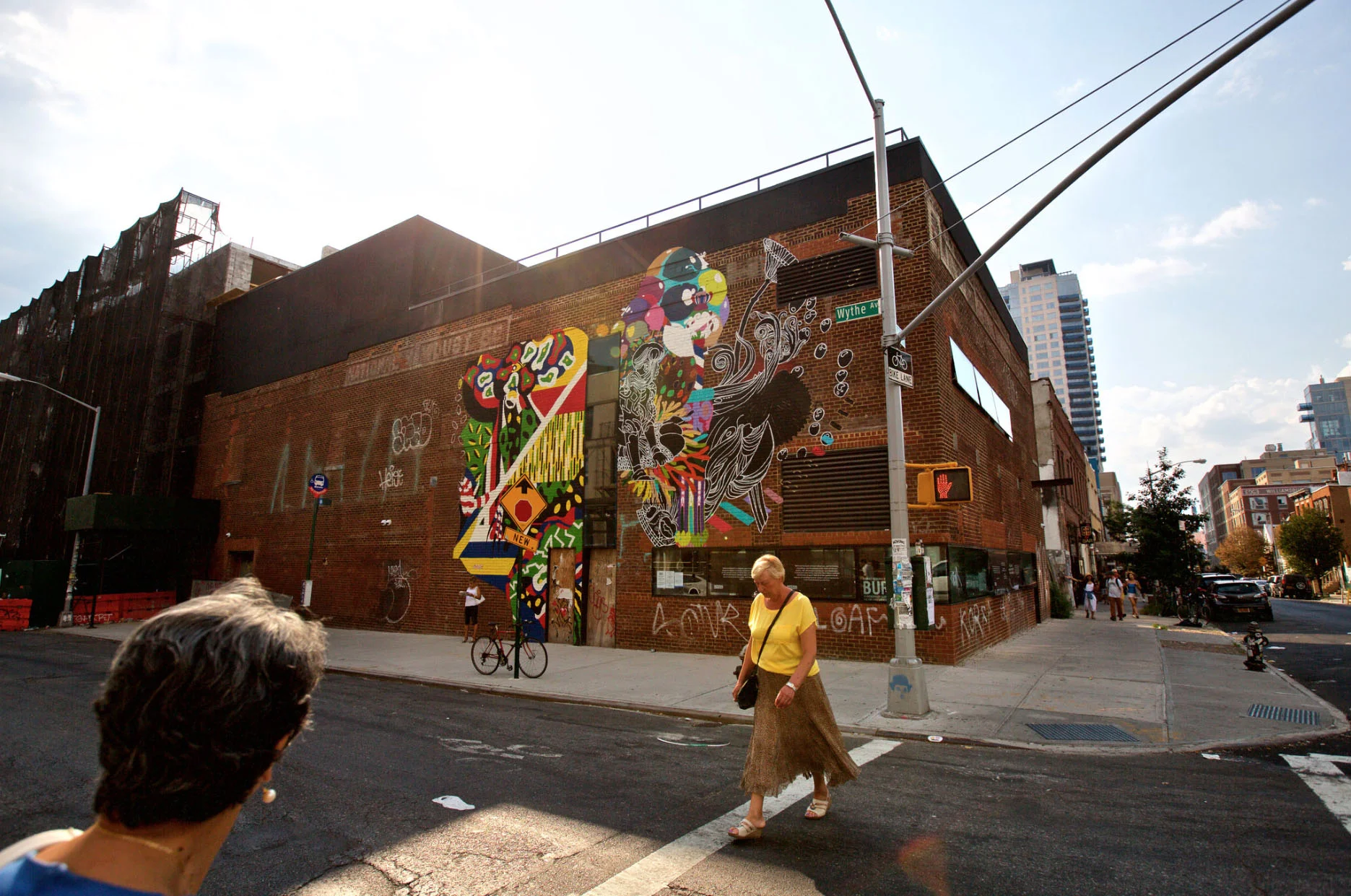
National Sawdust Prepares for an Oct. 1 Opening

Via The New York Times, written by Nate Chinen:

Paola Prestini, the creative and executive director of National Sawdust, stood in the space’s balcony one recent afternoon, looking over what would soon be a bustling concert hall. “The speakers just came in,” she said cheerfully, pointing at a rig hanging from the ceiling, still in its filmy protective covering. A geometric metal framework crisscrossed the room’s far wall, next to the hydraulic platforms that will make for a flexible stage.
National Sawdust, a nonprofit performance space, recording facility and creative hub in the shell of a century-old sawdust factory in Williamsburg, Brooklyn, opens on Oct. 1. It will be a significant addition to the musical landscape in New York — at least for a broadly defined constellation of artists working in the zone where compositional form, improvisational technique and global or technological savvy find ways to converge.
Founded by Kevin Dolan, a tax lawyer and amateur composer who contributed roughly $9 million to the project, National Sawdust has been in the works for years. (Its previous name was the Original Music Workshop.) Its centerpiece is an acoustically sealed theater, designed by the Brooklyn studio Bureau V with Arup, an engineering firm. A restaurant and lounge will be run by Patrick Connolly, a James Beard Award-winning chef.
The primary mission of National Sawdust is the incubation of new works through commissions, artist residencies and in-kind services like rehearsal space. Its first month of programming will include festivals devoted to the composers Terry Riley (Oct. 3-5) and John Zorn (Oct. 9-10 and 30-31); a screening of the silent film “Nanook of the North,” with a live score by the Inuit throat singer Tanya Tagaq (Oct. 2); the flex dancer Reggie Gray, known as Regg Roc, with the performance artist Helga Davis (Oct. 13); the mezzo-soprano Alicia Hall Moran (Oct. 19); and the vocal shape-shifter Theo Bleckmann, with the John Hollenbeck Large Ensemble (Oct. 22).
“It’s essentially artists who have very, very strong identities,” said Ms. Prestini, a celebrated composer herself. “They are more than just great performers; they’re auteurs. They’re bringing forward a very specific perspective on their field — and an international perspective, really treating New York as a bridge to different cultures.”
National Sawdust has held performances throughout construction, and Ms. Prestini seemed unfazed by the apparent unfinished business on site. She was looking ahead to an opening-night program, “Discover the Space,” whose early show would include performances by Ms. Tagaq, Mr. Bleckmann, the mandolinist Chris Thile and the composer Nico Muhly.
The late show will include the steel pan player Andy Akiho, the poet Roger Bonair-Agard, the explosive art-pop band Cibo Matto and a special unannounced guest.
“I feel really ready,” Ms. Prestini said. “Even if there’ll be some kinks to work out, we’re ready.”
 
tags: The New York Times
categories: Press, Archive
Monday 09.07.15
Posted by Alexander Pincus
 

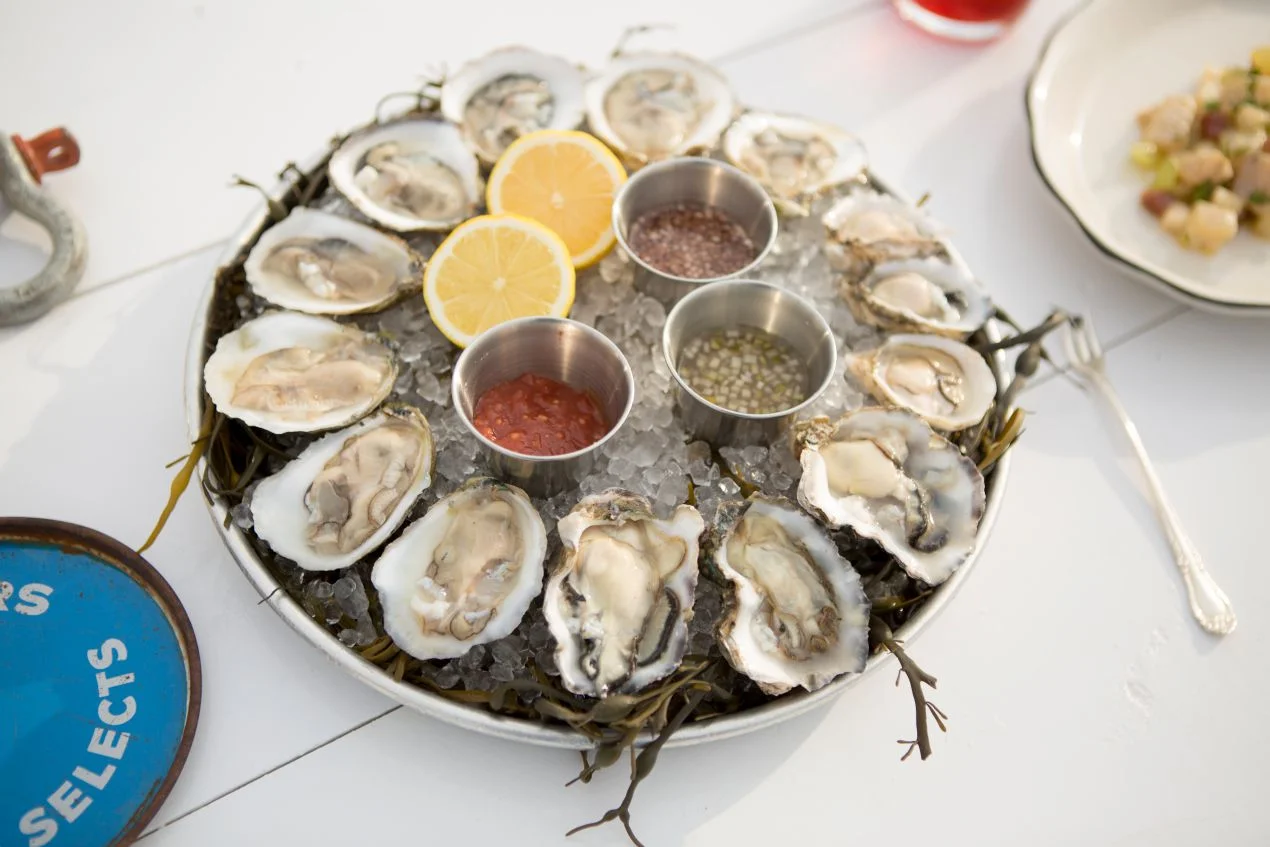
Have You Discovered the Best Oyster Bars in New York City?

Via The New York Observer, written by Zachary Weiss:

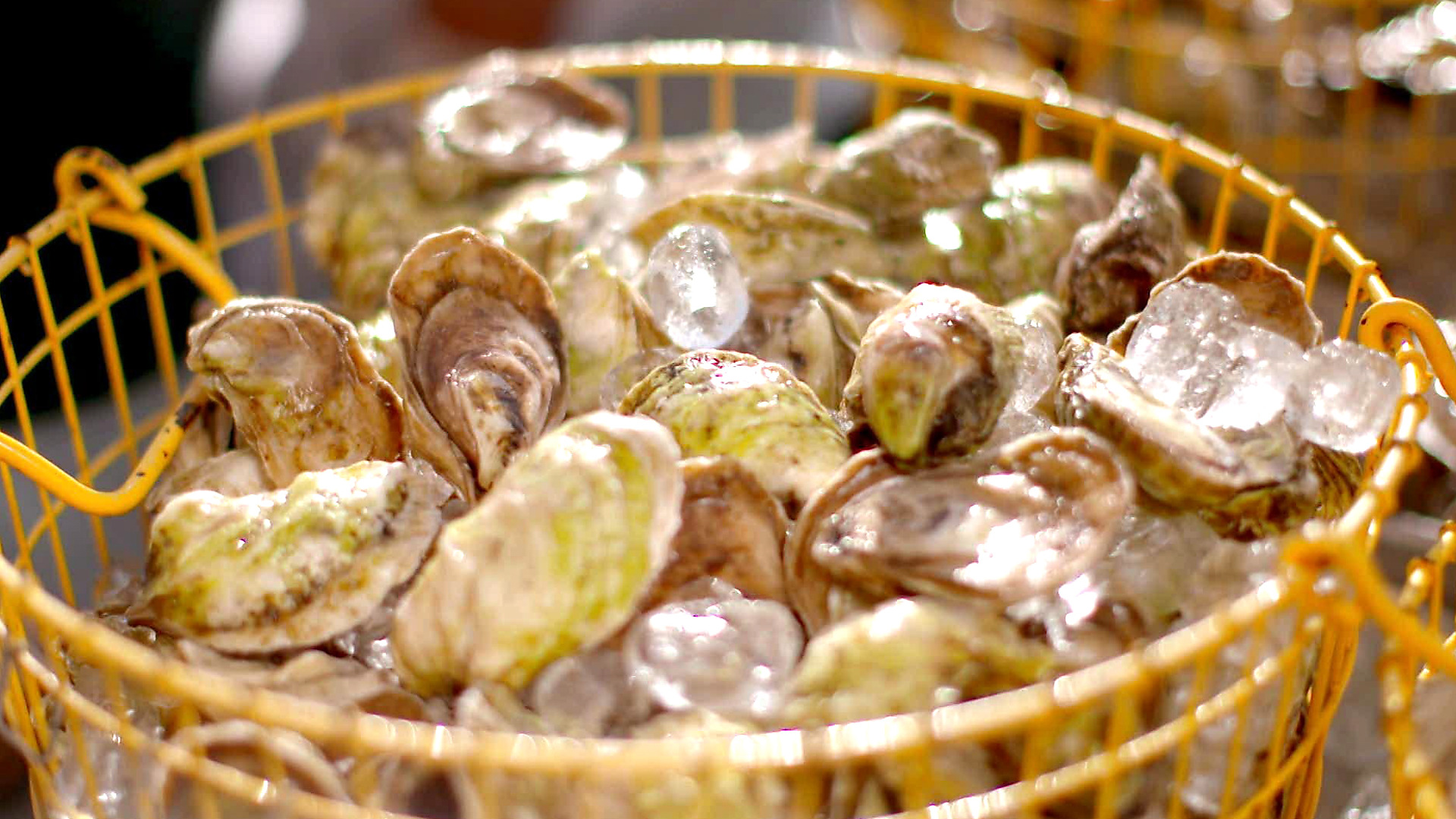
In the last few moments of summer, reap the seasons rewards by enjoying the best foods on offer. While most consider raw oysters to be a tried and true aphrodisiac, I prefer to think of them more as a summer snack staple. Thus, rather than spending your last summer Friday packing into the Jitney with the masses, belly up to one of these awesome oyster bars. 
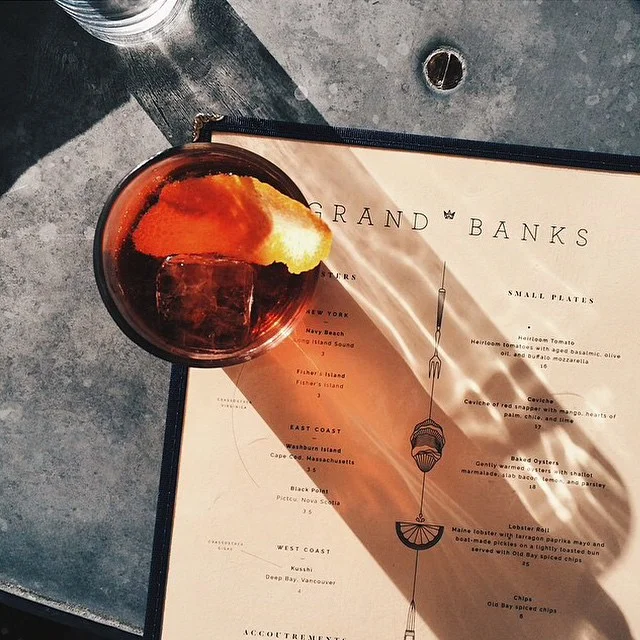
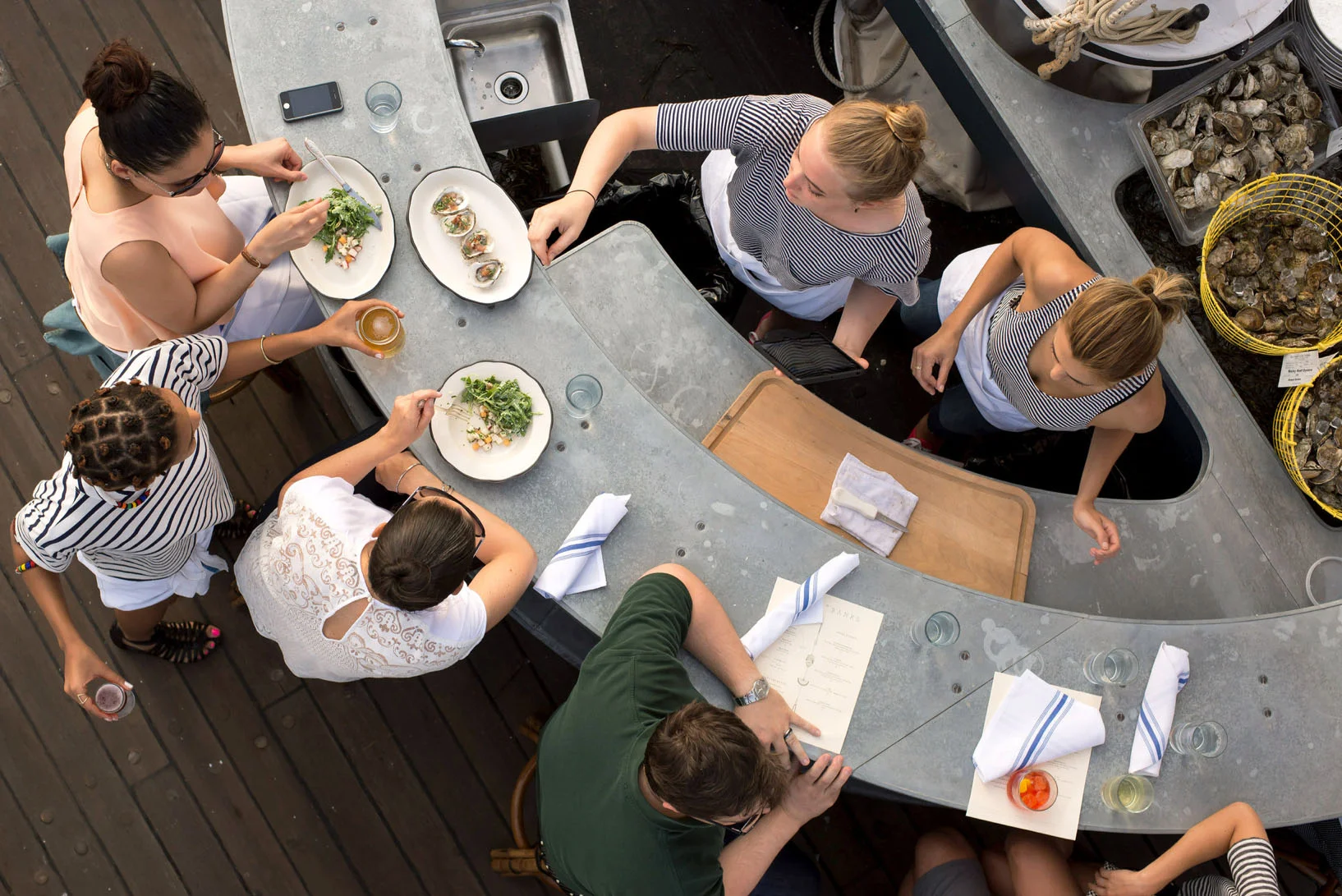
1. Grand Banks The “next big thing” in experiential New York bars, Grand Banks, takes guests aboard a schooner docked in Tribeca. Pay a visit to this hotspot before it becomes more sardine-packed than The High Line.
2. Grand Central Oyster Bar Brooklyn It may not be located inside the actual midtown transport hub, but Grand Central Oyster Bar’s Park Slope locale makes for an even better oyster-filled happy hour devoid of commuter (and tourist) traffic. 
3. The Bar Room The Bar Room, tucked uptown on 60th St between Park and Lexington, serves up quality cocktails and $2 every day from 4-6 PM. The earlier you arrive, the more likely you are the actually score some before they sell out.  
4. The Mermaid Inn The Mermaid Inn’s three locations in the Upper West Side, Greenwich Village, and The East Village are the brain child of restauranteur Danny Abrams, and have been known to pack to the gills on a summer Friday. The small spot also offers $1 oysters every Monday starting at 5 PM through the evening. 
5. Lure Fish Bar The subterranean Soho boîte, where Mets pitcher Matt Harvey once crafted a sushi roll for me, is a mecca for all things seafood-not just oysters! 
6. Blue Water Grill  This mainstay located on Union Square first opened in 1996, and formerly operated as the Metropolitan Bank, which is still visible in the eatery’s soaring ceilings and power lunches.
7. Hudson Malone Hudson Malone proprietor Doug Quinn is the master cocktail maker, formerly of PJ Clarke’s, who recently opened this new eatery with the eye for a no-frills dining experience.The bi-level space is slightly hidden on 53rd St, thanks to a sign that simply reads “Eva Dress Shop,” but keep an eye out for dim gas lanterns outside. He refers to it as “a real New York joint.” Mr. Malone also has a knack for remembering all of his customers. 
8. Maison Premiere This Williamsburg cocktail den and oyster bar offers an oyster happy Monday-Friday from 4-7pm, as well as on Saturday and Sunday from 11am-1pm. Maison Premiere’s selection of oysters changes daily, and a select 15 varieties are available for $1-$1.25.
tags: The New York Observer
categories: Press, Archive
Thursday 09.03.15
Posted by Alexander Pincus
 

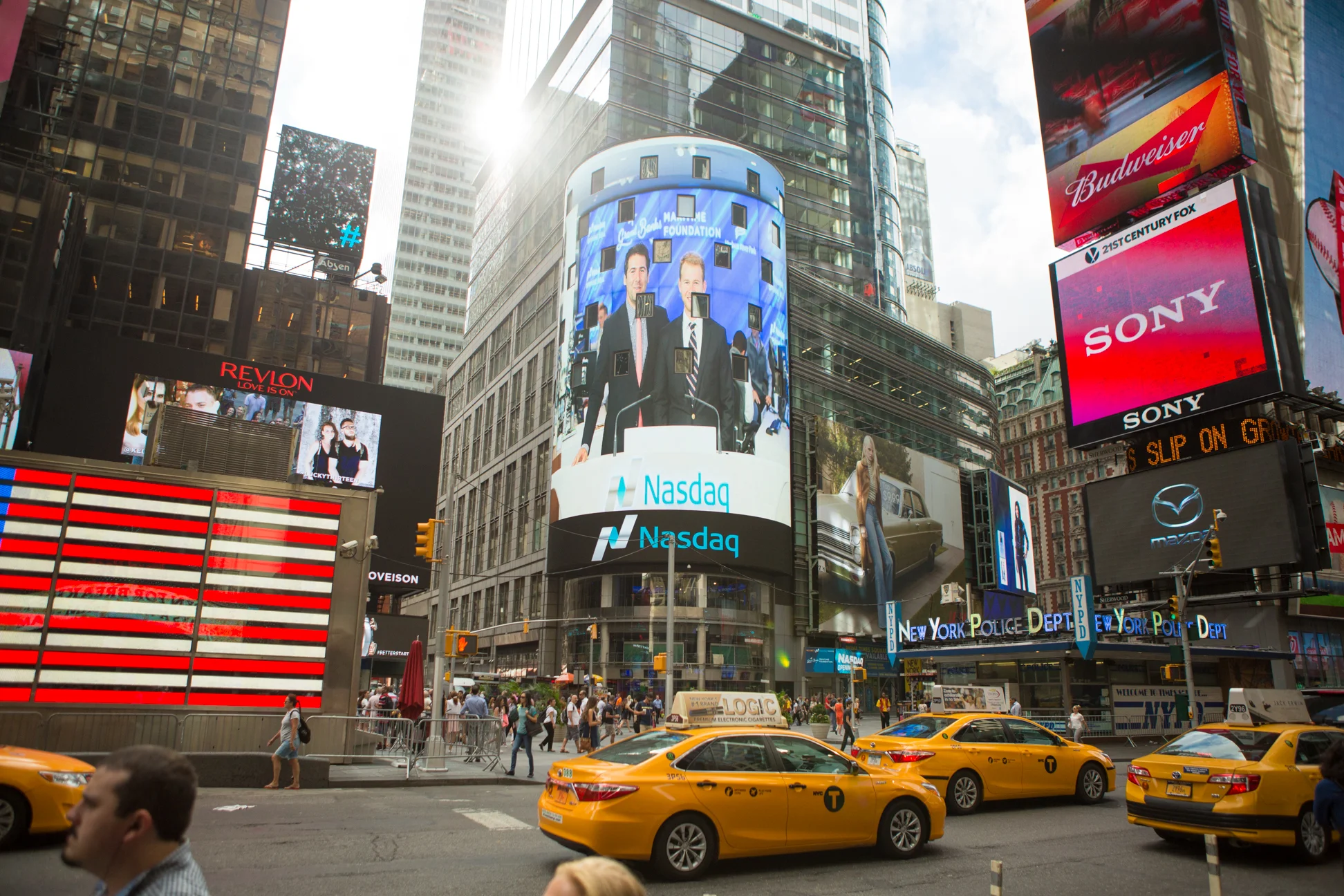
Grand Banks Rings The Nasdaq Stock Market Opening Bell

Via NASDAQ

Grand Banks, an award-winning oyster bar aboard a historic ship - founded as a joint venture between the non-profit Maritime Foundation and the hospitality group Arts & Leisure - will visit the Nasdaq MarketSite in Times Square.

In honor of the occasion, Alexander Pincus, Co-Founder will ring the Opening Bell. 

tags: CNBC
categories: Press, Archive
Wednesday 08.19.15
Posted by Alexander Pincus
 

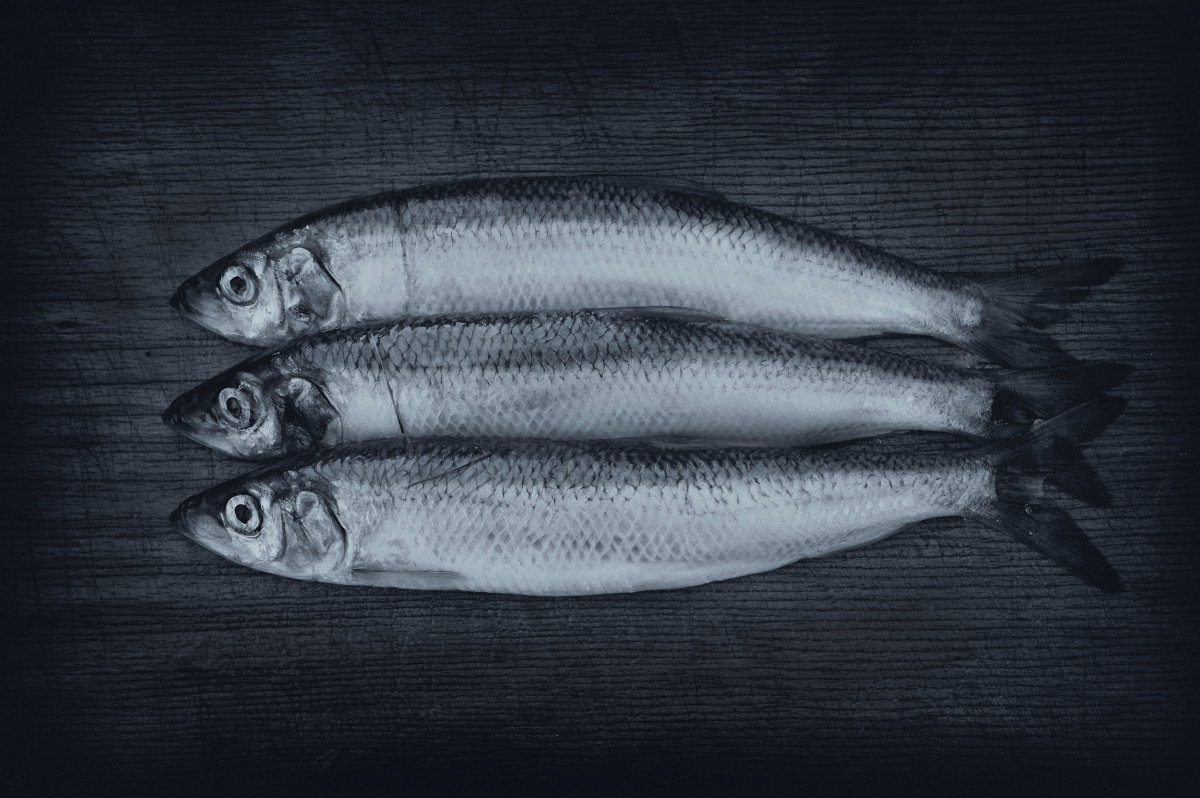
The Case for Eating Small Fish

Via The New Yorker, written by John Donahue

From the beginning of time, through the artist Bruegel’s day, and until relatively recently, little fish had only big fish to fear. Since the middle of the twentieth century, however, some little fish—forage fish, to be precise—have faced radically increased threats from humans, and, by extension, from the pigs and chickens that the fish are increasingly being fed to. Forage fish are now threatened worldwide, which has potentially troubling implications for the entire food chain. In conservation circles, the suggestion lately is that encouraging consumers to eat small fish might, ironically enough, be the best way to save them.
Last week, on the decks of the Grand Banks, an oyster bar situated inside a restored cod-fishing schooner moored to Tribeca’s Pier 25, the chef Kerry Heffernan and Paul Greenberg, the author of “Four Fish” and “American Catch: The Fight for Our Local Seafood,” considered this notion in detail, over a lunch, prepared by Heffernan, that consisted essentially of bait. The meal was there as a part of Sustainable Seafood Week, an annual series of events dedicated to responsibly sourced fish. A small crowd of adventurous, ecologically minded diners had assembled beneath the shade of the boat’s yellow-and-white-striped awning.
Forage fish, like many other kinds of fish, are in peril largely because of technological advances. The advent of synthetic fibres, in the nineteen-forties, allowed fishermen to create nets that were larger and longer-lasting than ones made of natural fibres such as hemp. Shortly thereafter, the rise of diesel engines permitted fishing farther offshore than ever before, and sonar, which had been refined to wage submarine warfare, was adapted to locate schools of fish. Factory trawlers made fish processing much more efficient, and fishing vessels became larger and larger. As a result of such developments, the world’s annual catch of fish quadrupled in the four decades after the Second World War. Despite stricter regulations and increased awareness of overfishing, many stocks remain in rapid decline.
From the perspective of small fish, the potential collapse of predatory species such as cod, tuna, and swordfish, which are popular with diners, would seem to be good news. However, as the larger, high-value fish became increasingly scarce, the fishing industry turned to farming, and those penned fish needed something to eat. Commercial fishermen have thus begun fishing down the food chain, and smaller fish behave in ways that make them very vulnerable, swimming in large, dense schools that are easy to spot from the air and require little fuel to pursue. “Fishing for these animals may be likened to shooting fish in a barrel,” a National Coalition for Marine Conservation report noted in 2006. Three years ago, a far-reaching analysis of forage fish, put out by the Lenfest Foundation and financed by the Pew Charitable Trusts, reported that thirty-seven per cent of global seafood landings recorded annually consist of forage fish, up from less than ten per cent fifty years ago. Of that thirty-seven percent, only a small fraction goes to the consumer market—mostly in the form of fish oils and supplements—while the bulk is processed into pellets and fishmeal, then fed to animals like salmon, pigs, and chicken.
“We are grinding up a third of the ocean each year,” Greenberg told the diners at the Grand Banks, before the food was served. Greenberg was on hand to discuss the virtues of catches such as herring, mackerel, and butterfish, which, he said, are very high in omega-3 fatty acids (hence their value to the supplement industry), albeit bony and strongly flavored. “They are healthy to eat, but tricky to cook,” he said.
The meal had been organized in part to address one of the Lenfest report’s more radical conclusions: that forage fish, because they support swordfish, tuna, and other in-demand predators, are worth twice as much to us in the water than when transformed into animal feed. The authors suggested cutting the haul of forage fish in half each year. But of course this would also halve the income of the fishermen who depend on that catch, so other ideas began to circulate. “What if we cut the forage fish take in half and instead paid fisherman twice as much for that catch, since it would be sold as valuable human food rather than cheap animal feed?” Greenberg later mused to me. “By the reasoning of the Lenfest report we’d also have more wild big fish.” He added, “Of course this is all very sort of economics-in-a-bottle type thinking. What would happen to the market for forage fish if their price doubled? It could possibly incentivize more people to catch them. But I think it’s possible to engineer a management regime where they wouldn’t.”
This scenario would require creating a consumer market for forage fish—in other words, making fish like herring, mackerel, and anchovies seem tasty and desirable. A larger effort is also underway; recently, the conservation organization Oceana got twenty of the world’s top chefs, including Ferran Adrià, Massimo Bottura, Grant Achatz, and René Redzepi, to pledge to serve such fare.
In Tribeca, the task was left to Heffernan, the executive chef of the Grand Banks and a “Top Chef Masters” finalist in 2012. “He’s a genius with these fish, which are not the most popular in the media,” Alexander Pincus, the owner of the Grand Banks, said to the crowd. Duly introduced, Heffernan, wearing chef’s whites, shorts, and blue sneakers, told a story about a sport-fishing friend who had once brought his day’s haul of fluke and black sea bass to a sushi restaurant in Amagansett, on Long Island. The fisherman wanted the chef to prepare his catch, but instead he began cutting up the squid and other bait. It was delicious, the friend reported. “For a while now, I’ve been pondering how to do this,” Heffernan said.
He began by serving surf clams, which are used to catch codfish, and whelks, which, though small, aren’t typically used as bait. His clam preparation demonstrated a deft touch. He used to dig up surf clams as a kid on Cape Cod, he explained, and would cook them “forever,” in a chowder. At the Grand Banks, he’d sliced them thinly for a ceviche. Dressed with makrut lime and laid out delicately beside bright slices of avocado in half of its softball-sized shell, the clam was as attractive as it was crisp and refreshing. The whelk, which had been cooked in its shell, was slightly less successful. Rubbery by nature, it tasted less like bait than like a fishing rod’s grip.
The rest of the meal was highly whimsical. The herring, which is commonly used as bait in lobster traps, was paired with a lobster sauce. One diner said the herring was “delightfully mild”; another countered that the bones were “delightfully small.” To conclude the meal, Heffernan served butterfish—typically used as bait for tuna—with a tonnato sauce, which is made with canned tuna. “Today, the butterfish wins,” he declared, to laughter from the assembled diners. He proved correct: with a crisp and savory crust, the palm-sized fish was as addictive as French fries. It was delicious enough, even, to save a little fish from extinction.
tags: The New Yorker
categories: Press, Archive
Friday 07.03.15
Posted by Alexander Pincus
 

Waterways offer deeper insights into New York City

Via San Francisco Chronicle, written by Spud Hilton:

When you grow up with the notion of restaurants on tall ships being pirate-themed nightmares with little more than fish and chips and hush puppies slathered in tartar sauce, it’s difficult to reconcile a plate of fresh Black Point oysters from Nova Scotia and a well-made Negroni at a table on deck.
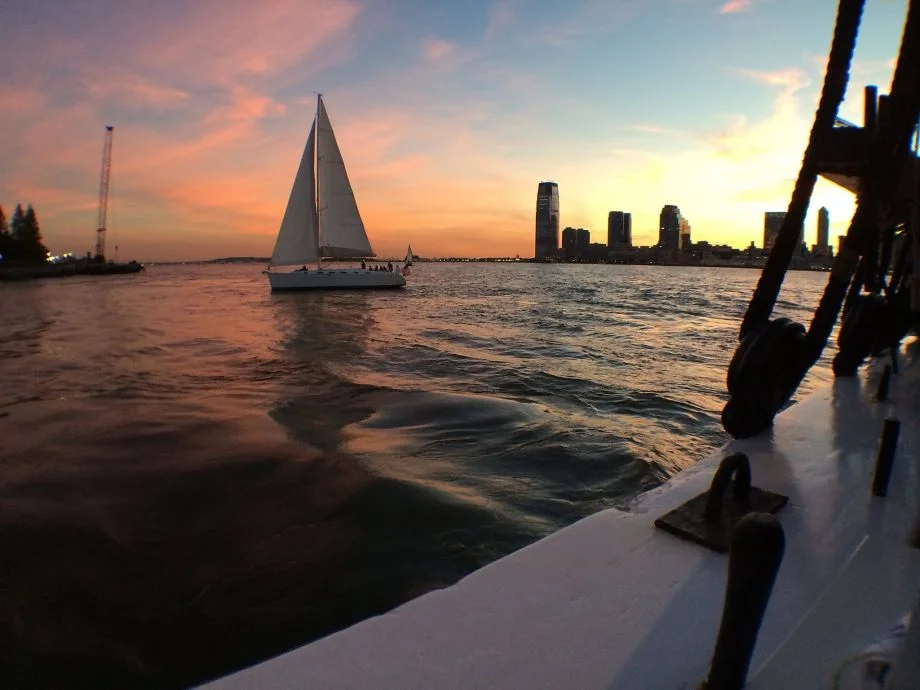
The wildly popular Grand Banks operates out of the 1942 fishing vessel Sherman Zwicker, a 142-foot schooner docked at Pier 25 in Hudson River Park (another waterfront rehabbed into a park and sports courts and fields). According to the owners, the restaurant was inspired by “the floating oyster barges that lined lower Manhattan’s waterfront in the 18th and 19th centuries.”
Looking across the deck on a Saturday night, however, it was a good bet that the young, hip crowd was not there for a history lesson so much as the simple upscale menu and drinks, the sea-level view of the new World Trade Center tower and the sunset over New Jersey (the only reason most Manhattanites gaze in that direction).
As simple a concept as Grand Banks seems, almost no one was doing it — at least not well, said David Farley, a New York friend who writes about food and travel.
“Even though Manhattan, specifically, is surrounded by water, it really doesn’t take full advantage of the water here,” Farley said over some baked oysters and ceviche. “There are very few water-centric places to eat and drink in New York City. It’s crazy.”
tags: The San Francisco Chronicle
categories: Press, Archive
Saturday 05.02.15
Posted by Alexander Pincus
 

Brothers Aim to Give Fair Haven’s Old Barge New Life

Via The New Haven Register, written by Mary E. O'Leary.  

NEW HAVEN, Conn. (AP) - Fair Haven’s Old Barge, possibly the one remaining connection to America’s mid-19th century booming oyster industry in New York, is going home.
The vessel, which began life as a working oyster barge on the East River in Brooklyn when the industry was selling 6 million of the mollusks a week, has been on the shore of the Quinnipiac River at 289 Front St. since around 1921.
Alex Pincus and his brother, Miles, of the Maritime Foundation, are having the barge disassembled over the next few weeks and trucked to the Atlantic Basin, a marina in the Red Hook section of Brooklyn, where they hope it eventually will be restored and begin a new era.
There are no decisions on what that new chapter might be, but the brothers already have restored a 1942 Grand Banks all-wooden schooner, the Sherman Zwicker, at the Hudson River Park’s Pier 25 where they opened an outdoor oyster bar on the deck.
This is a source of revenue to make the schooner, which traveled the Eastern Seaboard fishing cod, a self-sustaining example of maritine history for a new generation to experience.
Alex Pincus, an architect with a love of boats, said the moving costs to Brooklyn are in the area of $25,000, while full restoration is around $500,000, necessitating a lot of private fundraising.
Miles Pincus, the younger brother, who has a masters in maritime science, is president of the nonprofit Maritime Foundation, while Alex is the vice president.
“We have been doing boating stuff from New York for the last ten years,” Alex Pincus said. He said Miles rebuilt the biggest passenger sailboat in U.S. The Clipper City is at the South Street Seaport in New York.
The old barge, possibly 76 years old by the time it arrived in New Haven, evolved into a full-service speakeasy during Prohibition, with accommodations for a brothel upstairs.
Starting in the early 1970s, New Haveners mainly remember it as the Old Barge Cafe, a storied watering hole run by John Tsilfoglou, who bought the Fair Haven Marina where the barge had landed some 50 years before on Front Street.
He closed that out in 1987 with no patrons at the bar for almost 30 years.
Preserving the Old Barge and finding the best home for it has always been the goal of its latest owner, Lisa Fitch, who took on that responsibility in 2007 after buying the property and renaming it the Quinnipiac River Marina.
“I think the destination is a positive one. It gives it justice, historical justice,” Fitch said of the Pincus brothers’ plan.
She said she managed to ignore the advice of family and friends for the past eight years to junk it, hoping a solution on how to preserve it would come along.
It’s a love match, with Fitch giving the barge to the care of the brothers at no cost.
There were many lovers of all things marine Monday to welcome the Pincus brothers and take another tour of the Old Barge.
Robert Greenberg, a New Haven history buff, has already rescued many examples of 1920s bottles that were found in the hull, as well as pieces of pottery and rusted components of a Model T car that he said was on the site.
Greenberg has a favorite place he wants to see the Old Barge call home: the Brooklyn Bridge Park. “I think that would be a fabulous location,” he said.
The Maritime Foundation, though a spokesman, agreed that that would be one of their first choices, but they don’t want to rule out any options at this point.
Greenberg said the Old Barge was built anywhere between the 1840s and ‘50s. By the early 20th century, the oyster industry was defunct, when some blamed it for a cholera outbreak. It went from 6 million eaten a week, to zero.
“It was the hot dog of its day,” said preservationist Ken Karl of the popular 18th century food.
John Kochiss, a retired Mystic Seaport researcher, was the first to realize the significance of the barge almost four decades ago. He tried to get the seaport to take it on as a project, but his brother, Joseph Kochiss, said it didn’t have the money.
Oyster barges, which are two-stories tall, have hulls that slant inward.
Joseph Kochiss, called it a “tumble” design, which makes it look like a miniature Noah’s ark.
On the East River, the barges were nestled tightly next to each other. The bowed sides kept them from being damaged when the water got rough.
The barges operated by receiving the oysters at one end of the lower level, where there also was a shucking room. A gangplank at the other end allowed customers to come in and purchase the oysters.
The product could be stored in the lowest part of the barge, where they would stay cool in the summer and not freeze in the winter.
Houses along Front Street in New Haven and some cross-streets had cellars that opened to the street, where workers would shuck the mollusks.
Originally, three of the barges were brought to the Quinnipiac River in the 1920s, but the other two were scuttled and their remains can be seen in the river.
The Quinnipiac River Marina will soon be for sale; Fitch expects it will be on the market next month with a $2.95 million asking price.
In the meantime, Fitch said once the barge is moved and the area is cleaned up, by June she hopes to lease an area to a rowing club that will later be part of the city’s boathouse project at Long Wharf.
That project won’t be finished until 2017, so Fitch offered her services to fill the gap.
The Long Wharf boathouse is being underwritten by the state as mitigation for demolishing the Yale Boathouse that was lost as part of the expansion of the Pearl Harbor Bridge.
tags: The New Haven Register
categories: Press, Archive
Saturday 04.04.15
Posted by Alexander Pincus
 

An 1850s-Era Oyster Barge Is Saved for Yet Another Life on the East River

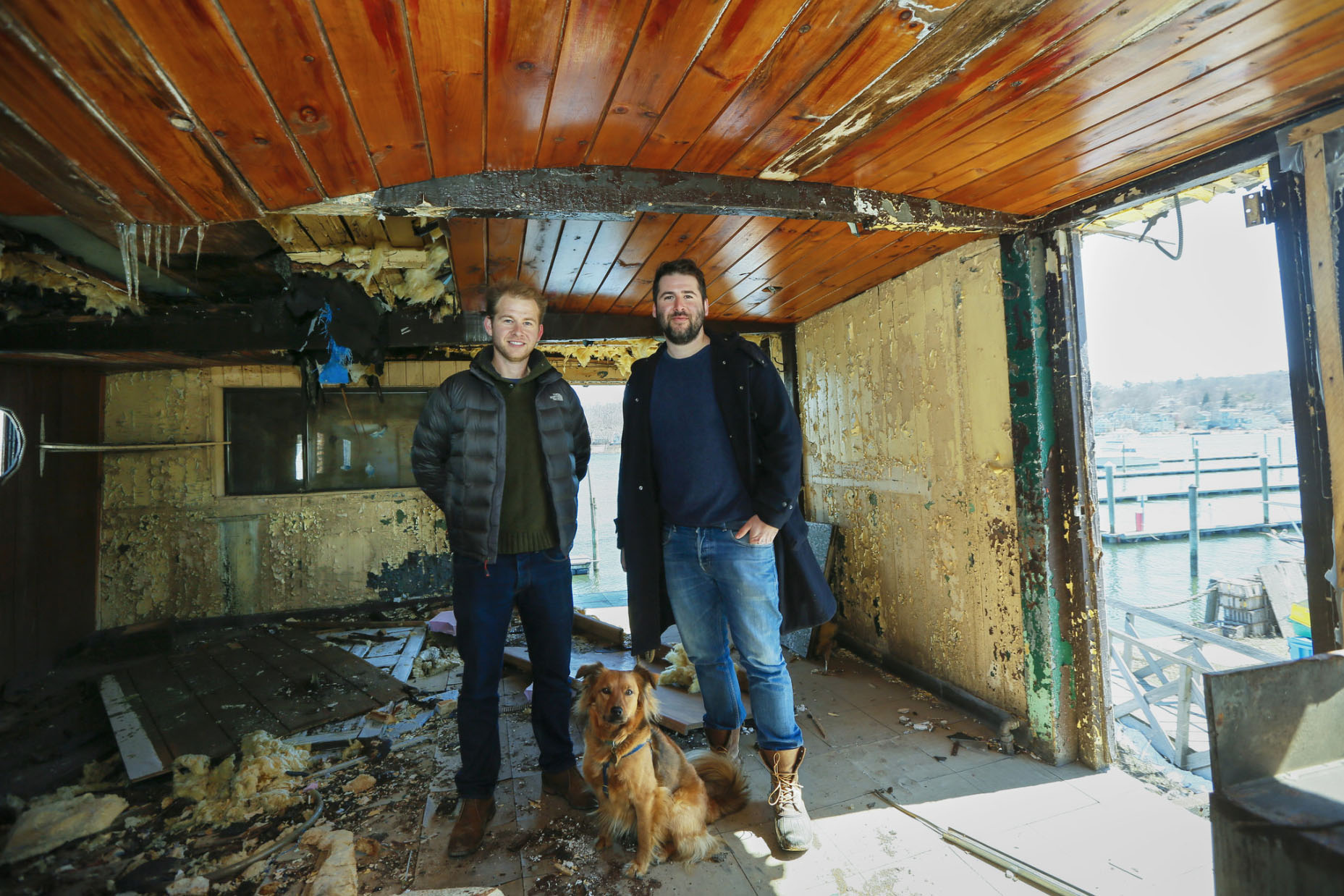
Miles and Alex Pincus, brothers and maritime preservationists, on the second floor of the barge, which will be returned to and restored in New York City. Credit Ángel Franco/The New York Times

Miles and Alex Pincus, brothers and maritime preservationists, on the second floor of the barge, which will be returned to and restored in New York City. Credit Ángel Franco/The New York Times

Via The New York Times, written by Corey Kilgannon:

NEW HAVEN — For years, a shoddy shed of dilapidated wood has cluttered up the boatyard of the Fair Haven Marina, a hub for recreational boaters on this stretch of the Quinnipiac River, just east of Yale University.
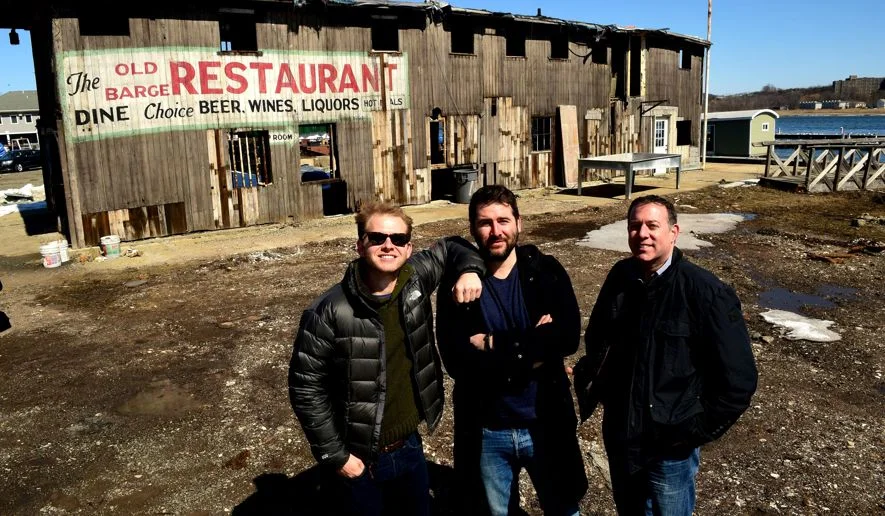
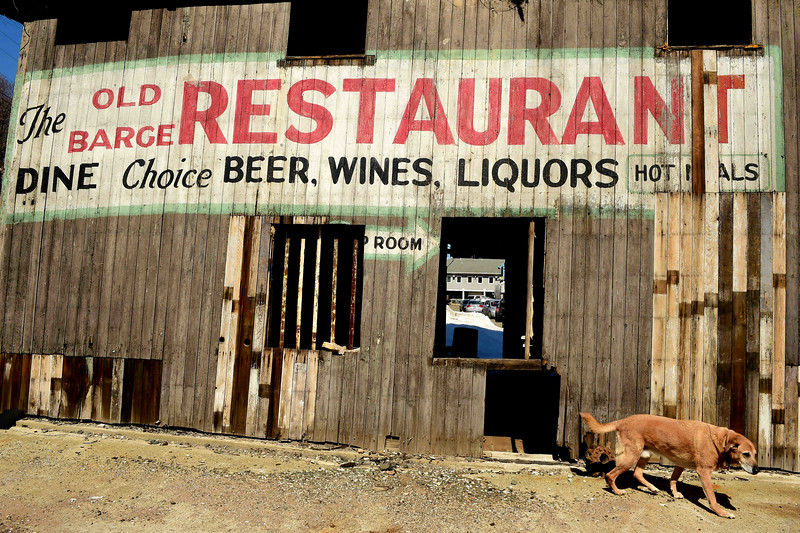
Brought up from New York City nearly a century ago, it is an 1850s-era oyster barge that has had various incarnations — as a speakeasy, a restaurant called the Old Barge and, finally, as a dive bar before closing for good in 1987. It was then left to languish in the boatyard, too leaky even to use as a storage shed.
“Most people wanted me to tear it down, but I said, ‘That can’t happen,’ ” the marina’s owner, Lisa Fitch, said. “Everyone who grew up around here had a beer here.”
She drank there too, as a young adult, she said, and had eaten there as a child, when the barge was still a restaurant.
But for the yard’s manager, Brett Seriani, it was more of a headache than a local landmark, and he urged Ms. Fitch to bulldoze it.
“She kept saying, ‘No, it’s historical,’ ” Mr. Seriani said. “But come on, there’s historical and there’s hysterical.”
Mr. Seriani can smile now because the old barge is finally departing, and not in a Dumpster. Instead, it is being carefully dismantled to be taken by truck to the Brooklyn waterfront, where it will be rebuilt it to its original grandeur, and, if all goes well, will float in the East River off Lower Manhattan within a year.
That is the plan envisioned by the Pincus brothers, Alex and Miles, maritime preservationists and Manhattan restaurateurs who specialize in the restoration of old boats.
Alex Pincus said the barge could become a maritime museum or a dining establishment like Grand Banks, an oyster bar the brothers opened last summer on a historic schooner that they restored and docked on the Hudson River at Pier 25 in Manhattan.
Mr. Pincus said he had read a newspaper article last summer that mentioned Ms. Fitch’s desire to sell the marina. It also said she was hoping to find a taker for what was perhaps the last of the many oyster barges that docked as floating markets along the East River, near the Brooklyn Bridge, in the late 1800s and early 1900s.
“We saw that it was the only one left, and potentially available, and it was something we had to do,” he said.
Numerous attempts over the years to move and preserve the barge had sputtered. But the brothers’ background and vision impressed Ms. Fitch, she said, so she sold it to them for $1.
A local, amateur historian, Robert S. Greenberg, said that the vessel was probably built in the mid-1800s and that its structure seemed to match one of the barges in historic photographs he had found.
Oystermen during that era would steer their small sailboats up to the rear of the barges and offload their catch, which barge operators would sell wholesale or serve fresh on the piers to lines of customers, he said.
“The barges were like processing plants,” Mr. Greenberg said. “The oysters came in one end and went out the other very quickly.”
The barges sprung up when New York City was still the oyster capital of the world and lower New York Harbor had about 350 square miles of oyster beds, where hundreds of millions of bivalves were harvested every year.
Around 1920, as the oyster industry in New York began to decline, Mr. Greenberg said, the barge was bought by Ernest Ball, who owned the Fair Haven marina property at the time. It was towed to Fair Haven, which still had a thriving oyster industry along the Quinnipiac River.
The barge was floated onto the property via a short canal, which was then filled in. During the 1930s, it was a speakeasy.
PhotoOyster barges moored on the Hudson River in 1912, before the industry in New York City began to decline, around 1920. Credit The Oysterman and Fisherman
“The reason it survived is because it got landlocked,” Mr. Greenberg said, saving it from storms and a rotting hull.
It still bears “Old Barge” restaurant signs — “Choice beer, wines and liquors, hot meals” — painted decades ago but preserved under shingle siding for decades. According to local lore, the second floor may have featured a bathtub and a brothel for the oystermen.
Mr. Greenberg showed buckets full of bottles and pottery and china shards that he excavated from a section of the barge’s hold.
“It had all these lives,” Mr. Greenberg. “And now it’s going home to the East River.”
Alex Pincus said the barge, which is 17 feet wide and 70 feet long, would be reconstructed by a shipwright and a team of boat builders at the Atlantic Basin in Red Hook, Brooklyn.
Mr. Pincus said they hoped to use as much of the barge’s original materials as possible, especially the larger support timbers and beams. But, he added, much of the wood and cladding are in poor shape and will have to serve as models for new versions.
The barge will be rebuilt along the identical structural lines, including the tapered shape that allowed it to rock without its roof crashing into adjacent floating barges and the bowed floor that allowed proper drainage.
The brothers’ plan is to pursue a docking location in a “historically appropriate” spot near where the original oyster barges once floated on the East River, Mr. Pincus said.
Of the barge, he said, “It’s harder to relate to, in a marina in Connecticut, but if you bring it back to New York, it just sort of unleashes the potential.”
This made sense to Mr. Seriani, the yard manager, who laughed when asked if he patronized the barge when it was a dive bar.
“I spent a week there one afternoon,” he said, dragging on a cigarette. “It was a real bucket of blood. They had to put a cage around the back deck because of the fights — people would get thrown off the deck into the water.”
The floor was uneven, he remembered, and “you knew you were too drunk to drive when it seemed level to you.”
Ms. Fitch said she had been willingly paying an extra $6,000 each year in property taxes to keep the structure on the property because, “I knew it would all fall into place somehow.”
tags: The New York Times
categories: Press, Archive
Friday 04.03.15
Posted by Alexander Pincus
 

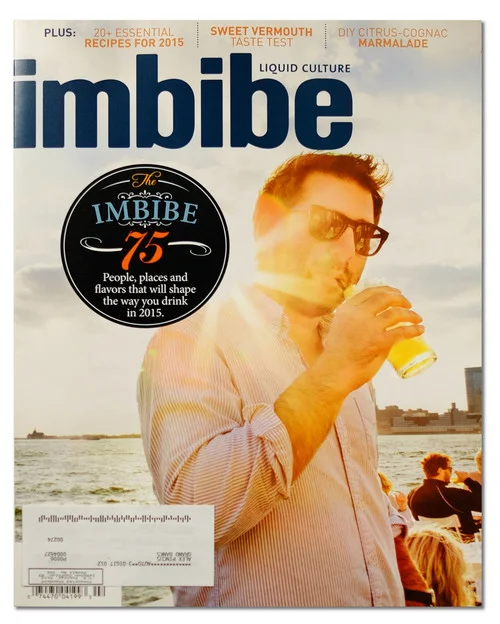
The Imbibe 75

Via Imbibe, written by Miranda Rake:

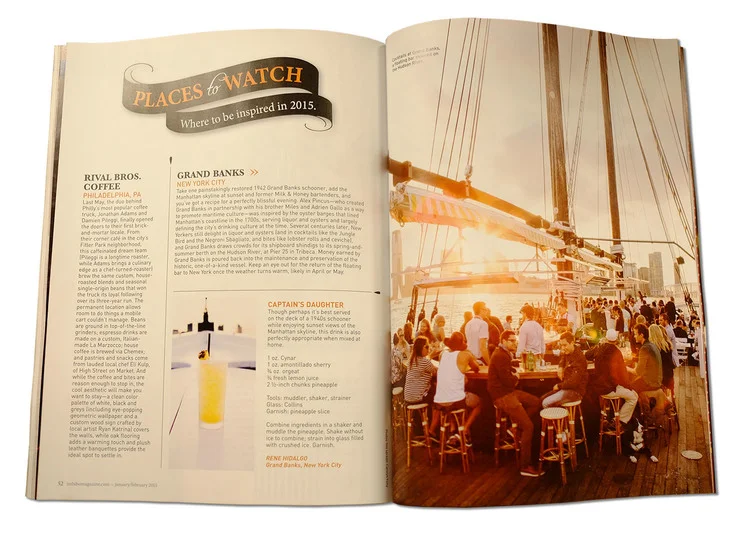
Take one painstakingly restored 1942 Grand Banks schooner, add the Manhattan skyline at sunset and former Milk & Honey bartenders, and you've got a recipe for a perfectly blissful evening. Alex Pincus – who created Grand Banks in partnership with his brother Miles and Adrien Gallo as a way to promote maritime culture – was inspired by the oyster barges that lined Manhattan's coastline in the 1700's, serving liquor and oysters and largely defining the city's drinking culture at the time. Several centuries later, New Yorkers still delight in liquor and oysters (and in cocktails like the Jungle Bird and the Negroni Sbagliatio, and bites like lobster rolls and ceviche), and Grand Banks draws crowds for its shipboard shindigs to its spring-and-summer berth on the Hudson River, at Pier 25 in Tribeca. Money earned by Grand Banks is poured back into the maintenance and preservation of the historic, on-of-a-kind vessel. Keep an eye out for the return of the floating bar to New York once the weather turns warm, likely in April or May.


tags: Imbibe
categories: Press, Archive
Tuesday 01.06.15
Posted by Alexander Pincus
 

Metropolis

Alex Pincus and Grand Banks are featured alongside notable New York City landmarks, institutions, and celebrities in the premiere of the Travel Channel's new series, Metropolis, Sunday January 4th at 9PM EST.

tags: The Travel Channel
categories: Press, Archive
Sunday 01.04.15
Posted by Alexander Pincus
 

A Negroni Summer

Via The New York Times, written by Alex Williams:

At the recent opening party for Grand Banks, a meticulously on-trend oyster bar on an old fishing schooner anchored at Pier 25 in Manhattan, all the colors of summer were on Technicolor display: the gold of the sunset, the steel-blue of the Hudson River and the red of the cocktails.
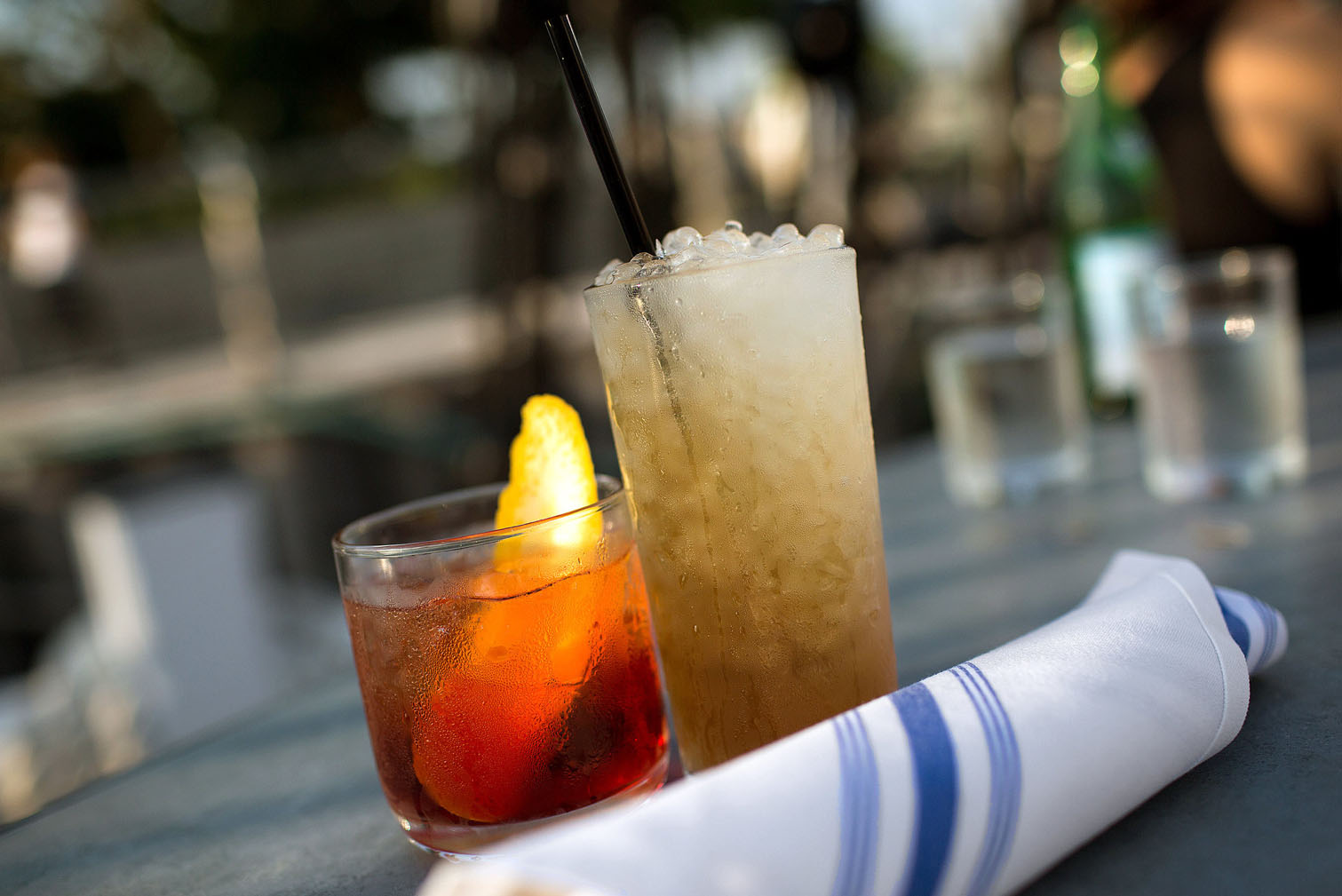
Yes, red. In every direction, partygoers fashionably clad in the season’s Vans slip-ons and Persol sunglasses could be seen sipping a fiery crimson Negroni, a bitters-based aperitif that is not only a signature cocktail of the restaurant, but also, it seems, of this summer itself.
“It’s like a pink polo shirt,” said Alex Pincus, an owner, who prowled the schooner’s decks that night, Negroni in hand. He explained further, “it’s sort of manly and colorful at the same time.”
Such enthusiasm for the Negroni is evident at craft cocktail bars, beach clubs and rooftop bars alike, where stylish tipplers have embraced this venerable Italian concoction as a latter-day Cosmo for the artisanal set.
The Negroni may look to the uninitiated like the stuff of Cancún spring-break frolics, with its Hawaiian Punch hue and festive shard of orange peel. But in classic form, it is a serious libation: a blend of Campari, gin and sweet vermouth with complex personality and unapologetic bitter finish that challenges you to love it.
The Negroni has also become a fashion statement of sorts for connoisseurs — a pledge of allegiance to la dolce vita, and a secret signal to fellow cognoscenti that you do not stoop to sozzle yourself in the fashion of the daiquiri-sipping masses.
Its nuance, in fact, is the basis of its charm, devotees say.
“The Negroni has this wonderful limpidity that few other cocktails contain: it’s cool without being too cold, and the mouth feel has this wonderful silk quality,” said Aaron Von Rock, the wine director at Lincoln Ristorante at Lincoln Center, which did its part to kick-start the current Negroni infatuation with a create-your-own Negroni bar featuring dozens of alternatives to the drink’s Holy Trinity of ingredients (a “training wheels” version for neophytes, for instance, features apple bitters, Lillet and blood-orange vodka).
The resurgence of the Negroni, a favorite of noted thinkers (and drinkers) like Kingsley Amis and Orson Welles, has been brewing for at least five years, said Jonathan Miles, the novelist and the former cocktail columnist for The New York Times.
Lately, it has reached the point that seemingly every self-respecting foodie haunt is expected to offer a signature Negroni (Parm, in SoHo, serves a beet version), if not a menu of them (see I Sodi in the West Village).
Pinterest boards are brimming with recipes of the ever-photogenic cocktail in seemingly infinite variations — the blood-orange Negroni; the amber Negroni, with amaro; the pomegranate Negroni; not to mention its first cousins the Boulevardier (mixed with bourbon) or the Americano (club soda). (Then there’s the popular Negroni Sbagliato at Grand Banks, which substitutes prosecco for gin.)
Will mass acceptance poison the esoteric air that helped propel the Negroni to prominence? During Negroni Week in June, a lounge in Los Angeles, the Varnish, whipped up Negroni Jell-O shots.
Cheeky, sure. But also, perhaps, a perilous step toward the Appletini.
tags: The New York Times
categories: Press, Archive
Thursday 08.21.14
Posted by Alexander Pincus
 

They’re on a Boat! Floating Restaurants Try to Redefine the Dinner Cruise

Via The New York Times, written by Liz Robbins:

As the early-evening sun blazed, the old Navy boat gently pushed into the East River and the 32 passengers were mindfully served cocktails, wine in tumblers and beer in cans. Life aboard the Revolution eased to two knots.
“In New York, we’re so fast-paced,” said Erik Gerlach, 37, a Brooklyn architect relaxing with his wife, Josa, in the cabin of the floating restaurant, the Water Table. “This is a way to slow down. When you’re in the moment, you want to make it last longer.”
In New York this summer, the artisanal meets the nautical, as a group of floating restaurants have claimed what had been uncharted territory in New York’s culinary world.
The ventures vary from a modest New England tavern to a French-Caribbean oyster bar to a three-deck lobster shack. But their challenges have been similar: They all had to navigate bureaucracy, bad weather and boat plumbing in an effort to redefine the dinner cruise.
The newest of the boat-restaurants does not actually leave the dock: Grand Banks, an oyster bar on the Sherman Zwicker, a 142-foot schooner tied up at the end of Pier 25 in the shadow of One World Trade Center in TriBeCa, will stay through October before it sails south.
With a capacity of 160 people, Grand Banks is envisioned as the Balthazar of boats, said Alex Pincus, who founded the Atlantic Yachting School on the Upper West Side with his brother, Miles, before selling it and founding Grand Banks with two other partners. Witness the $16 cocktails, the French bistro bar stools, the zinc and mahogany bars and the windswept patrons on a recent weekday afternoon, including the actress Marisa Tomei, ignoring the pitching waves.
The fashionable scene belied the travails below deck. “The challenge was not the idea,” Mr. Pincus said. “The challenge was making it happen.”
First, they had to find the right ship. When they found the Sherman Zwicker in Boothbay Harbor, Maine, the Pincus brothers established their own maritime education foundation to persuade the owner to donate the boat. As a museum, it cannot take passengers cruising, however, and that necessitated the right dock for seasonal mooring.
Because city construction foiled plans for a spot at East River State Park in Williamsburg, the group negotiated with Hudson River Park. The opening was originally scheduled for July 3, but storms delayed it until July 4. On the boat’s second day of operation, it ran out of oysters, and Mr. Pincus furiously called in favors for a rush weekend shipment.
Then, a couple of days later a pipe burst on the 72-year-old boat and there was no running water.
Still, the demand for $3.50 oysters and $17 fluke crudo remained strong.
“This is basically the grown-up version of the Frying Pan,” said Golnar Nassiri, 34, out with her husband on a recent evening. Ms. Nassiri, like others that night, could not help making comparisons to the Frying Pan, the lightship boat permanently docked at Pier 66, infused with a fraternity party vibe.
“I feel like I’m in the Hamptons or something,” said Matthew Glass, 53, drinking wine with his friend Ken Clark, 56, after their rides in spandex biking shorts — a bit underdressed, they acknowledged.
They might have felt more at home aboard the North River Lobster Company’s vessel, a former gambling boat called the Destiny, which is run by New York Cruise Lines, the parent company that also owns the Circle Line.
The idea is to take the usual dockside lobster shack — complete with lobster rolls ($16), peel-and-eat shrimp ($10) and one-and-one-quarter-pound Maine lobsters ($29) served on paper plates — and include free cruises. Mason jar cocktails run $12, and a bucket of beer is $24.
“When we started this thing, we didn’t know what we were going to get,” said Jason Hackett, the chief marketing officer for New York Cruise Lines, who said that because of the harsh winter, the crew had only two months to prepare for the late-April opening. “We were targeting New Yorkers, and thank goodness that’s what we got. People are really digging just being on the water.”
Jamie deRoy, 68, a producer, and her friend Sandra McFarland, 52, working in insurance, took a late lobster lunch. “I got some coupons in the mail and I thought it would be fun to try it,” Ms. McFarland said.
They had an array of raw bar selections, corn on the cob and the Maine attraction.
Like the other patrons, they had ordered their food and drinks on the enclosed second deck (air-conditioned) and taken a wooden buoy with a number. They sat on the top deck with picnic tables and white and red trash cans, as Top 40 radio crackled and Columbia Business School students celebrated the end of exams.
With three long blasts of the horn, the ship backed out of Pier 81 for one of its 35-minute jaunts up the Hudson, turning around at 72nd Street, almost over before it had really begun.
“That’s O.K.,” Ms. deRoy said, her long silver hair flowing in the wind. “It’s the gimmick.”
Of the three, the Water Table has been operating the longest. It opened in December and ran until ice clogged the East River and a ferry walkway collapsed in February at Greenpoint’s India Street Pier, where it had been docking. The boat resumed East River service in April from a seaplane dock at the Skyport on East 23rd Street. Kelli Farwell and Sue Walsh have spent their first year of marriage starting the business, dogged in their dream that began in 2011 on an East River ferry ride.
It was then that Ms. Farwell, a former wine director at Brooklyn’s DuMont, Dressler and Rye, who trained at Gramercy Tavern and Craft, decided to get her captain’s license. That led to the dinner boat idea.
“It would be very simple — just good ingredients, New England tavern food, on the water,” Ms. Farwell added.
In late 2012, the couple launched an Internet campaign, raising $26,956. After the purchase of a tugboat in Michigan fell through, the couple found a 62-foot Navy yard patrol craft, the Revolution, working as a tour boat in Boston in 2013. The ride back through Buzzard’s Bay in May was so rough, Ms. Walsh recalled, she thought they might not make it back for their June wedding.
Today she serves as first mate, filling in as server and deckhand, and designing the website and the menus, in addition to her full-time job as a graphic designer. A photo of Ms. Walsh’s grandfather, a former Navy lieutenant, hangs on the wall, with other vintage artifacts, maps and photos.
Ms. Farwell, 42, learned how to do many of the repairs herself, with help from YouTube. “You’re making changes to the wine list, and then you have to rewire a pump, and then you’re making the salad dressing,” she said.
Because of the 80 hours a week that her wife spends on the boat, Ms. Walsh, 35, has a cocktail named after her: “Captain’s Widow.”
The boat offers two-and-a-half-hour dinner cruises Thursday through Saturday, offering three courses for $75; a two-hour Sunday supper ($50) is just two courses: lobster mac and cheese or panzanella salad, followed by a root beer float.
On a recent Sunday night, a group of friends had booked passage to celebrate Lara Naaman’s 40th birthday. As the boat motored under the Roosevelt Island Bridge, the revelers made their way to the top deck to snap photos of the city skyline, as Stevie Nicks, George Michael and Bruce Springsteen played over the sound system. The Revolution went as far up as the northern tip of Roosevelt Island, until dinner was served, and then it turned back south.
As the boat pulled close to the dock, the Journey song “Don’t Stop Believing” came on. Passengers cheered wildly and honked their birthday horns.
Ms. Walsh smiled and looked for the captain.
“That’s our theme song,” she said.
tags: The New York Times
categories: Press, Archive
Friday 07.18.14
Posted by Alexander Pincus
 

No Place Like Home: Three New York City Waterfront Hotspots This Summer

Via The New York Times, written by Alex Williams:

Summer in the city used to mean open fire hydrants, barbecues on fire escapes and those dreaded street fairs. Lounging by the water? You were lucky if you made it to the freak show called Coney Island once.
But now, thanks to the revitalization of the city’s waterfront, it’s possible to spend a summer by the water without leaving New York. There are locavores at the Smorgasburg tents at Brooklyn Bridge Park’s Pier 5, taco-eating surfers at Rockaway Beach, clubgoers on Governors Island and TriBeCa moms pushing fancy strollers along Hudson River Park.
New Yorkers no longer feel compelled to ditch the sweltering city every weekend. Indeed, for some, there is a reverse snobbery to shunning the South Fork and enjoying the traffic-free attractions at home.
And just as Bridgehampton draws a different crowd from East Hampton, the city’s sun-kissed waterfront playlands are developing their own distinct tribal affiliations. Here are snapshots of three waterfront spots and the cosmopolitan creatures drawn to them.
Fort Tilden beach
Fort Tilden beach is remote, graffiti-scarred and a bit industrial; in short, it’s Bushwick by the sea. No wonder that this mile-long stretch of sand on the Rockaway Peninsula, which closed after Hurricane Sandy, has re-emerged this summer with an artsy makeover.
“It’s like a beer garden in Williamsburg transposed to the seashore,” Susannah Kalb, 28, who works in film production, said on a sunny Friday.
It does not take a Brooklyn sense of irony to appreciate the natural wonders of Fort Tilden. Ignore for a moment the nonnative fauna (that is, the two-legged visitors in aviator shades), and the landscape could be borrowed from a Hopper painting. Rolling dunes are blanketed in wildflowers. Battery Harris, a former concrete Army gun emplacement, offers stunning vistas of sun-dappled waves.
Part of the charm is its ruins; hollowed-out military buildings and machine shops from its Army days. Fort Tilden is beautiful in the complicated way that Detroit is. It’s a “Mad Max” aesthetic that feels like home to the average L train denizen.
Thanks to the efforts of the Rockaway Artists Alliance, as well as the much-publicized efforts by Patti Smith and Klaus Biesenbach, the director of MoMA PS1, those ruins are now a canvas for artists. Old barracks house photographs by Ms. Smith, sculptures by Adrián Villar Rojas and a sound installation by Janet Cardiff.
The fact that nude sunbathers have long favored this remote beach also lends it an air of art-world edginess, as if beachgoers are participating in their own Marina Abramovic performances. Last Friday, a burly man in his 30s with a red beard had flipped his bicycle onto its handlebars to perform seaside tire repair in the buff. On a nearby blanket, a topless woman chatted blithely with friends, as blasé as if she had just kicked off her sandals.
While clothing is optional, literature, it appears, is not. At Fort Tilden, Stephen King will not do. Reading options that day included The Paris Review, “Slaughterhouse Five” and “The Grapes of Wrath,” with two young actors thumbing through “The Autobiography of Malcolm X” for their book club.
Musical pursuits are welcome, too, so long as they are obscure and idiosyncratic. One 20-something Brooklynite sat alone on a blanket, plucking on his ukulele while staring out to sea.
To some beachgoers, the scene is a little too familiar. “You come down here and you’d see everyone you’d see on Bedford Avenue,” said Mikael Kennedy, 34, a photographer from Greenpoint.
And that, ultimately, may be its undoing. North Brooklyn creative types hate nothing more than when word gets out about their secret haunts. With Rockaway Beach, about a 30-minute bike ride to the east, already brimming with urban surfers, bohemian day-trippers and young partygoers, it may be a matter of time before Fort Tilden is declared over.
“Four or five years ago, you would come down here and it would only be fishermen — it was awesome, it was pretty much abandoned,” said Mr. Kennedy, who was tanning with friends. Then, “it blew up.”
“On Saturdays and Sundays,” he added ruefully, “you can barely fit on the beach.”
 
Pier 25 in TriBeCa
Aboard the Sherman Zwicker at Pier 25 in TriBeCa. Credit Karsten Moran for The New York Times 
Golf. Sailing. Celebrities. Throw in the conspicuous display of luxury timepieces and you have New York’s closest waterfront equivalent to Sagaponack.
For the young hedge-fund managers and analysts who inhabit the nearby finance dominions of TriBeCa and Battery Park City, Pier 25 — which juts out into the Hudson River near North Moore Street — has become the de facto spot to pregame for the Hamptons during the week, and to bring the South Fork closer to home on the weekends that they can’t make it out to their summer shares.
During the day, scrubbed young professionals with perma-tans and perfect teeth congregate at the pier’s myriad outdoor-sports opportunities like sand volleyball and outdoor dance-cardio. A mini-golf course, opened in 2011, is Manhattan’s only 18-holer. It’s the perfect place to give future traders a taste of Maidstone culture on their ninth birthday. The aspiring preppy class can also hone their yachting chops with the Offshore Sailing School.
Even the pier’s Eurocentric playground has become a place to see-and-be-seen, thanks in part to the celebrity parents. Ed Burns and Christy Turlington, Karolina Kurkova, and Leelee Sobieski have been spotted there. They are joined during the day by the freshly blown-out TriBeCa moms, with their Céline bags and their Valentino Rockstud sandals, who transform the playground into a Concours d'Élégance of high-end strollers, with displays of four-figure models by Bugaboo and Stokke almost de rigueur.
One thing that Pier 25 lacked was Hamptons-worthy night life. That’s no longer the case with this month’s opening of Grand Banks, a seasonal oyster bar aboard the Sherman Zwicker, a historic 142-foot fishing schooner docked at the pier’s tip.
During a soft opening over the Fourth of July weekend, the schooner was packed with young professionals with Panerai wristwatches, pink polo shirts and box-fresh boat shoes, who chased down sustainably harvested oysters and fried squash blossoms with nautical-themed cocktails like the Engine Room (lager, aquavit, ginger, lemon). Also spotted were the fedora-and-tattoo types, perhaps lured by the Brooklyn bona fides of Mark Firth, a former owner of Marlow & Sons and Diner.
The owners insist that they were not looking to create a floating version of the meatpacking district.
Continue reading the main story
“Up until about 1900, the entire downtown waterfront was surrounded by these little oyster barges, some guy selling oysters,” said Miles Pincus, another owner, sipping a negroni during the opening party last Thursday. “It was the everyday, common man’s food. It was not the elevated thing it is now. We thought, ‘Why does that not exist?' ”
Alongside the $3.50 oysters from the Long Island Sound and Huntington Bay, diners can fork over $17 for a small plate of fluke crudo.
Governors Island
“You have to take a ferry to get here, and you can’t leave unless you go by ferry,” said Quinton Kerns, 29, an architect from Harlem who was on his third summer outing to Governors Island last Sunday. “You have to want to get here. You have to earn it.”
Like most visitors to the island that day, Mr. Kerns did not look as if he was straining terribly hard. Wearing black Wayfarers, he stared into a cloudless blue sky from a supine position in one of the island’s 50 new red-rope hammocks, the much-publicized centerpiece of a 30-acre expansion this summer.
The hammock, in fact, is a fitting symbol for what Governors Island has become for many New Yorkers: a shared suburban backyard, a private sanctuary for quiet reflection and unfettered play. Situated only an 800-yard ferry ride from Manhattan (and a seven-minute ferry ride from Pier 6 in Brooklyn Bridge Park), the centuries-old military base — currently midway into its seemingly endless transformation into a 100-plus acre recreation area — offers a striking absence of cars, noise, grime and, seemingly, tourists.
The spirit of mass urban decompression was in evidence in every corner of the island last Sunday.
A 40-something dad in camouflage shorts lounged quietly on a blanket, nibbling on water crackers and Brie, as his two young children clambered on a steampunk-inflected sculpture by Oreen Cohen called “A Sharper Lens,” fashioned from reclaimed materials like tires. A Hasidic family in a six-person pedal surrey wheeled down a nearly deserted bike path toward the immaculate new ball fields, the Statue of Liberty looming on the horizon. Twenty-somethings in floral-print Vans browsed the foodie carts, sampling goat-and-fig jam baguettinis and maple grilled cheese sandwiches in the cool shadow of a red brick former Army building.
But as the sun begin to sink, the legions of solace-seeking New Yorkers began to depart, and an entirely different tribe emerged to make the island its own. A tide of 1,000-plus ravers in their early 20s poured off the ferry and streamed into the Gov’nors Beach Club, an open-air club that has held summer dance parties on the island for the last few years.
As Pan-Pot, a Berlin duo, played techno music from a stage at the far end of an open-walled tent, two leggy blond women in micro-cutoffs and white, eight-inch platform high-top sneakers strode toward the dance floor, where the crowd began to undulate as a single, 500-headed organism.
From time to time, the crowd, many sporting plastic bead necklaces and Day-Glo sunglasses, would part just enough for an enterprising young dancer to step out on his own and bust a few moves.
A young man in black sunglasses gyrated in dreamy circles beneath the giant disco ball, a three-foot inflated giraffe perched on his shoulders. A burly raver in a sweat-drenched tank top then broke free from the stonewashed mass and began stomping around furiously near the stage, as if trying to repel an invasion of ants.
“It’s totally B & T,” one man said, as he boarded the ferry back to Manhattan. “I mean, is anyone there from the city?”
As new columns of flesh-baring techno acolytes filed toward the club entrance, the sternum-rattling beat droned on, its internal dramas and crescendos a mystery to the uninitiated. (“It’s the same song, over and over,” said a fire department paramedic on duty, shaking his head.)
Such opinions would be lost on the assembled. Lulled by the hypnotic tempo, they bobbed on toward midnight.
tags: The New York Times
categories: Press, Archive
Wednesday 07.16.14
Posted by Alexander Pincus
 

Sherman Zwicker Serves Up History—and Oysters

Via The Wall Street Journal, written by Andy Battaglia: 

Floating off the edge of Battery Park City, past the miniature golf course and beach volleyball courts on Pier 25, is a new home for old history of the New York waterfront.
Her name is the Sherman Zwicker, and in her service as a schooner, she has traveled the Eastern Seaboard since 1942. With the boat's looming masts and a hold big enough to store 320,000 pounds of catch, its original purpose was fishing for cod. Now, it is a museum and a restaurant with a mission to fulfill.
"We're working with people putting out interesting responses to maritime history. Not just the state-park model of representing it with a plaque but filtering it through a lens to make that history something you can actually feel, that can have a presence," said Alex Pincus of the Maritime Foundation, the group behind the vessel's move to its new home.
The deck of the ship is now occupied by Grand Banks, an open-air oyster bar and seafood restaurant run by Mark Firth, the founder of Diner and Marlow & Sons restaurants in Williamsburg. Underneath, down a ladder into the hold, is an unconventional museum space where many tons of cod were once assembled. In their place is an exhibition by New Draft Collective, a group devoted to answering the mandates of both history and art.
"The history of the Sherman Zwicker is really rich," said Libby Pratt,one of the collective's two main members, "so when the Maritime Foundation asked us to put together an exhibit, we thought: how?"
They have responded with a mix of archival materials and new creations to evoke the boat's more than seven decades of lore. One bay beneath the deck includes an illuminated display of 150 pounds of salt, to show how cod were preserved. Another features vintage photographs of the boat and its crew. Yet another features a sort of sculpture made from rope.
"Rope hasn't become obsolete," said Michi Jigarjian, New Draft Collective's other founder. "It's one of the only materials that was on the boat that is still viable and not taken over by some sort of technology."
When it was built in Nova Scotia, the Sherman Zwicker—touted as the largest wooden vessel now floating in New York—was a sister ship to the Bluenose, a famously fast schooner memorialized on the back of the Canadian dime. It spent the prime of its life fishing for cod and ferrying the fish for sale to South America, before taking up as a historical museum boat for decades in Maine.
When in need of a new home, the boat was gifted to Mr. Pincus and his brother Miles Pincus, who had collaborated before on the sailing company Atlantic Yachting. They struck a deal with the Hudson River Park to dock it at Pier 25, as a not-for-profit historical attraction supported by a for-profit restaurant on board.
"I don't know what the answer is, but it seemed like an interesting question to approach presenting a historical and cultural narrative through a more experimental, curatorial lens," said Alex Pincus. "I was interested in creating a certain atmosphere that brings forth life on the water."
In addition to the exhibition space and the restaurant, there will be talks and lectures during Sherman Zwicker's residency through the end of October. A pre-opening trial run last week featured Paul Greenberg, author of "American Catch: The Fight for Our Local Seafood." During a dinner devoted to salmon, he talked about risks attending world-wide fisheries while attendees descended below deck to check out the art and history in the hold.
"That was the most spectacular setting I could ever imagine," Mr. Greenberg said.
tags: The Wall Street Journal
categories: Press, Archive
Sunday 07.06.14
Posted by Alexander Pincus
 

Now Docking Downtown: An Oyster Bar on a Boat

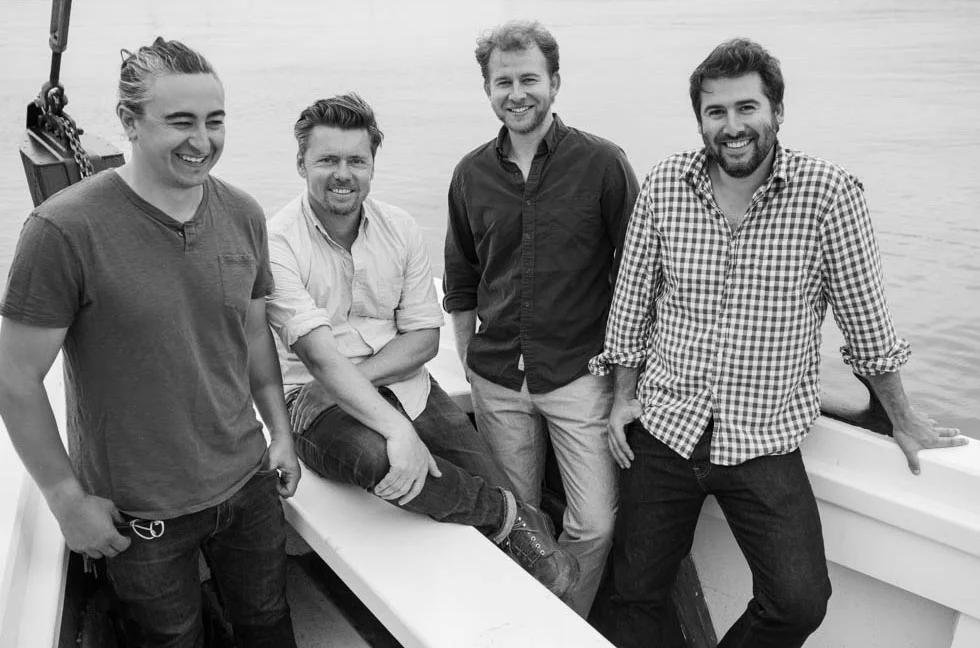
The restaurant's partners, from left: Adrien Gallo, Mark Firth, Miles Pincus and Alex Pincus.

The restaurant's partners, from left: Adrien Gallo, Mark Firth, Miles Pincus and Alex Pincus.

Via The New York Times:

For Alex Pincus, the question wasn’t whether Manhattan needed a floating oyster bar and mini-maritime museum on a 72-year-old codfish schooner, but rather where to put it. Now, his vision has become reality in the form of Grand Banks, which will begin serving food and drinks Thursday afternoon on a boat docked off Hudson River Park in TriBeCa.
Pincus, who grew up sailing on Lake Pontchartrain and founded the Atlantic Yachting school on the Upper West Side with his brother Miles, had been reading about the city’s 19th-century oyster barges a few years ago when the idea occurred to him to build a modern-day version. Piled high with just-dug Crassostrea virginica, says Pincus, the vessels would sell their wares to hungry New Yorkers directly from the docks. “We thought, ‘why don’t we have that here?'” he says of a conversation with Miles that followed. The two gathered their restaurant-industry friends — including Mark Firth, a co-founder of the Brooklyn restaurants Diner and Marlow & Sons and Adrien Gallo, a former owner of downtown bars including Palais Royale and Double Happiness — and “started looking around for the spot.”
That spot turned out to be the park’s Pier 25, where the partners have a yearlong lease to park a 142-foot-long Nova Scotian wooden fishing vessel called the Sherman Zwicker. (Tentative plans are to stay until fall, says Alex Pincus, and then sail down to Florida for the winter.)
The Sherman Zwicker was once the property of the Maine Maritime Museum, where four decades ago a sailor and nautical-history buff named George McEvoy (“the ultimate old soul,” says Pincus) lovingly restored it. As of last week McEvoy’s pride and joy — the last of its kind used to fish among the Grand Banks of Newfoundland and now the largest wooden vessel in New York City — was docked in Red Hook, Brooklyn. There the Pincuses and their partners hustled to outfit the kitchen (formerly bunks where sailors slept) and to prepare marine-education exhibits in the stalls where just-caught cod was once buried in salt for the trip to South America.
Above decks, they also built out two bars, one for drinks (such as daily nautical-themed cocktails and ales from Red Hook’s Other Half Brewing Company), and another topped with zinc for a rotating menu of sustainably sourced oysters. Those, as well as the rest of the Grand Banks menu — lobster rolls, small plates of seasonally and locally available seafood — will be overseen by Firth, who is also the owner of Prairie Whale restaurant in the Berkshires.
It was in those landlocked mountains, where both Firth and Alex Pincus had moved a few years back, that the seed for Grand Banks was first planted. The two men, old friends from the city, crossed paths at the gym and got to discussing how they shared both a love of the urban waterfront and a desire to connect the rest of the city to it. It was that conversation that spurred Pincus to research old New York’s oyster barges. Now, both are splitting their time between the boat and the Berkshires. “It’s kind of ironic that we had to move away,” says Firth, “to figure this out.”
tags: The New York Times
categories: Press, Archive
Monday 06.30.14
Posted by Alexander Pincus
 

Factory Conversion Moves Forward

Via The New York Times, written by Michael Cooper:

The effort to turn a century-old sawdust factory in Williamsburg, Brooklyn, into an acoustically sound concert hall, recording studio, nightclub and center for composers is moving ahead, with organizers saying that they have raised the $16 million needed to finish construction. The space on North 6th Street, called the Original Music Workshop, has already drawn respected musicians and celebrities inside its weathered brick walls for concerts, even before it had a roof. Now its founder, Kevin Dolan, said that he had lined up what he called “philanthropic investors” to put up the money needed to finish construction. It is an unusual arrangement. Mr. Dolan said that the investors would become part owners of the building, which they would allow the Original Music Workshop, a nonprofit, to use rent-free. In the future they could then give their shares to the workshop, sell them to the workshop, or sell the building. Mr. Dolan, 62, said this would reduce the risk to people who might be reluctant to put money into a new organization without a long track record. He added that the space could open as soon as the fall of 2015.

tags: The New York Times
categories: Press, Archive
Sunday 05.11.14
Posted by Alexander Pincus
 

Scene Last Night: Bono, Edge, Vega at Unfinished Venue

Via Bloomberg News, written by Amanda Gordon:

Bono whistled loudly when Zimbabwean singer Netsayi and band finished their cover of U2’s “Sunday Bloody Sunday.” 
“He wants to perform with you,” said the concert’s creative director, Paola Prestini, to Netsayi after the unusual fundraiser. 
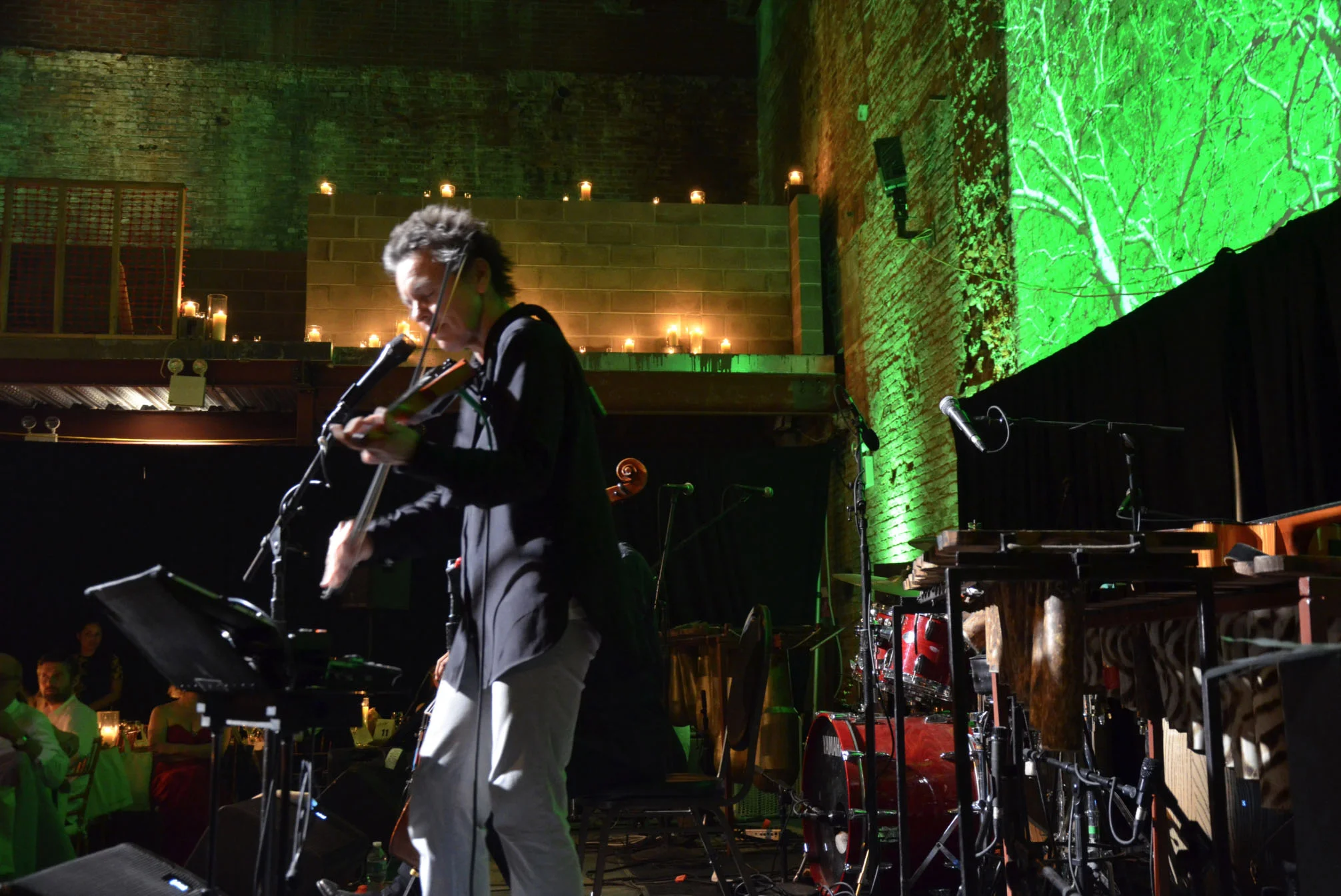
Billed as “An Experience in the Ruins,” the dinner party for about 60 guests and 50 musicians took place at the future home of the Original Music Workshop, a former sawdust factory in the Williamsburg section of Brooklyn. 
Kevin Dolan, a tax attorney and OMW’s founder, has put in $8 million to demolish, excavate and reconstruct the 100-year-old building’s core. His money has also paid for Prestini to serve as creative director. 
Now he needs $7 million to complete the complex. Dolan is seeking donations or money from investors who will get a stake in the building. 
So the evening was a soft-sell springboard to the missing millions for a select group of invited guests including the Edge, Julianne Moore, Alan Fishman, a former bank chief executive, and David Ford, co-founder of Latigo Partners. 
Among the musicians, who performed throughout dinner, were Laurie Anderson and Suzanne Vega. 
The best argument for investing was music. Anderson’s violin produced the sound of the wind. Vega sang “Luka,” “Tom’s Diner” and a new song, “Don’t Uncork What You Can’t Contain.” 
Hole Covered
“This will be the entrance, that’s the restaurant over there,” said Dolan, standing next to a hole in the floor, covered with planks and fenced in orange netting for the occasion. The finished complex will include a performance space and a recording studio. 
Helena Christensen, the model, actress and artist, worked on the decor, sweeping floors, providing photographs projected in the space, and artfully arranging bags of pavement mix, wheelbarrows, cement mixers, power tools and hard hats. 
She was particularly excited about the giant mushrooms from upstate New York she had surrounded with moss and placed on the tables. 
Valerie Dillon, who has a namesake gallery in Chelsea, corralled 500 candles from 360 Design that flickered atop concrete walls and a work table displaying the architectural plans. 
Great Acoustics
“This place is going to have great acoustics,” said Peter Zuspan of the Williamsburg-based design firm Bureau V. The project is Bureau V’s first building. Arup and SLAB Architecture are also part of the project team. 
Dillon’s husband, Alvaro Perez Miranda, brought in members of Black Ship, an artist’s collective he created. Christophe Laudamiel, the event’s scent director, replaced the smell of concrete with a sweet floral fragrance. 
Miranda flew in Paladar Underground from Los Angeles to prepare the meal: ceviche, a salad with baby carrots, braised chicken leg with truffle apple puree, and yogurt panna cotta with berries. 
tags: Bloomberg News
categories: Press, Archive
Friday 05.31.13
Posted by Alexander Pincus
 

In Kentucky, Tomorrow Comes Today

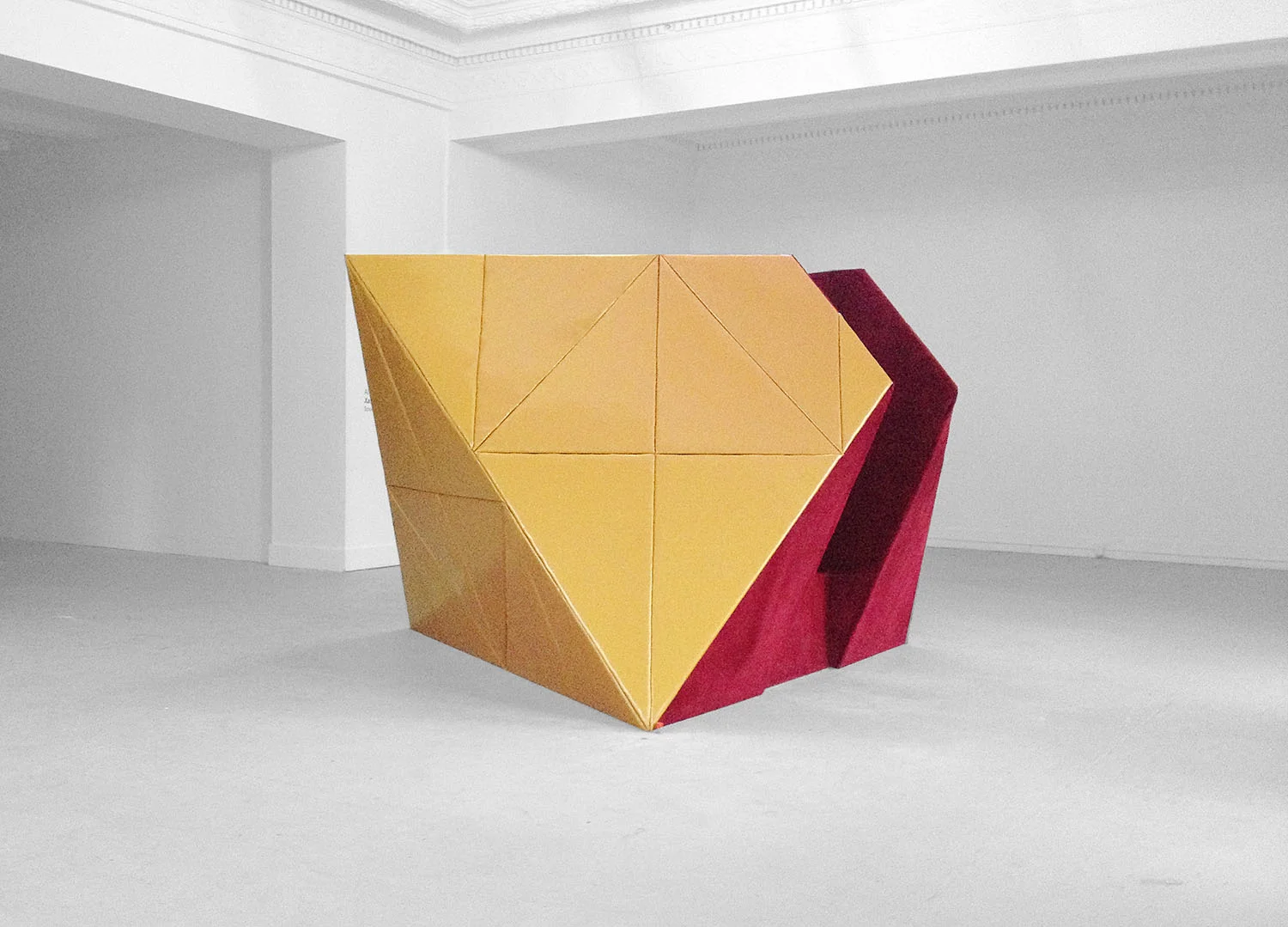
Xanadu DJ Booth at Land of Tomorrow featured in Hyperallergic

Via Hyperallergic, written by Yasmeen Siddiqui:

LOUISVILLE, Ky. — Since moving here with my family a couple of years ago, Land of Tomorrow (LOT) has been on my mind. It is a provocative production and exhibition space established by Drura Parish and Dmitry “Dima” Strakovsky, first in Lexington (2009) and then in Louisville (2010), Kentucky. Louisville is a city where the aesthetic approach of business is palpable, infusing the development and design of small, local shops, companies and restaurants with a look, if nothing else.
What should amount to strength – given the design-oriented commercial sector – spirals into weakness when that trait morphs into a vacant valuation system, a contrived metric ladled onto artists to determine who and what should be encouraged, supported and facilitated. LOT is a counterpoint, challenging this citywide problem through its work as a cultural producer and presenter, a creator of spaces and moments. I have asked Drura and Dima to address a few questions to shed light on what appears to be a pragmatic, responsive, rigorous mode of working with and for artists.
*   *   *
Yasmeen Siddiqui: What is the story behind LOT? Who are the players?
Dima Strakovsky: Drura and I were standing in the front space of what became PR&VD (Parrish, Rash, Van Dissel). He claims that I convinced him that we should start a gallery. I claim he convinced me. I am afraid we will never know the truth.
Speaking from a personal perspective, I come from Chicago, which is an incredible hatchery — so many great art programs, spaces and apartment shows! Going through the program at the Art Institute, I constantly showed my work with my friends and there was this sense of community. I don’t think it really translated up to commercial galleries or museum institutions but that might have actually been a blessing. Anyways, when I got to University of Kentucky in 2006, I didn’t see those opportunities for my students. Starting a space was the most real and vital thing I could do as an art educator. Also, I had to make a decision on how to make a home here in Kentucky and my home has gotta have at least one or two adventurous cultural institution. Bringing amazing artists in was the most natural thing to do on many counts.
Both of us were just super hungry to do something big and different. We gave ourselves room to experiment and try things out. The fabrication component paid for the art exhibition and slowly (OK, actually not that slowly almost within a year) things began to move and congeal into a more of a symbiotic relationship between production and exhibition.
There is an amazing list of collaborators and interns who have made LOT flourish over the years. I might leave some of the folks out (apologies), but people like Rives Rash, Bart Van Dissel, Angela Torchio and the current crew both in Louisville and Lexington have done some really amazing things to get the spaces live.
Drura Parish: My former business partner Rives Rash and I moved from a small space on Maxwell to the current space on third street in Lexington. He and I went crazy and converted the building that was previously a refrigerator supply store and church into an open front and small shop in back. We put in a table and then Dima walked in and asked us what we were going to do with all the space.  We‘d met Dima at UK. He was in the art department and we were in architecture. He suggested that we use the excess space as a gallery – Will Tucker and Paul Simmons was our first show and I was blown away with the ambition of one person to articulate a vision in an empty room.  Through the years we were fortunate to have many people pitch in on the effort, Will Sizemore, Joey Yates, Nathan Hendrickson, Charlie Campbell, J.R. McClenny, Paul Michael Brown, and more.
YS: In your view how would you analyze the relationship between cultural production and exhibition in 1) the traditional commercial gallery as compared to LOT 2) the alternative project-based space as compared to LOT?
DS: LOT has changed modalities of operation about a thousand times as we tried different things along the way. So at times we mirrored aspects of the more “traditional” models that you have mentioned. Though we have to remember that from art historical point of view both are very new and strange beasts in the cultural landscape. They are adaptations to the market condition and the market has made dramatic shifts in the last decade.
There is a natural fabrication base in Kentucky, which has always been the cornerstone of our enterprise. Commercial galleries manage reputations. Alternative spaces create community-based consensus. We can collaborate with both to produce shows all over the world. In some very real ways this liberates the artists that show in our space because we are not as interested in current cultural capital maintenance but rather in asking the “What if?” question through production and presentation of material artifacts.
DP: Whoa.  I am still new to galleries per se, and their modes of operation. I think the focus on economy is much different.  Through the years we are drifting to an area where production is a means to give artists’ objects, things, moments they can transfer and sell while the economic element rests in us locating, hiring, securing fabricators and craftspeople to produce work for the artist.  Exhibition is the place where all production and economics meets. It is the project so to speak.
I think we have much in common with most project spaces.  Generalizing the two, I would say that we rarely separate economics from art.  This does not mean sales — rather the metrics of understanding success-which is hard to quantify in art.  With that said, we are very focused in what we are trying to “get” out of an exhibition. This very rarely has dollar signs attached to it, but has always fascinated me in terms of the commoditization of a moment in a space. I come from architecture so the economics of a project are inescapable, and the indirect value of a project is hard to quantify and qualify. Art and project spaces are the opposite, here the mission of the artist at best is honed and clear, but the VALUE and economics are hard to define. With that said, I have always viewed our exhibitions as a way to observe true market demand and desire. After all we are in Louisville, Kentucky and our press budget is nill, so to see how work is received without the hype machine is priceless.
YS: To date, how has the paradigm LOT asserts served artists? Are there projects that have been more successful than others?
DS: We really do shift our gears a lot depending on an artist: in some cases it’s purely production support, in some, it’s full on-site project management and then, some come in a very straight-forward exhibition production sort of way. I think financially, Freeman and Lowe stand out very clearly. They are able to effectively orient the production process in a similar way to many of the mega-brand artists of today (Murakami, Hirst, etc.) Yet, at the same time, they playfully throw in a utopian hallucinatory trip or two that allows for an uneasy critical distance from the objects conjured up by their production pipeline. At the same time we have worked with art group Voina, who are absolutely not interested in production capabilities and have very antagonistic relationship with the art market. Relative success is kind of hard to judge when the cultural scope of the game we play is so loosely defined.
DP: No project is the same. Luckily our team has a very diverse background that can facilitate the many different projects we have taken on. On any given project we finance, produce, manage, and / or just place the exhibition. Sure there are more successful projects work flow wise, but there are kernels of value in each project that are completely amazing. It’s fascinating how intense it is to produce objects that are intended for cultural consumption.
YS: What would you claim as your moral position and ideological stance in connection with the production and circulation (exhibition/sale) of art?
DS: I still teach. That’s my day job and a half. I went to academia from a great design job because I wanted the freedom (albeit relative one) to play with various ideas — to discuss them with some of my students and colleagues. My own work is not particularly commercial in nature. I am saying all this to try to define the position from which I am coming to the answers to your question.
For the most part contemporary art world is a plutocratic sphere. There is a lot of lifestyle branding going on that has very little to do with the supposed content of the work. I personally don’t mind this specific feature, since it has much more historical traction then anything else about art that I can think of right now. Some of the most amazing collections: Louvre, Hermitage, Uffizi had to do as much with the status projection, as with any ideas about transcendent beauty. However, and here I am channeling Lewis Hyde, there is a gift element to the artworks in play – a reason, a drive to put a unique experience out there for everyone to see. The gift and commodity economies exist in parallel: very often one is faced with the hard cash to pixie dust ratio calculation when selling a work. As long as there is a little bit more pixie dust in this equation the work is worth producing and selling.
DP: I use info from this article, which cites info from TEFAF report on art market.
The art market is the largest unregulated market in the world next to illegal drugs and I do not know if needs to be. I think the production of art, design, and architecture is the most necessary non-biological function humans can do. The platform by which these goods are sold, however, needs to be figured out. I do know that they need us more than we need them (producers vs. sellers), however the fiscal scales on this matter are skewed.
Think the global art market has a rough value of $60 billion with contemporary and modern art accounting for 70% and with the top 5% of galleries accounting for 70% of sales. I don’t want to turn this into an issue of inequality blah blah blah, but I do think that the art market would benefit from a check where we focus more on sustainable economies for the makers rather than suffering as a whole by continuing to pretend like we are all doing okay.  It appears no one is winning and no one is happy.  The artists are frustrated, the galleries are suffering, and the buyer is exhausted. Recently, we were discussing this and Dima likened it to living in Russia where you either you drive in a black car with security and a siren that stops traffic or you dream of being in that car. No one wants to step outside of this model.”  No one, however, is really pressing for reform — and I am not sure what that would look like. However, it feels like the system is getting stagnant.
In a business where everything relies on emotions and perception, though, it would help if the rules were a bit clearer, and the transactions more uniform.  We have unfortunately made a market where the seller has the majority of power.  They seem to control the buyer, often times employing draconian tactics to ensure a sale.  If the market was opened up (which fairs ironically may be the last bubble mechanism and first level playing field at the same time) and the best sold and the worst didn’t, we would all win — without all the snake oil, bad suits, and fear.
YS: What factors allowed for the establishment of the Louisville chapter?
DP: One amazing developer and core group of supporters that believe in what we do.
tags: Hyperallergic
categories: Press, Archive
Monday 05.06.13
Posted by Alexander Pincus
 

Year in Culture Top 10

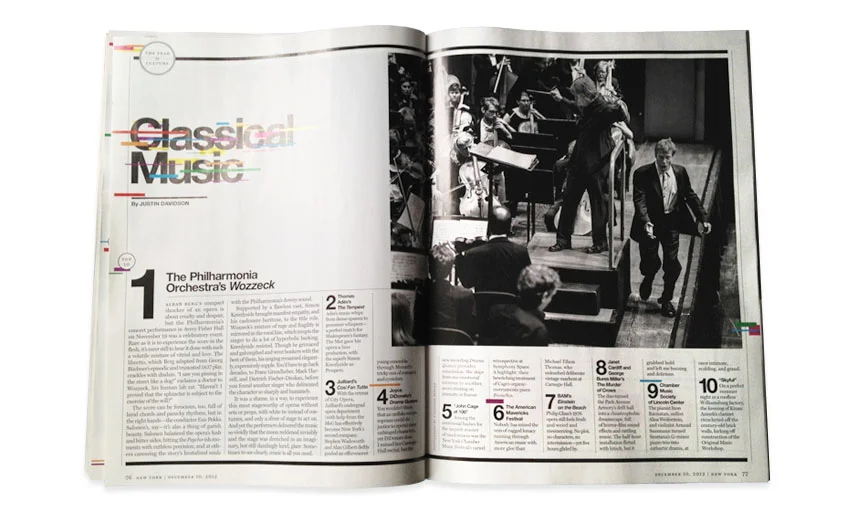
New York Magazine The Year In Culture Top 10 Classical Music

New York Magazine's Justin Davidson names Skyful, the preview performance at the Original Music Workshop, one of the top 10 classical performances of 2012.

 "On a perfect summer night in a roofless Williamsburg factory, the keening of Kinan Azmeh’s clarinet ricocheted off the century-old brick walls, kicking off construction of the Original Music Workshop."
tags: New York Magazine
categories: Press, Archive
Wednesday 12.05.12
Posted by Alexander Pincus
 

Butterflies Roam at a Concert Hall in Infancy, Still Without a Roof

Via The New York Times, written by Zachary Woolfe:

You will not immediately be able to know, when it opens a little over a year from now, that there is anything very special about the Original Music Workshop. Aside from a few large windows, from the outside it will look like any of the old factory buildings scattered throughout Williamsburg.
Appearances can be deceiving. Nestled inside the building’s weathered brick shell will be a small concert hall with translucent ceiling and walls set at dozens of jagged angles: “a radiant jewel,” its architect, Bureau V, promises, in a scruffy postindustrial box.
On Thursday evening all that was still many months in the future as dozens of people gathered, surrounded by the factory’s looming brick walls under a clear, starry sky, for a glimpse of the raw space and a preview of the hall’s programming plans, which will be fleshed out in a series of concerts at the Greene Space over the coming year.
There has recently been a boom in fresh spots for new music in Brooklyn, including the brand-new BAM Fisher at the Brooklyn Academy of Music; Galapagos Art Space (which moved from Williamsburg to Dumbo in 2008); Roulette; and the Issue Project Room, situated, like the Original Music Workshop, in a kind of modern ruin.
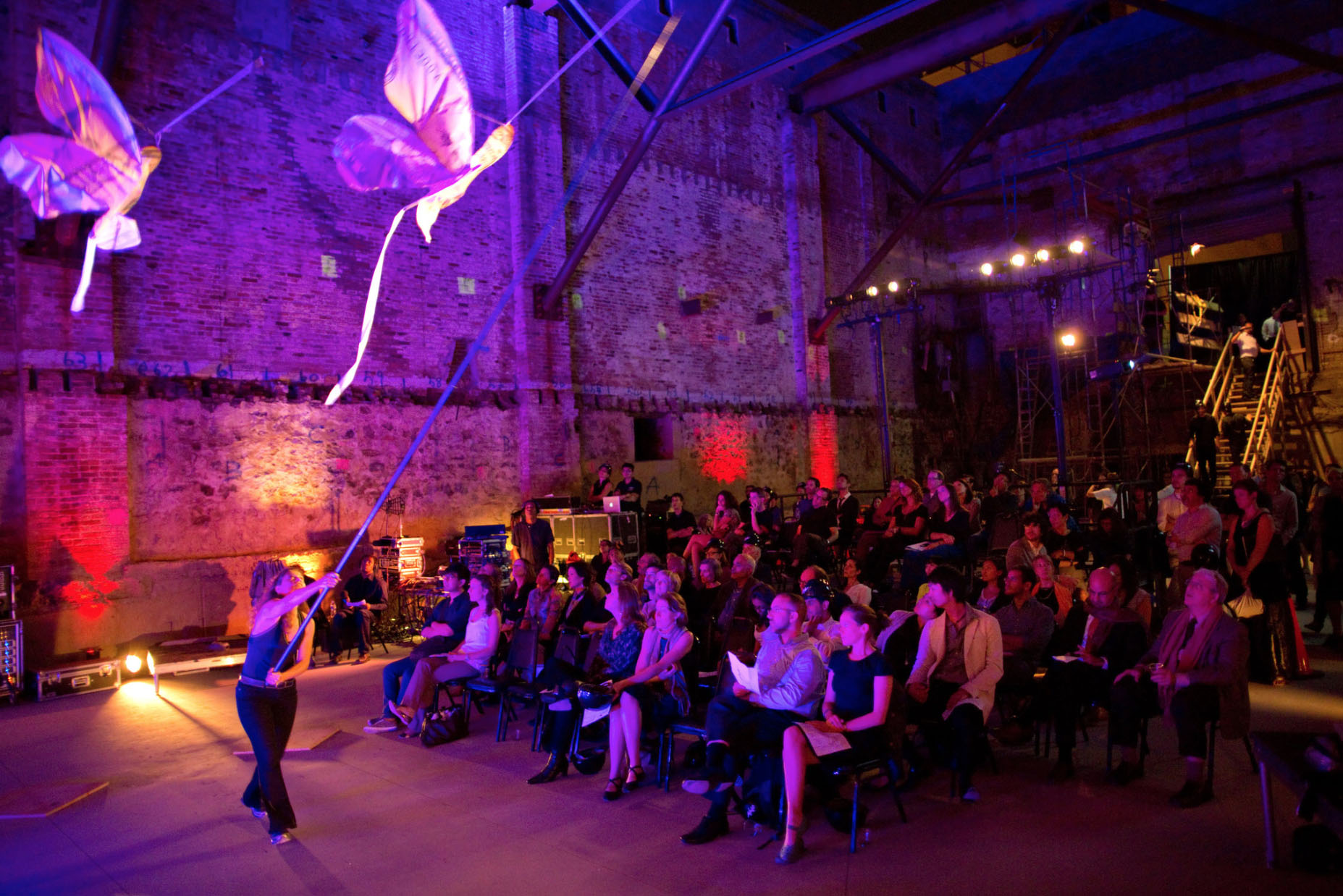
PhotoA performance designed by the artist Erika Harrsch, with butterfly-shaped kites, was among the acts at Original Music Workshop in Williamsburg on Thursday. Credit Marcus Yam for The New York Times 
The workshop — led by the creative director Paola Prestini, herself a noted composer — will have in common with these other halls an emphasis on variety. Anchored by a select group of resident ensembles and artists, the programming will span opera, indie rock, electronica and Baroque. On Thursday, in a concert called “Skyful,” the quartet Brooklyn Rider’s performance of Gyorgy Kurtag’s icy, potent “Microludes” shared the bill with the sexily smoky voice of Magos Herrera, paying tribute to the great Mexican singer Chavela Vargas, who died last month.
Despite the high walls, the outside world was never too far away. One of two pieces written and performed by the excellent clarinetist Kinan Azmeh used melodies sung during the recent demonstrations in Mr. Azmeh’s native Syria. In a performance designed by the visual artist Erika Harrsch, butterfly-shaped kites were printed with blown-up images of American currency, a beautiful but melancholy accompaniment to works for flute duet by Mario Diaz de León and Julian Wachner. The intense soprano Tony Arnold sang fragments of popular song lyrics in a stratospheric register in the Talea Ensemble’s performance of Bernhard Lang’s “DW 16: Songbook 1,” her piercing notes matched by bursts of Geoff Landman’s saxophone.
The founder of the Original Music Workshop, Kevin Dolan, has donated $8 million of the project’s $14 million cost, but there are still significant fund-raising hurdles to clear. On Thursday, though, it was easy to feel hopeful and excited that the evening’s richness and range would be a fixture of the city for many years to come.
tags: The New York Times
categories: Press, Archive
Sunday 09.16.12
Posted by Alexander Pincus
 

Gold Rush: The Brooklyn Based Architectural Firm Bureau V Pushes Art Beyond the Blueprint

​Everything Ornament in Vault Magazine

Via Vault Magazine, written by Eric Newill: 

We know what you’re thinking, so here’s the answer upfront: It’s a drawing. But the back story is so much richer than that.
Created by the genre-bending, Brooklyn-based architectural firm Bureau V, Everything Ornament was originally conceived as a three-dimensional performance space for the 2008 Buckminster Fuller retrospective at New York’s Whitney Museum of American Art. In collaboration with Lars Jan, BV produced this design as the set for a play to be presented in the institutions courtyard. Sadly, economics prevailed and the piece was never built, but, rather than put the idea back in the box, the firm found a new use for it. “We pursued our architectural vision for the project in the realm of drawing, pushing further into a reflective, refractive, and glowing atmosphere,” says Alexander Pincus, on of Bureau V’s principals alongside Peter Zuspan and Stella Lee. “We were after something like a Rococo Buckminster Fuller, where the rigor of formal organization meets over-the-top atmospheric effects.”
Physically enhanced and reworked with painted gold and silver leaf, Everything Ornament is in the tradition of architectural drawings designed to, in Pincus’ words, “anticipate the new, explore the unimaginable and project into the future.” Today, however, as most firms create “glossy renderings and advertising-ready images,” Bureau V embraces a more intellectual spin: “We find it more interesting to explore the potential of drawing. Not so much as a tool to sell a project, but as a means to find, develop and exploit more expansive opportunities in architectural possibility.”
Founded in 2007, Bureau V is now undertaking its most ambitious and complex project to date in Williamsburg, Brooklyn. Inside a former sawdust factory, the Original Music Workshop will serve as a venue for composers of new classical, jazz, and experimental music to perform and record their work. The centerpiece is a 200-seat, double height auditorium, combining “the crafted beauty of a European concert hall with the experimental programming and roughness of a blackbox theater.”
Meanwhile, at 30 x 60 inches, Everything Ornament is available to collectors hungering for a bit of smart bling. And at $6,000, it’s a bargain compared to Cartier.
tags: Vault
categories: Press, Archive
Tuesday 06.05.12
Posted by Alexander Pincus
 
Newer / Older