• Profile
  • Press
  • Contact

Alexander Pincus

  • Profile
  • Press
  • Contact

Dust Bowl: Musicians get their hands dirty at Brooklyn’s National Sawdust.

Via The New Yorker, written by Russell Platt:

Before the turn of the century, there were two basic models for classical-music venues in New York: the concert hall (read Carnegie’s Stern Auditorium, or its little brother, Weill Recital Hall) and the alternative space (such as the Kitchen, the kind of place that offered opportunities to musicians that venues like Carnegie had little use for). Then Carnegie, in 2003, opened up Zankel Hall, a flexible midsized venue with a relatively relaxed ambience, and the traditional duopoly suddenly seemed outdated.
Enter the kids. (Le) Poisson Rouge, which opened in 2008, found success presenting all sorts of music in a club-style space on a for-profit basis. Then in 2013 came SubCulture, also run as a business, which has struggled financially despite besting its older competitor in its warm acoustics and living-room-style intimacy. Now a new Brooklyn space, National Sawdust, gets into the game, opening in Williamsburg on Oct. 1. Unlike its recent predecessors, it will operate proudly as a nonprofit, which will allow the creative process to come first.
“What kind of financial seed of support would I have needed in my twenties?” asks Paola Prestini, the dynamic composer and entrepreneur who is National Sawdust’s creative and executive director. The thirteen-thousand-square-foot space, a century-old former sawdust factory that has been radically reimagined by the Brooklyn-based architects of Bureau V, will serve simultaneously as concert hall, rehearsal room, record studio, and arts incubator, giving young musicians commissioning support and mentoring opportunities. What makes this all possible is a new financial model instigated by the venue’s founder, Kevin Dolan; he’s put together a team of “philanthropic investors,” who will co-own the building and benefit as it appreciates in value—essentially investing and donating at the same time. It’s also a great “insurance policy,” as Prestini calls it, for an initial month of concerts of breathtaking ambition and range. After an all-star opening night that features such influential musicians as Nico Muhly, Chris Thile, and Nadia Sirota, the venue will present festivals devoted to the music of John Zorn and Terry Riley, concerts by such acclaimed soloists as the pianist Alessio Bax and the violinist Johnny Gandelsman, an evening with the Inuit throat singer Tanya Tagaq, and the world première of Keeril Makan’s “Persona,” an operatic adaptation of the Ingmar Bergman film.
tags: The New Yorker
categories: Press
Thursday 10.01.15
Posted by Alexander Pincus
 

The Case for Eating Small Fish

Via The New Yorker, written by John Donahue

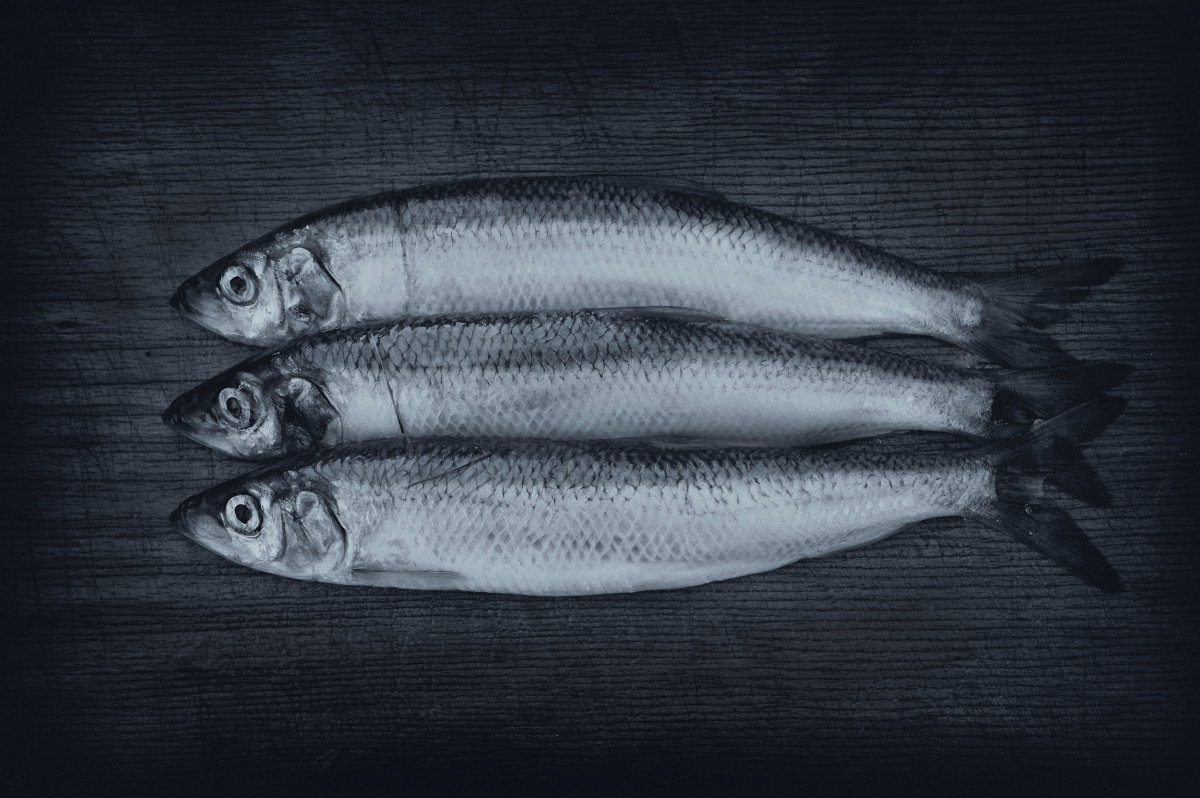
From the beginning of time, through the artist Bruegel’s day, and until relatively recently, little fish had only big fish to fear. Since the middle of the twentieth century, however, some little fish—forage fish, to be precise—have faced radically increased threats from humans, and, by extension, from the pigs and chickens that the fish are increasingly being fed to. Forage fish are now threatened worldwide, which has potentially troubling implications for the entire food chain. In conservation circles, the suggestion lately is that encouraging consumers to eat small fish might, ironically enough, be the best way to save them.
Last week, on the decks of the Grand Banks, an oyster bar situated inside a restored cod-fishing schooner moored to Tribeca’s Pier 25, the chef Kerry Heffernan and Paul Greenberg, the author of “Four Fish” and “American Catch: The Fight for Our Local Seafood,” considered this notion in detail, over a lunch, prepared by Heffernan, that consisted essentially of bait. The meal was there as a part of Sustainable Seafood Week, an annual series of events dedicated to responsibly sourced fish. A small crowd of adventurous, ecologically minded diners had assembled beneath the shade of the boat’s yellow-and-white-striped awning.
Forage fish, like many other kinds of fish, are in peril largely because of technological advances. The advent of synthetic fibres, in the nineteen-forties, allowed fishermen to create nets that were larger and longer-lasting than ones made of natural fibres such as hemp. Shortly thereafter, the rise of diesel engines permitted fishing farther offshore than ever before, and sonar, which had been refined to wage submarine warfare, was adapted to locate schools of fish. Factory trawlers made fish processing much more efficient, and fishing vessels became larger and larger. As a result of such developments, the world’s annual catch of fish quadrupled in the four decades after the Second World War. Despite stricter regulations and increased awareness of overfishing, many stocks remain in rapid decline.
From the perspective of small fish, the potential collapse of predatory species such as cod, tuna, and swordfish, which are popular with diners, would seem to be good news. However, as the larger, high-value fish became increasingly scarce, the fishing industry turned to farming, and those penned fish needed something to eat. Commercial fishermen have thus begun fishing down the food chain, and smaller fish behave in ways that make them very vulnerable, swimming in large, dense schools that are easy to spot from the air and require little fuel to pursue. “Fishing for these animals may be likened to shooting fish in a barrel,” a National Coalition for Marine Conservation report noted in 2006. Three years ago, a far-reaching analysis of forage fish, put out by the Lenfest Foundation and financed by the Pew Charitable Trusts, reported that thirty-seven per cent of global seafood landings recorded annually consist of forage fish, up from less than ten per cent fifty years ago. Of that thirty-seven percent, only a small fraction goes to the consumer market—mostly in the form of fish oils and supplements—while the bulk is processed into pellets and fishmeal, then fed to animals like salmon, pigs, and chicken.
“We are grinding up a third of the ocean each year,” Greenberg told the diners at the Grand Banks, before the food was served. Greenberg was on hand to discuss the virtues of catches such as herring, mackerel, and butterfish, which, he said, are very high in omega-3 fatty acids (hence their value to the supplement industry), albeit bony and strongly flavored. “They are healthy to eat, but tricky to cook,” he said.
The meal had been organized in part to address one of the Lenfest report’s more radical conclusions: that forage fish, because they support swordfish, tuna, and other in-demand predators, are worth twice as much to us in the water than when transformed into animal feed. The authors suggested cutting the haul of forage fish in half each year. But of course this would also halve the income of the fishermen who depend on that catch, so other ideas began to circulate. “What if we cut the forage fish take in half and instead paid fisherman twice as much for that catch, since it would be sold as valuable human food rather than cheap animal feed?” Greenberg later mused to me. “By the reasoning of the Lenfest report we’d also have more wild big fish.” He added, “Of course this is all very sort of economics-in-a-bottle type thinking. What would happen to the market for forage fish if their price doubled? It could possibly incentivize more people to catch them. But I think it’s possible to engineer a management regime where they wouldn’t.”
This scenario would require creating a consumer market for forage fish—in other words, making fish like herring, mackerel, and anchovies seem tasty and desirable. A larger effort is also underway; recently, the conservation organization Oceana got twenty of the world’s top chefs, including Ferran Adrià, Massimo Bottura, Grant Achatz, and René Redzepi, to pledge to serve such fare.
In Tribeca, the task was left to Heffernan, the executive chef of the Grand Banks and a “Top Chef Masters” finalist in 2012. “He’s a genius with these fish, which are not the most popular in the media,” Alexander Pincus, the owner of the Grand Banks, said to the crowd. Duly introduced, Heffernan, wearing chef’s whites, shorts, and blue sneakers, told a story about a sport-fishing friend who had once brought his day’s haul of fluke and black sea bass to a sushi restaurant in Amagansett, on Long Island. The fisherman wanted the chef to prepare his catch, but instead he began cutting up the squid and other bait. It was delicious, the friend reported. “For a while now, I’ve been pondering how to do this,” Heffernan said.
He began by serving surf clams, which are used to catch codfish, and whelks, which, though small, aren’t typically used as bait. His clam preparation demonstrated a deft touch. He used to dig up surf clams as a kid on Cape Cod, he explained, and would cook them “forever,” in a chowder. At the Grand Banks, he’d sliced them thinly for a ceviche. Dressed with makrut lime and laid out delicately beside bright slices of avocado in half of its softball-sized shell, the clam was as attractive as it was crisp and refreshing. The whelk, which had been cooked in its shell, was slightly less successful. Rubbery by nature, it tasted less like bait than like a fishing rod’s grip.
The rest of the meal was highly whimsical. The herring, which is commonly used as bait in lobster traps, was paired with a lobster sauce. One diner said the herring was “delightfully mild”; another countered that the bones were “delightfully small.” To conclude the meal, Heffernan served butterfish—typically used as bait for tuna—with a tonnato sauce, which is made with canned tuna. “Today, the butterfish wins,” he declared, to laughter from the assembled diners. He proved correct: with a crisp and savory crust, the palm-sized fish was as addictive as French fries. It was delicious enough, even, to save a little fish from extinction.
tags: The New Yorker
categories: Press, Archive
Friday 07.03.15
Posted by Alexander Pincus
 

Original Music Workshop "Skyful"

Original Music Workshop’s preview performance, Skyful, is recommended by the New Yorker.

Original Music Workshop’s preview performance, Skyful, is recommended by the New Yorker.

tags: The New Yorker
categories: Press
Monday 09.10.12
Posted by Alexander Pincus
 

Dana Goodyear

I hung out with some old friends last night and they brought along the very talented and charming Dana Goodyear.  Dana writes Postcards from Los Angeles for the New Yorker.

tags: Dana Goodyear, The New Yorker
categories: Friends & Family
Tuesday 05.20.08
Posted by Alexander Pincus