• Profile
  • Press
  • Contact

Alexander Pincus

  • Profile
  • Press
  • Contact

Floating Oyster Bar Tests Owners’ Mettle

Via The Wall Street Journal, written by Sophia Hollander:

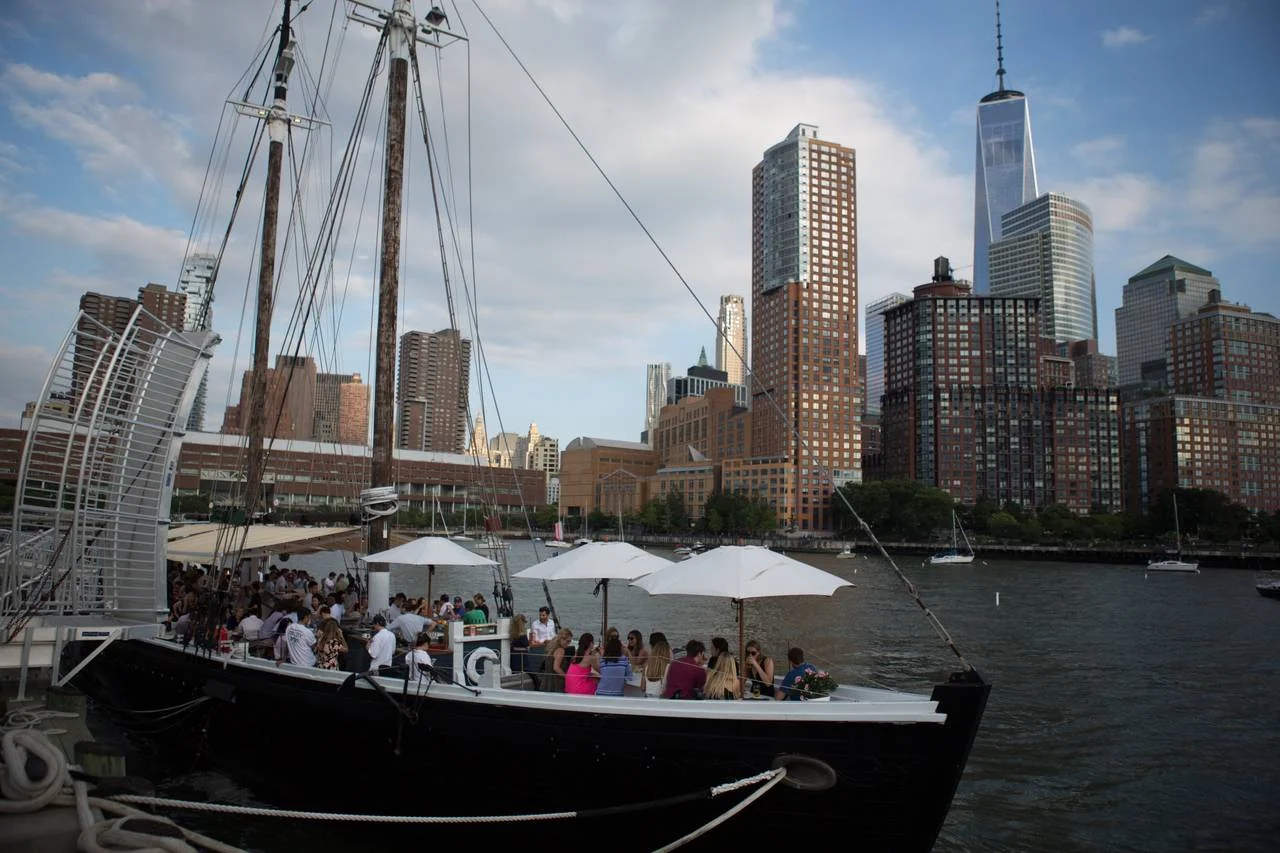
Brothers behind Grand Banks navigate the perils of running a restaurant docked in Hudson River Park.
Tides riled the opening week of Grand Banks, an oyster bar docked in Hudson River Park. As the current ripped at the moorings three summers ago, the owners remembered flinging themselves on the ropes to stabilize the historic boat.
And then a customer called out. “I’ve been waiting an hour for my table,” she said. “What’s going on?”
It was an early lesson in running a New York City restaurant for the two brothers, Alexander and Miles Pincus, behind Grand Banks. But it was far from the only learning curve.
In addition to hosting a restaurant, the boat operates as a nonprofit, also run by the Pincus brothers, dedicated to maritime education and restoring historic vessels. It is all crammed into a 142-foot schooner built more than 70 years ago that degrades daily, requiring about $200,000 of annual maintenance, according to the brothers.
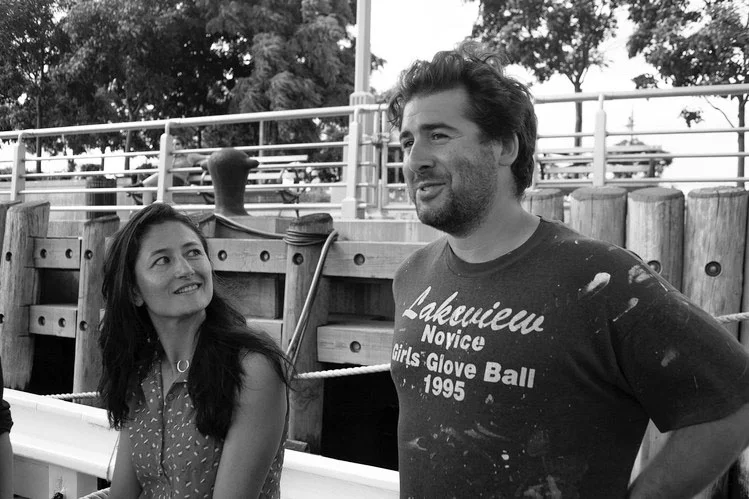
“Most people don’t have the problem that their restaurant changes height,” said Alexander Pincus, 40 years old. “We have to do all the boat stuff right so it has no interference with any of the other things that need to go right.”
Some customers still ask if they can stop the boat from bobbing in the water “like we’re at Disney World,” said his brother Miles, 37. “It’s not a ride, it’s an experience.”
This summer, the brothers got another reminder of the perils of operating a floating restaurant when plans to open a second boat in Brooklyn Bridge Park fell through.
“We spent months renovating a beautiful historic ship, designing and building a restaurant on board, creating a new menu, hiring and training staff,” Alexander said. The park has been supportive of their work, he said, but the marina has yet to be completed.
Brooklyn Bridge Park and One15 Brooklyn Marina, the company contracted to manage and build the dock, declined to comment.
The brothers grew up in New Orleans, where their father ran a hotel and oyster bar. They started sailing as children, and Miles refurbished and sold boats as a teenager.
After they moved to New York, Alexander read about the area’s oyster history. He was captivated by the oyster barges, like floating saloons, around lower Manhattan, giving it the name Oyster Row.
“I got fixated on this idea,” he said. “How beautiful it was and how wild it was and how everybody ate on boats.”
As they began to search for a site, Hudson River Park told the brothers there wasn’t space for an oyster barge, but there was an open berth for a historic ship. They went out and got one.
“They were fast,” said Madelyn Wils, president and chief executive of Hudson River Park.
The boat, the Sherman Zwicker, was built in Nova Scotia in 1942 to fish in the waters known as the Grand Banks. For decades it had been run and maintained by volunteers.
“We realized that our volunteer crew had an average age of about 70, and the vessel was not getting any younger,” said Bob Ryan, executive director of Grand Banks Schooner Museum Trust in Boothbay Harbor, Maine. “This couldn’t go on forever.”
Mr. Ryan’s group donated the boat to the nonprofit created by the Pincus brothers, called the Maritime Foundation, which hosts educational lectures and tours. In the small hold, they stage exhibitions featuring maritime history. Since the boat is an extension of the park in season, the public can sit in the restaurant without ordering anything.
This year, they expanded their partnership with the Billion Oyster Project, which is seeking to repopulate New York’s waterways. Grand Banks donates used oyster shells to the organization—which cleans the shells and uses them to grow a new generation of bivalves—and hosts an oyster-monitoring station off the side of the ship.
Kerry Heffernan, a former Eleven Madison Park chef who has also done work with the Environmental Defense Fund, said he was attracted to work on the 70-seat boat-restaurant because of his interest in sustainable seafood. At Grand Banks he took striped bass off the menu and pays fishermen more for less popular breeds like porgy and bluefish.
“Thankfully our guests come aboard, and they’re very willing to listen to what we have to say and what we want to demonstrate,” Mr. Heffernan said. “They’re the choir.”
Having that kind of platform was enticing enough to overcome the constraints of preparing food on a boat.
All the cooking is electric, since open flames are prohibited. The brothers rebuilt all the tables after discovering that water condensation on the oyster trays caused them to slide right off.
With their partner Adrien Gallo, the brothers learned to calculate every power use down to a single charging cellphone. Their first year, when someone turned on an unauthorized fan during a hot summer night, the power went out.
That fall, the heaters couldn’t operate the same time as the fryer. When they ran low on simple syrup one Saturday and an employee tried to make more, the extra burner blew the circuits.
“We quickly realized how important it is for everyone to holistically understand how the systems work,” Miles said. If not, he added, “everything melts down.”
tags: The Wall Street Journal
categories: Press
Tuesday 08.23.16
Posted by Alexander Pincus
 

Sherman Zwicker Serves Up History—and Oysters

Via The Wall Street Journal, written by Andy Battaglia: 

Floating off the edge of Battery Park City, past the miniature golf course and beach volleyball courts on Pier 25, is a new home for old history of the New York waterfront.
Her name is the Sherman Zwicker, and in her service as a schooner, she has traveled the Eastern Seaboard since 1942. With the boat's looming masts and a hold big enough to store 320,000 pounds of catch, its original purpose was fishing for cod. Now, it is a museum and a restaurant with a mission to fulfill.
"We're working with people putting out interesting responses to maritime history. Not just the state-park model of representing it with a plaque but filtering it through a lens to make that history something you can actually feel, that can have a presence," said Alex Pincus of the Maritime Foundation, the group behind the vessel's move to its new home.
The deck of the ship is now occupied by Grand Banks, an open-air oyster bar and seafood restaurant run by Mark Firth, the founder of Diner and Marlow & Sons restaurants in Williamsburg. Underneath, down a ladder into the hold, is an unconventional museum space where many tons of cod were once assembled. In their place is an exhibition by New Draft Collective, a group devoted to answering the mandates of both history and art.
"The history of the Sherman Zwicker is really rich," said Libby Pratt,one of the collective's two main members, "so when the Maritime Foundation asked us to put together an exhibit, we thought: how?"
They have responded with a mix of archival materials and new creations to evoke the boat's more than seven decades of lore. One bay beneath the deck includes an illuminated display of 150 pounds of salt, to show how cod were preserved. Another features vintage photographs of the boat and its crew. Yet another features a sort of sculpture made from rope.
"Rope hasn't become obsolete," said Michi Jigarjian, New Draft Collective's other founder. "It's one of the only materials that was on the boat that is still viable and not taken over by some sort of technology."
When it was built in Nova Scotia, the Sherman Zwicker—touted as the largest wooden vessel now floating in New York—was a sister ship to the Bluenose, a famously fast schooner memorialized on the back of the Canadian dime. It spent the prime of its life fishing for cod and ferrying the fish for sale to South America, before taking up as a historical museum boat for decades in Maine.
When in need of a new home, the boat was gifted to Mr. Pincus and his brother Miles Pincus, who had collaborated before on the sailing company Atlantic Yachting. They struck a deal with the Hudson River Park to dock it at Pier 25, as a not-for-profit historical attraction supported by a for-profit restaurant on board.
"I don't know what the answer is, but it seemed like an interesting question to approach presenting a historical and cultural narrative through a more experimental, curatorial lens," said Alex Pincus. "I was interested in creating a certain atmosphere that brings forth life on the water."
In addition to the exhibition space and the restaurant, there will be talks and lectures during Sherman Zwicker's residency through the end of October. A pre-opening trial run last week featured Paul Greenberg, author of "American Catch: The Fight for Our Local Seafood." During a dinner devoted to salmon, he talked about risks attending world-wide fisheries while attendees descended below deck to check out the art and history in the hold.
"That was the most spectacular setting I could ever imagine," Mr. Greenberg said.
tags: The Wall Street Journal
categories: Press, Archive
Sunday 07.06.14
Posted by Alexander Pincus
 

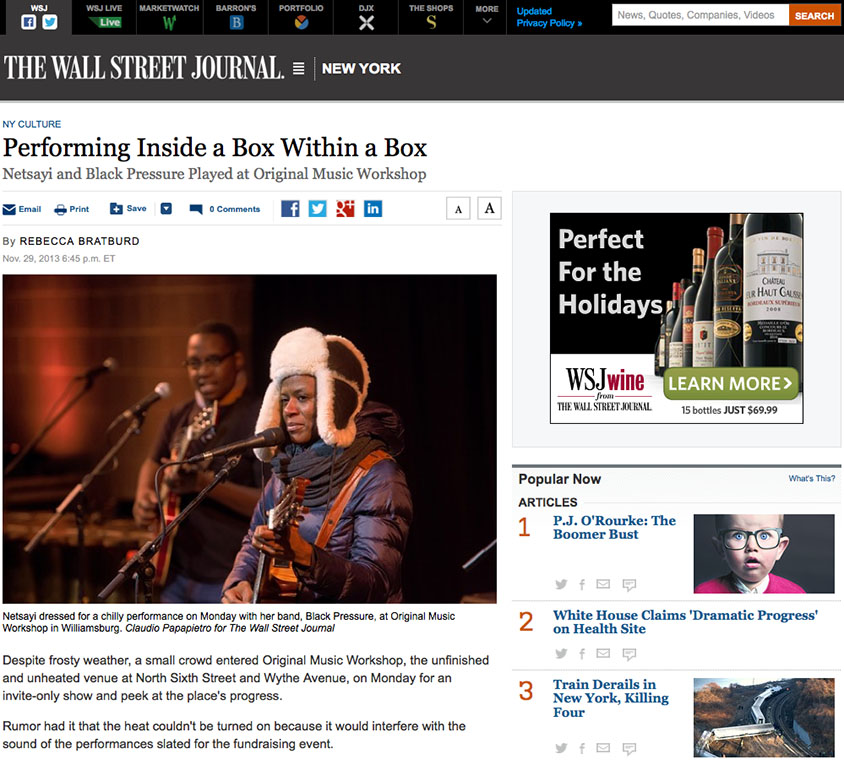
Performing Inside a Box Within a Box

Original Music Workshop in Wall Street Journal

The Wall Street Journal features Original Music Workshop for a third time.

tags: The Wall Street Journal
categories: Press
Sunday 12.01.13
Posted by Alexander Pincus
 

Making Music—and a Place to Rehearse—in Brooklyn


The Wall Street Journal, written by Melanie Grayce West

Kevin Dolan wanted a lasting, meaningful philanthropic project for his semiretirement instead of joining friends at the golf course and tennis courts. He's passing on the "adult summer camp" routine, explains the 60-year-old international tax attorney who previously worked at Merrill Lynch and continues to work part-time at a law firm.
Mr. Dolan decided to take on something a little less "adventurous." He's building a 13,000-square-foot performance and recording space on the corner of Wythe Avenue and North Sixth Street in the Williamsburg section of Brooklyn that will house the Original Music Workshop, a nonprofit that aims to help both aspiring and well-known musicians and composers. To get closer to the project, he moved to Williamsburg last month. 
"It's an unbelievable neighborhood. It's almost like a block party," says Mr. Dolan. "I'm the only person here, I think, who lives here that is over 35 years old, so far as I can tell."
Though Mr. Dolan has experience fundraising and has volunteered with several nonprofits, the size and scope of this project—and the roughly $8 million he's committed—sets it apart. The Original Music Workshop will operate around the clock, allowing for performance, rehearsal, recording and broadcasting of any kind of music.
"Everyone says this is a great project. It makes tremendous sense and there's such a need," says Mr. Dolan. "And the next thing is, 'Are you crazy?' And the answer is, yea, you probably have to be a little crazy to do something like this." 
Mr. Dolan estimates that the project and building—the building's core and shell should be done by the end of the year—will run about $14 million total. Now, he's looking for philanthropic investors to come in and seed some $6 million for the second phase of the project. Those investors would purchase equity in the building or provide interest-free loans. The hope is that the investors will ultimately donate their "shares" of the building to the nonprofit. 
The Original Music Workshop is nearly five years into development. It began with a townhouse that Mr. Dolan wanted to convert into a performance venue. That space wasn't right and then the project morphed and grew. There was a long real-estate search for the right site and a few years of seeking building permits. 
Part of what keeps Mr. Dolan moving forward on the project is his lifelong love for music. He enjoys classical baroque music, composes some of his own pieces and is an organist. "I can play at your wedding and do a pretty good job," he says.
Music is part of a person's DNA and, for some, it's "almost a salvation," says Mr. Dolan. "The notion has been for quite a while to help the musician and composer community, particularly the younger folk. If you support them you support the art form."
tags: The Wall Street Journal
categories: Press
Monday 08.20.12
Posted by Alexander Pincus
 

Music Workshop Slated for Brooklyn

OMW in Wall Street Journal

OMW in Wall Street Journal

Via The Wall Street Journal, written by Pia Catton:

A new nonprofit that will nurture contemporary music is underway in Williamsburg. 
The Original Music Workshop (OMW) will be built within the shell of an existing warehouse at 80 North Sixth St., organizers will announce Tuesday.
The project, which has been developing for three years, is led by founder Kevin Dolan, a former senior vice president and general tax counsel at Merrill Lynch & Co. Mr. Dolan, an accomplished organist, described himself as "a fan of musicians" and an advocate for music.
Juilliard-trained composer Paola Prestini has been appointed creative director. 
Though OMW is scheduled for completion in late 2013, Ms. Prestini is lining up early, off-site performances, as well as artist residencies.
The inaugural residents will be new-music groups—the Knights, Brooklyn Rider, Talea Ensemble and ACME—as well as the multidisciplinary theater company Dangerous Ground Productions and the dance troupe Ballet Next. 
"The idea is to keep an open mind to the trends going on," said Ms. Prestini on the inclusion of groups outside the new-music realm.
The $15.6 million, 13,000-square-foot facility—designed by Bureau V, with acoustics by Arup—will allow for performances to be recorded and broadcast. When not in use for performances, the space will be available for rehearsal. Additionally, OMW will partner with Creative Capital to provide resources to mid-career artists.
"It's pretty much like a new music utopia," said Alex Lipowski of Talea. "They're saying, 'Here's a room that will sound great. Here's time and resources. And you can do whatever you what.'"
Corrections & Amplifications 
An earlier version of this article incorrectly identified Kevin Dolan a a faculty member at the New School for Jazz and Contemporary Music.
tags: The Wall Street Journal
categories: Press, Archive
Tuesday 04.24.12
Posted by Alexander Pincus