• Profile
  • Press
  • Contact

Alexander Pincus

  • Profile
  • Press
  • Contact

Making Music—and a Place to Rehearse—in Brooklyn


The Wall Street Journal, written by Melanie Grayce West

Kevin Dolan wanted a lasting, meaningful philanthropic project for his semiretirement instead of joining friends at the golf course and tennis courts. He's passing on the "adult summer camp" routine, explains the 60-year-old international tax attorney who previously worked at Merrill Lynch and continues to work part-time at a law firm.
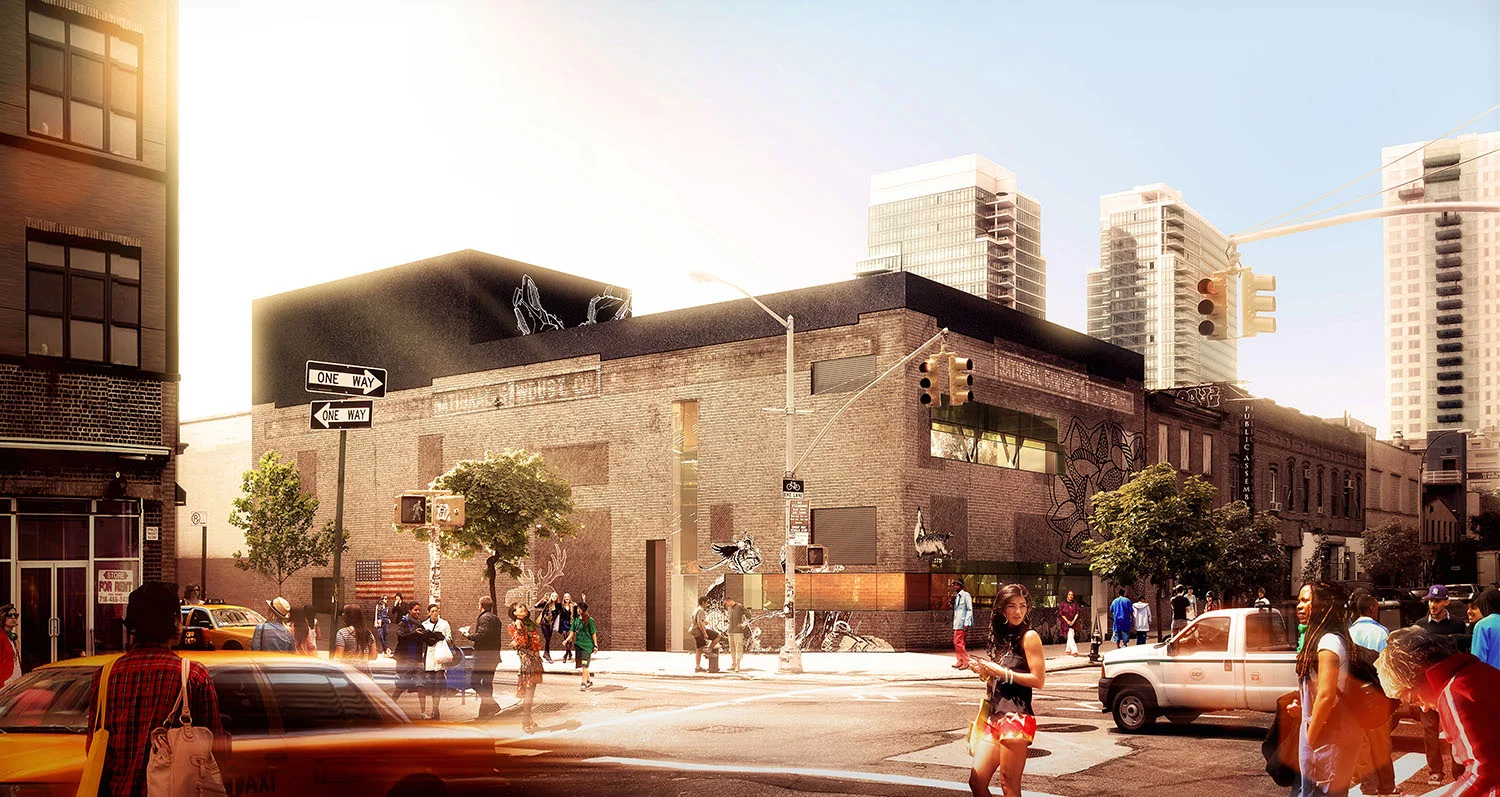
Mr. Dolan decided to take on something a little less "adventurous." He's building a 13,000-square-foot performance and recording space on the corner of Wythe Avenue and North Sixth Street in the Williamsburg section of Brooklyn that will house the Original Music Workshop, a nonprofit that aims to help both aspiring and well-known musicians and composers. To get closer to the project, he moved to Williamsburg last month. 
"It's an unbelievable neighborhood. It's almost like a block party," says Mr. Dolan. "I'm the only person here, I think, who lives here that is over 35 years old, so far as I can tell."
Though Mr. Dolan has experience fundraising and has volunteered with several nonprofits, the size and scope of this project—and the roughly $8 million he's committed—sets it apart. The Original Music Workshop will operate around the clock, allowing for performance, rehearsal, recording and broadcasting of any kind of music.
"Everyone says this is a great project. It makes tremendous sense and there's such a need," says Mr. Dolan. "And the next thing is, 'Are you crazy?' And the answer is, yea, you probably have to be a little crazy to do something like this." 
Mr. Dolan estimates that the project and building—the building's core and shell should be done by the end of the year—will run about $14 million total. Now, he's looking for philanthropic investors to come in and seed some $6 million for the second phase of the project. Those investors would purchase equity in the building or provide interest-free loans. The hope is that the investors will ultimately donate their "shares" of the building to the nonprofit. 
The Original Music Workshop is nearly five years into development. It began with a townhouse that Mr. Dolan wanted to convert into a performance venue. That space wasn't right and then the project morphed and grew. There was a long real-estate search for the right site and a few years of seeking building permits. 
Part of what keeps Mr. Dolan moving forward on the project is his lifelong love for music. He enjoys classical baroque music, composes some of his own pieces and is an organist. "I can play at your wedding and do a pretty good job," he says.
Music is part of a person's DNA and, for some, it's "almost a salvation," says Mr. Dolan. "The notion has been for quite a while to help the musician and composer community, particularly the younger folk. If you support them you support the art form."
tags: The Wall Street Journal
categories: Press
Monday 08.20.12
Posted by Alexander Pincus
 

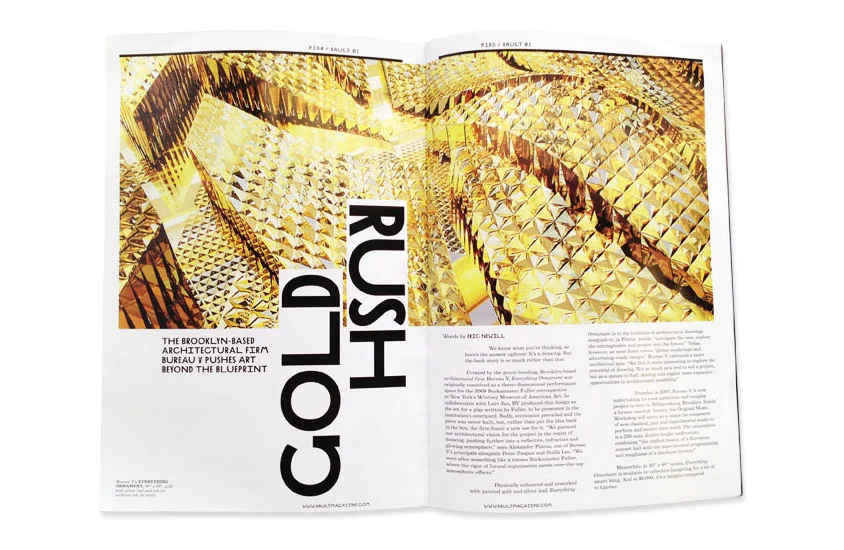
Gold Rush: The Brooklyn Based Architectural Firm Bureau V Pushes Art Beyond the Blueprint

​Everything Ornament in Vault Magazine

Via Vault Magazine, written by Eric Newill: 

We know what you’re thinking, so here’s the answer upfront: It’s a drawing. But the back story is so much richer than that.
Created by the genre-bending, Brooklyn-based architectural firm Bureau V, Everything Ornament was originally conceived as a three-dimensional performance space for the 2008 Buckminster Fuller retrospective at New York’s Whitney Museum of American Art. In collaboration with Lars Jan, BV produced this design as the set for a play to be presented in the institutions courtyard. Sadly, economics prevailed and the piece was never built, but, rather than put the idea back in the box, the firm found a new use for it. “We pursued our architectural vision for the project in the realm of drawing, pushing further into a reflective, refractive, and glowing atmosphere,” says Alexander Pincus, on of Bureau V’s principals alongside Peter Zuspan and Stella Lee. “We were after something like a Rococo Buckminster Fuller, where the rigor of formal organization meets over-the-top atmospheric effects.”
Physically enhanced and reworked with painted gold and silver leaf, Everything Ornament is in the tradition of architectural drawings designed to, in Pincus’ words, “anticipate the new, explore the unimaginable and project into the future.” Today, however, as most firms create “glossy renderings and advertising-ready images,” Bureau V embraces a more intellectual spin: “We find it more interesting to explore the potential of drawing. Not so much as a tool to sell a project, but as a means to find, develop and exploit more expansive opportunities in architectural possibility.”
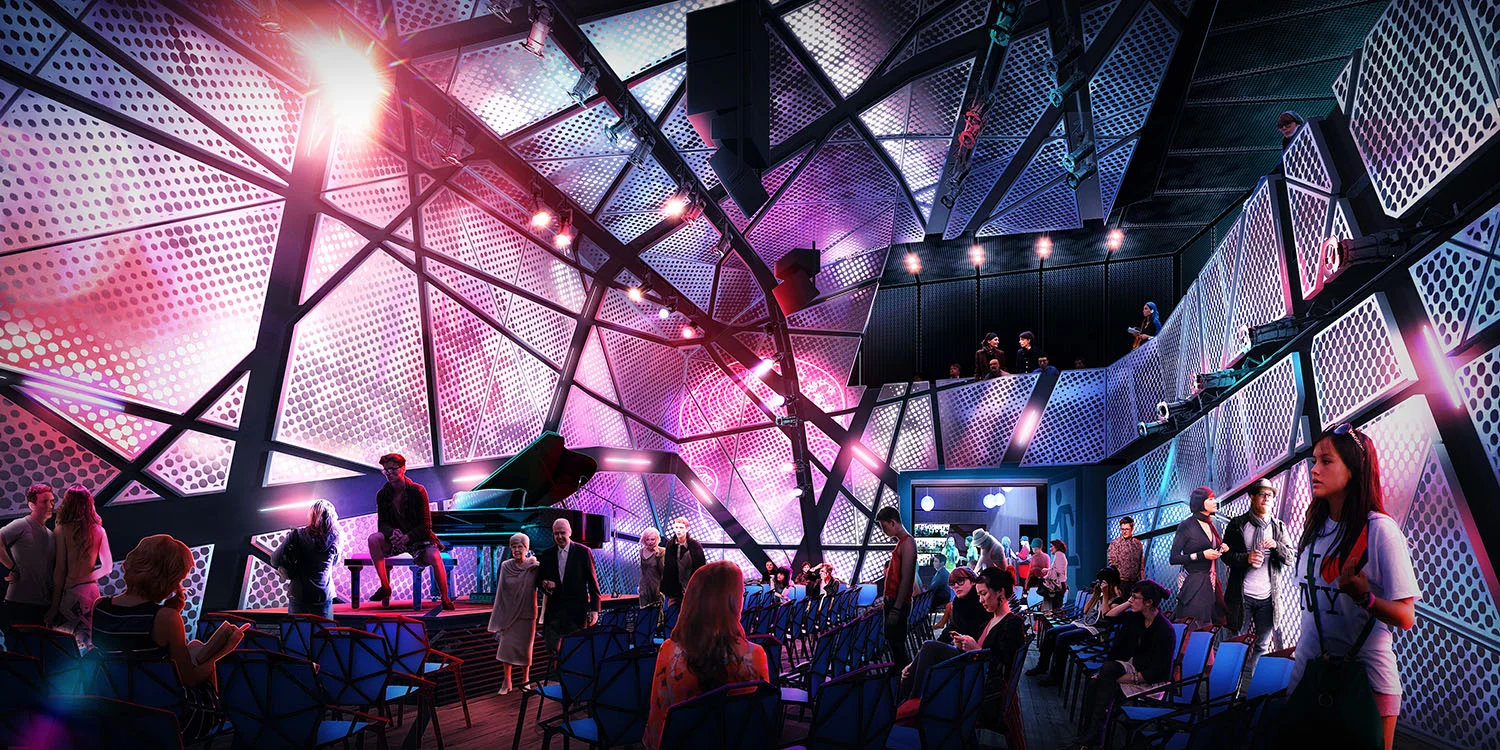
Founded in 2007, Bureau V is now undertaking its most ambitious and complex project to date in Williamsburg, Brooklyn. Inside a former sawdust factory, the Original Music Workshop will serve as a venue for composers of new classical, jazz, and experimental music to perform and record their work. The centerpiece is a 200-seat, double height auditorium, combining “the crafted beauty of a European concert hall with the experimental programming and roughness of a blackbox theater.”
Meanwhile, at 30 x 60 inches, Everything Ornament is available to collectors hungering for a bit of smart bling. And at $6,000, it’s a bargain compared to Cartier.
tags: Vault
categories: Press, Archive
Tuesday 06.05.12
Posted by Alexander Pincus
 

Original Music Workshop To Open Venue In Old Williamsburg Sawdust Factory

Original-Music-Workshop-Huffington-Post.jpg

Via The Huffington Post,:

The non-profit group Original Music Workshop is gearing up to open a new music venue on Williamsburg's North 6th Street,already home to many of the neighborhood's favorite concert venues including Cameo, Public Assembly, and Music Hall of Williamsburg. 
But unlike its neighbors, Original Music Workshop seeks to be somewhat of a mecca for the "21st century artist" by providing ample rehearsal and recording space for both emerging and established musicians to collaborate and learn.
Part of the $15.6 million makeover will create a space for musicians and artists to create and present work, and for audiences to enjoy performances and shows.
The Workshop will be taking over a century old, historic sawdust factory in order to make room for the venue's reported 13,000 square-foot of space.
Original Music Workshop founder Kevin Dolan told the The Observer
It’s amazing you can knock down anything and build whatever you want. I’m hopeful that at least the south side of this block will still maintain its feel into the future. I don’t believe in fate, but the location, the architecture, everything about it was just ideal. Even in the doldrums of the market, that real estate wasn’t cheap.
The venue is expected to open in late 2013.
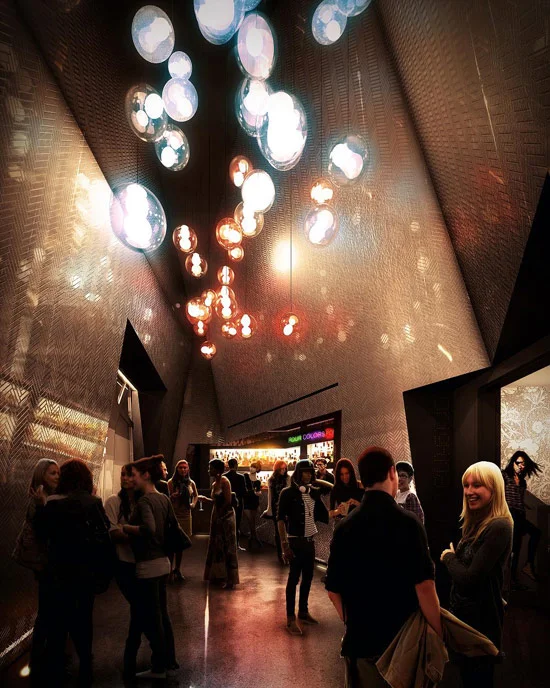
In conjunction with building a 21st century-minded space, renderings for the future venue reveal a unique, modern vision and an edgy interior design.
tags: Huffington Post
categories: Press, Archive
Tuesday 05.08.12
Posted by Alexander Pincus
 

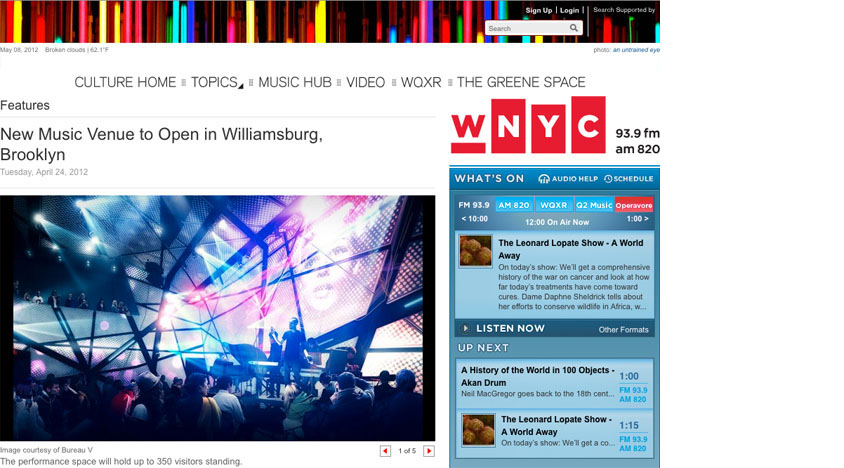
New Music Venue to Open in Williamsburg, Brooklyn

OMW on WNYC

WNYC featured the Original Music Workshop live on air and on the WNYC website.

tags: WNYC
categories: Press
Wednesday 05.02.12
Posted by Alexander Pincus
 

Unveiled > An Acoustic Renewal in Brooklyn by Bureau V

Via The Architect’s Newspaper, written by Matt Shaw. 

Brooklyn-based architecture practice Bureau V unleashed a spectacular design for the Original Music Workshop, a new non-profit arts organization which will open in 2013 with a wide range of musical programming, from classical to jazz to experimental sound. Located in the heart of Williamsburg, Brooklyn, the performance center was designed in collaboration with engineering gurus Arup and features state of the art acoustical technologies.
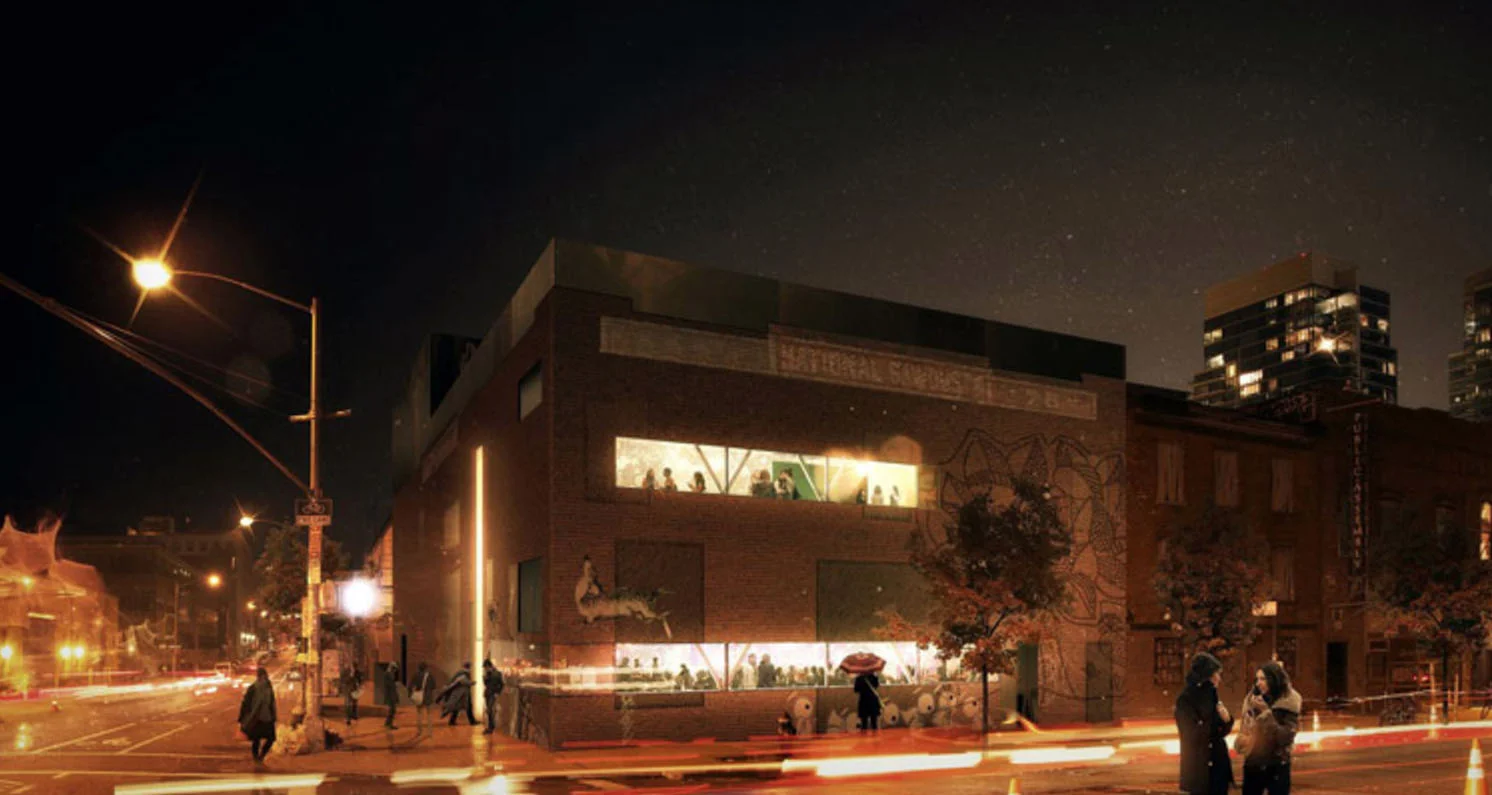
Like any good construction in Brooklyn these days, the building is a high-tech, state-of-the-art renovation of a disused industrial building on Wythe and North 6th streets, just one block from the East River. In this case, it’s an acoustic performance center with a series of variable acoustic treatments that allow the space to be tuned to specific instrumentation using acoustically isolated box-in-box construction, which minimizes background noise to studio levels inside the graffitied, hollowed-out remains of a sawdust factory. The result is a sublime collision of new and old: technology and ruin, progress and history, refinement and grit.
Bureau V principal Peter Zuspan explained that OMW came to them with a “two-fold request: the space needed to be both acoustically superior and a comfortable and visually compelling space, a departure from the standard black box theater.” The acoustically-driven, geometrically complex chamber hall  will accomodate 170 chairs, or approximately 350 people standing. “The space is small enough to truly listen, while large enough to foster a sense of community,” said Bureau V principal Alexander Pincus. Because of its acoustical performance features, the space can double as a recording studio for up to 70 performers.
tags: The Architect's Newspaper
categories: Press, Archive
Tuesday 05.01.12
Posted by Alexander Pincus
 

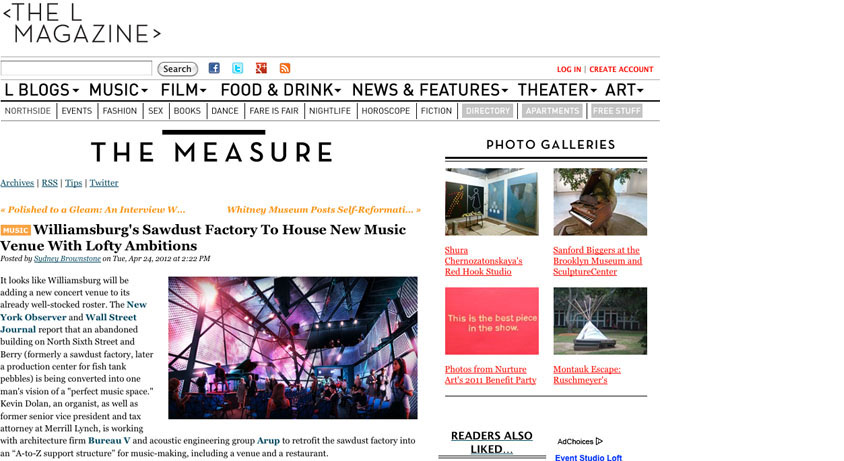
Williamsburg's Sawdust Factory To House New Music Venue With Lofty Ambitions

OMW in L Magazine

Brooklyn’s L Magazine features the Original Music Workshop, describing the design as “a futuristic, asymmetrical mesh cage of cross-beams and sophisticated lighting”.

tags: The L Magazine
categories: Press
Sunday 04.29.12
Posted by Alexander Pincus
 

Music Workshop Slated for Brooklyn

OMW in Wall Street Journal

OMW in Wall Street Journal

Via The Wall Street Journal, written by Pia Catton:

A new nonprofit that will nurture contemporary music is underway in Williamsburg. 
The Original Music Workshop (OMW) will be built within the shell of an existing warehouse at 80 North Sixth St., organizers will announce Tuesday.
The project, which has been developing for three years, is led by founder Kevin Dolan, a former senior vice president and general tax counsel at Merrill Lynch & Co. Mr. Dolan, an accomplished organist, described himself as "a fan of musicians" and an advocate for music.
Juilliard-trained composer Paola Prestini has been appointed creative director. 
Though OMW is scheduled for completion in late 2013, Ms. Prestini is lining up early, off-site performances, as well as artist residencies.
The inaugural residents will be new-music groups—the Knights, Brooklyn Rider, Talea Ensemble and ACME—as well as the multidisciplinary theater company Dangerous Ground Productions and the dance troupe Ballet Next. 
"The idea is to keep an open mind to the trends going on," said Ms. Prestini on the inclusion of groups outside the new-music realm.
The $15.6 million, 13,000-square-foot facility—designed by Bureau V, with acoustics by Arup—will allow for performances to be recorded and broadcast. When not in use for performances, the space will be available for rehearsal. Additionally, OMW will partner with Creative Capital to provide resources to mid-career artists.
"It's pretty much like a new music utopia," said Alex Lipowski of Talea. "They're saying, 'Here's a room that will sound great. Here's time and resources. And you can do whatever you what.'"
Corrections & Amplifications 
An earlier version of this article incorrectly identified Kevin Dolan a a faculty member at the New School for Jazz and Contemporary Music.
tags: The Wall Street Journal
categories: Press, Archive
Tuesday 04.24.12
Posted by Alexander Pincus
 

Is an Unconventional Music Venue with a Jagged Design the Last Hope for Williamsburg's Art Scene?

OMW in New York Observer

Via The New York Observer, written by Matt Chaban:

If Bedford Avenue is the main street of modern day Williamsburg, North Sixth Street is the hipster haven’s Broadway. Home to the first proper grocery store (Tops), concert venue (Northsix), swap meet (Artists and Fleas) and grotesque theme restaurant (Sea), North Sixth Street has long been the grand stage of Williamsburg.
Now performing on North Sixth Street (even if Northsix is long gone, replaced by a Manhattan concert conglomerate) is the Original Music Workshop.
Conceived by Kevin Dolan, a former tax attorney who also happens to be an organ virtuoso, the Original Music Workshop seeks to provide a venue bridging new and old Williamsburg, sustaining music of all types for all ages. As the rest of the neighborhood continues its inexorable gentrification, Mr. Dolan hopes to preserve a tiny corner of Williamsburg cultural past, as well as one of its historic industrial buildings.
“It’s amazing you can knock down anything and build whatever you want,” Mr. Dolan said in an interview. “I’m hopeful that at least the south side of this block will still maintain its feel into the future.”
The project began three years ago, in a small townhouse Mr. Dolan had hoped to turn into his perfect music space. He met local Williamsburg architecture firm Bureau V through a mutual acquaintance, and when they realized Mr. Dolan had far greater ambitions than his small site, they set about finding one. “A very interesting part of the project was that, after the house, we were, with the help of ARUP, very involved in the design of the entire concept,” said Alexander Pincus, one of the principals of Bureau V. “There was no programming, no building, no agenda for at least a year.” ARUP is the acoustical engineer on the project.
The designers set about scouring Brooklyn and parts of Manhattan until they found an old sawdust factory on the corner of North Sixth and Berry streets, a century-old sawdust factory—a painted sign near the roof still reads “NATIONAL SAWDUST,” which the facility produced at least until the 1940s, as old photos show. (For those confused by the concept of a sawdust factory, it was used for heating.)
“I don’t believe in fate, but the location, the architecture, everything about it was just ideal,” Mr. Dolan said. It was not an easy negotiation, though. “Even in the doldrums of the market, that real estate wasn’t cheap.” There were two other bidders for the property, which meant Mr. Dolan had to pay over ask, be he believes the seller ultimately chose him because of the project he planned there was more than another tear-down. “I think I got it on the merits of the use,” he said.
According to city records, Mr. Dolan paid $2.33 million for the former factory, and he said the entire project will cost about $15 million. The building had been vacant for a decade, but before that it had been producing those tiny colored pebbles that fill fish tanks, and was still full of them when the task of renovation began.
The former factory will continue to be a production facility of a sort. More than just a concert venue, Mr. Dolan is set on creating what he called an “A-to-Z support structure” for modern musicians. The space will also accommodate rehearsals and recordings, with room for up to 70 musicians during record sessions. For performances, a movable stage will accommodate between one and a dozen performers, with seating for 120 to 180 guests, up to 350 standing.
“It is a facility for which there is a tremendous need, it will be 24-hours a day, 7-days a week” said Paola Prestini, the celebrated young composer who was just named the creative director for the Original Music Workshop. Ms. Prestini said too often similar rehearsal and recording spaces were only open limited hours or had inferior acoustics. “What we’re trying to do with our project is serve the needs of the 21st Century artist,” she said.
The performers will cut across a wide artistic swath, from classical to jazz to electronica. The Observer suggested Le Poisson Rouge, the cutting-edge venue in Greenwich Village. Mr. Dolan responded that “that’s close, but we’re looking at one stratum down, the next big thing, though we will also be working with established artists from time to time.”
To that end, the Original Music Project is hoping to foster new talent through mentoring and residency programs, where artists can call the new space home for a series of time, working on new work or helping others form their own compositions.
This will all be achieved in a revolutionary space conceived by Bureau V. Mr. Dolan said he greatly preferred the old music halls of Europe. “I certainly do not want a black-box theater,” he said.
“Too often the space disappears, and Kevin did not want that, he wanted the space to be present, part of the performance” Peter Zuspan, another Bureau V principal, said. “With this, it’s kind of just a room—no fly space, no wings, no curtains, just a room. It’s a very classical idea.”
And yet the focus remains on new artists, new ideas, the cutting edge, which is certainly exposed in the design of the space. While the exterior of the building remains intact, inside is a mass of steel beams metal mesh, all with exacting perfomative standards. “This is not some historical pastiche,” Mr. Pincus said. “We’ve got 15-inch-thick brick walls, which you could never afford to build these days. The building is still very purposeful.”
Affixed to the brick interior is carefully crafted acoustic paneling, which is overlaid with the metal lattice. This not only supports the mesh but also contains all electrical, lighting, pass-throughs and all other elements required for performance and recording. The shape may look random, even haphazard, but it was all carefully tailored through hours upon hours of precise computer modelling, one of Bureau V’s specialties. (The firm is working on a similarly unusual residential development next door, which is still in the early planning stages.)
The bi-level space also includes a restaurant, still being developed. So the musicians and the crowd really do have everything. “We want to nurture artists who have not yet made it onto the other stages of New York,” Mr. Dolan said.
tags: The New York Observer
categories: Press, Archive
Tuesday 04.24.12
Posted by Alexander Pincus
 

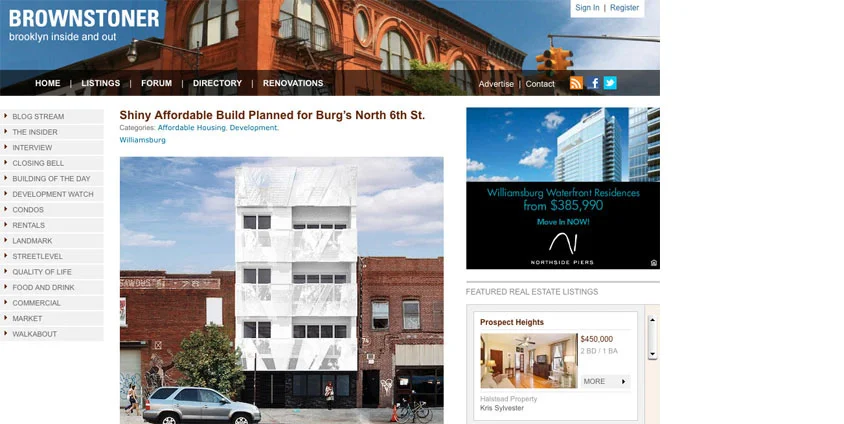
Shiny Affordable Build Planned for Burg's North 6th St.

Bureau V 76N6 in Brownstoner

Our design for 76N6 is featured on Brownstoner.

tags: Brownstoner
categories: Press
Wednesday 03.28.12
Posted by Alexander Pincus
 

Could startups crowdsource equity investments?

Alexander Pincus in Crain's Business

Via Crain's Business, written by Judith Messina:

The “crowd funding” craze hit the Internet with a splash a few years ago as a way of harnessing social media to raise money for causes or projects that strike an emotional chord with donors. In New York, sites such as Kickstarter and RocketHub provide a platform for the likes of inventors, independent filmmakers and young fashion designers to get their creations off the ground.
Donors get a nominal payback, such as an early version of a product or a mention in the credits of a film, in addition, of course, to the feel-good perk of helping someone pursue a dream. And the idea has caught fire with dozens of sites exploiting the trend in the U.S. and abroad. Three-year-old Kickstarter says that a million people have backed projects on its platform, donating some $84 million for 13,000 projects. 
Now, there's a move on to take crowd funding to the next level, using it to raise equity capital for young businesses. Several bills to amend the nation's security laws are in process in Washington, D.C., and the movement supporting them has drawn an unlikely mix of supporters, including Republicans, Democrats and entrepreneurs.
“I see [crowd funding] as a positive,” said Ian Fichtenbaum, a vice president with Near Earth, an investment banking firm that specializes in satellite technology, geo-spatial systems, aerospace and emerging telecommunications. “We see a lot of business plans from the edge of believability and the edge of technology, and some are actually good. When we raise capital for some of these companies, we have to find nontraditional sources or find people with a particular interest in the sector.”
In an environment where it's still very difficult for small businesses to get loans, the whole movement has taken on an almost missionary zeal. According to an advocacy website, Startup Exemption, “preventing entrepreneurs from soliciting financing from their fans and potential customer base equates to a massive form of economic suppression.”
A handful of sites that allow online investments already operate in Europe, but in the United States it's illegal for a business to solicit such investments from unaccredited investors—defined as investors with less than $1 million in assets—who are not friends or family. 
Last October, the House of Representatives passed a bill that would allow entrepreneurs to make general soliciations to raise up to $1 million (or $2 million if they provide audited financial statements) from unaccredited investors, each of whom could pony up a maximum of $10,000 or 10% of their annual income, whichever is less. Twenty-seven of New York's 28-member delegation voted for it. Two U.S. Senate bills would limit the amount raised to $1 million; one would limit the individual investment to $500, and the other would limit it to $1,000. Both bills focus on protecting unsophisticated investors from charlatans or bogus companies that would take their money and run. In the meantime, state securities regulators have voiced some opposition, concerned that one of the bills would pre-empt their authority. The Obama administration is backing the idea, and with Washington desperate to create jobs, supporters are hoping something will pass in the first quarter.
Al Silverstein, who founded Audience Fuel last year to allow websites to barter unsold ad inventory, says he hopes the legislation becomes law. Now seeking a second round of financing, he said he'd consider using crowd funding if it were legal. “Looking for angel investors or VCs is a very lengthy and time-consuming process, and there's not a lot of flexibility in the terms of those agreements,” Mr. Silverstein explained. “Crowd funding would simplify the process for entrepreneurs who want to pursue other routes.”
Entrepreneurs who have raised donor money via crowd funding also like the idea. In the space of a few weeks, using Kickstarter, three-time entrepreneur Alexander Pincus and his partner have raised more than half of the $20,000 they need to start production of their surge protector. Mr. Pincus, who said he was not familiar with the proposed legislation, said crowd funding allows riskier-sounding business ideas like his to win funding. “What it allows you to do is explore business opportunities that most people don't have the capital or risk-taking nerve to be able to jump into,” he explained.
There is, however, reason for caution. The bills in Congress call for crowd-funding platforms to register with the Securities and Exchange Commission, check for fraud, educate potential investors and act as communications vehicles. Their role would be critical, for example, in helping unsophisticated investors understand that they could lose all their money. But still unanswered are other questions, such as how to deal with valuation, a key issue when it comes to the sale of equity.
“I'm a big fan of the concept, but the infrastructure hasn't caught up so that it's efficient for both the investor and the entrepreneur,” said Jeff Stewart, whose latest company, Lenddo, is a microfinance site that uses social networking to bring together borrowers and lenders in developing countries.
Executives at some existing crowd-funding sites have reservations, too. Brian Meece, CEO and co-founder of RocketHub, said that entrepreneurs like to know the people investing in their companies. Moreover, he asked, what happens when a company “pivots”—changes its business plan and often its whole business model? Will unsophisticated investors revolt?
“For seed-stage companies, the pressures of trying to perform, of making the company successful for a bunch of strangers, may take the wind out of what they're doing,” Mr. Meece said. “They can't be as free to make the decisions.”
Indeed, another crowd-funding platform, California-based ProFounder, which provides tools for companies to share revenues or raise equity from unaccredited investors under existing SEC rules, has had a lot of interest from entrepreneurs wanting to raise equity, but only one project has so far published a term sheet for potential investors. ProFounder has done most of its business with entrepreneurs looking to share revenues with donors, an option that lets companies keep control.
“We think revenue sharing is going to be the more popular crowd-funding structure,” said ProFounder's co-founder and president, Dana Mauriello, who has testified in Washington in favor of the proposed legislation. “It's for the true Main Street type of business. There's another segment of the market for which equity is a better fit.”
tags: Crain's Business
categories: Press, Archive
Thursday 01.12.12
Posted by Alexander Pincus
 

The Power of Christ Compels You… to Plug In: Architect Alex Pincus Crucifies the Power Adapter

Via The New York Observer, written by Matt Chaban:

New York architect Alex Pincus was, like most architects, daydreaming about a mundane problem—unattractive wall sockets—when he had a touch of divine inspiration.
“It’s an architectural problem that bothers me, because it’s ugly, there’s no good solutions, and even the ones that are out there aren’t very compelling,” Mr. Pincus told The Observer earlier this week. “And I was thinking about different patterns of sockets that were interesting to me, and I tried to change it up. And I had this vision of a cruciform grid of plugs, on the floor or on the wall. At some point, I remember looking at this standard, 1990s, sorta cream-colored power strip, thinking of how ugly it was, and that’s when the idea came to me.”
What came from this design daydream was Higher Power, a cross-shaped power strip that is both arch and attractive, not to mention functional. By adding two armatures to a standard-looking power strip, those bulky plugs for the laptop and the alarm clock now all fit without blocking any of the other sockets. Mr. Pincus described it as the dumb idea that he simply could not shake, so he created a rendering and posted it to his website last year. Someone at Boing Boing noticed it, and from there it got picked up by Wired and bounced around the Internet for weeks. “When it shut down my website, that’s when I realized this could be real.”
Over the past year, Mr. Pincus and his friend and collaborator Rob Howell, a South Carolina developer (they call their outfit Means of Production), have been refining the design in partnership with a Kentucky electrical engineer. They have sourced materials, prototyped, even found a Chinese manufacturer to make the thing. The hope is to have 5,000 Higher Power surge protectors on store shelved for $29.99 by this May. All it will take is $27,500 on KickStarter, of which they are currently one-third of the way there since launching their campaign last week.
Mr. Pincus said he hopes this can become a mass object that still has appeal for the design cognoscenti. “It would be great to have it at Target, but I wouldn’t mind having it at Moss, either,” Mr. Pincus said, referring to the ostentatious Soho shop. “That’s where the gold-plated one comes in, gold-plated limited edition.” Like the project itself, the limited edition idea is meant only half-jokingly. “It’s actually pretty simple, because the guts are the complicated part, the wrapper’s pretty easy. I’ve already got a couple wrappers around my house. Nothing out of gold, yet, but it’s pretty simple.” An 18-karat option is currently on offer for the top Kickstart of $5,000. It will be one of an edition of five, and the creators promise to hand-deliver it anyone in the United States.
If it seems like Mr. Pincus is winking as he describes his vision, he insists the project is as earnest as a congregation’s prayers. He recognizes the potential humor in his creation, but as his dramatic and rather sardonic Kickstarter video shows, crosses have indeed been a part of the design canon for millenia. “I’ve always had an interest in religious iconography, it’s always held a special appeal to me and it’s appealed to me in architecture and photography,” Mr. Pincus said.
“I didn’t want to make it kitschy. I like kitsch, but it’s not how I design.”
The proof is in the response to the piece. Not only has it been worshiped by designers and techies but also Christians across the country. “What I’ve found pretty eye-opening throughout the process is that everyone looks at it through their own eyes,” Mr, Pincus said. “So if you’re an ironic, jaded person, it’s funny and you can laugh at it. Yet I’ve literally gotten emails from multiple ministers and pastors saying that they love it and it would be a great tool for fellowship with their congregations, and I’ve had Christians ask me if they could use it as a logo for their ministry.”
“I’ve tried to be not non-committal but open to various meanings and interpretations,” he added. “And I think that’s a lot more fun than just making a kitschy joke piece. Which is why there’s not a menorah yet.”
tags: The New York Observer
categories: Press, Archive
Thursday 12.15.11
Posted by Alexander Pincus
 

This Week's Picks

Higher Power by Alexander Pincus on Cool Hunting

Cool Hunting features Higher Power in This Week's Picks.

tags: Cool Hunting
categories: Press
Saturday 12.10.11
Posted by Alexander Pincus
 

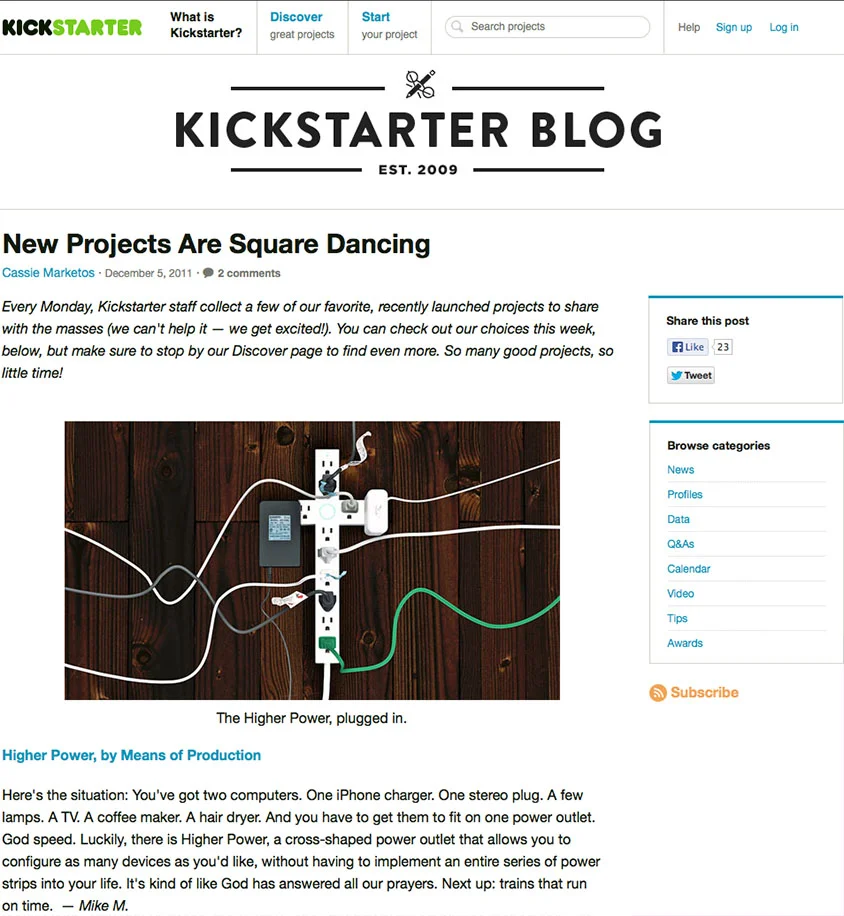
Higher Power

Higher Power featured on the Kickstarter Blog

Higher Power is featured on the Kickstarter Blog.

tags: Kickstarter
categories: Press
Monday 12.05.11
Posted by Alexander Pincus
 

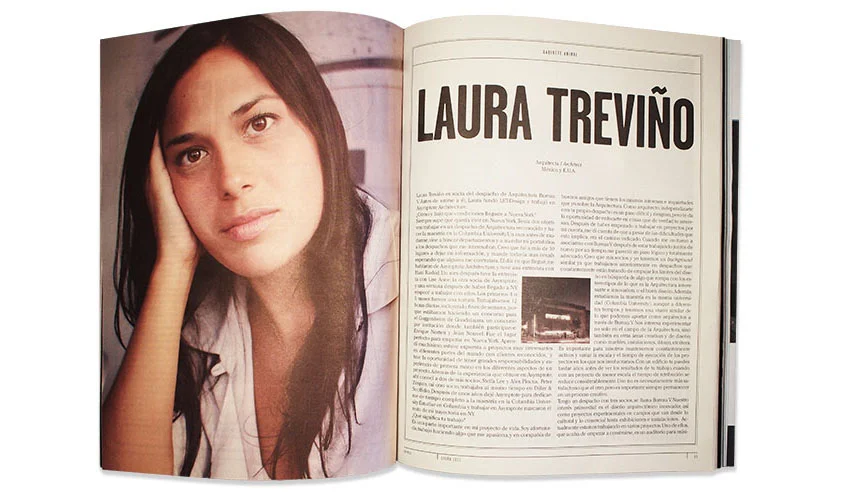
Laura Trevino in Animal

Laura Trevino

My business partner, Laura Trevino, discuses New York, architecture, and our current projects in the quarterly Animal.

tags: Bureau V, Animal, Laura Trevino
categories: Press
Tuesday 11.08.11
Posted by Alexander Pincus
 

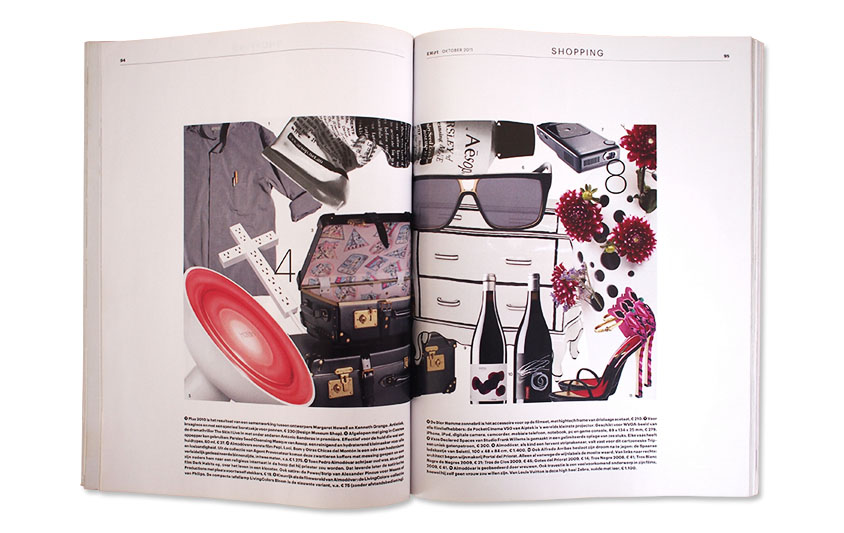
Higher Power

Eigen Huis & Interieur

Higher Power is featured in the inaugural issue of the Dutch design magazine Eigen Huis & Interieur (Custom Home and Interior).

tags: Eigen Huis & Interieur
categories: Press
Thursday 08.25.11
Posted by Alexander Pincus
 

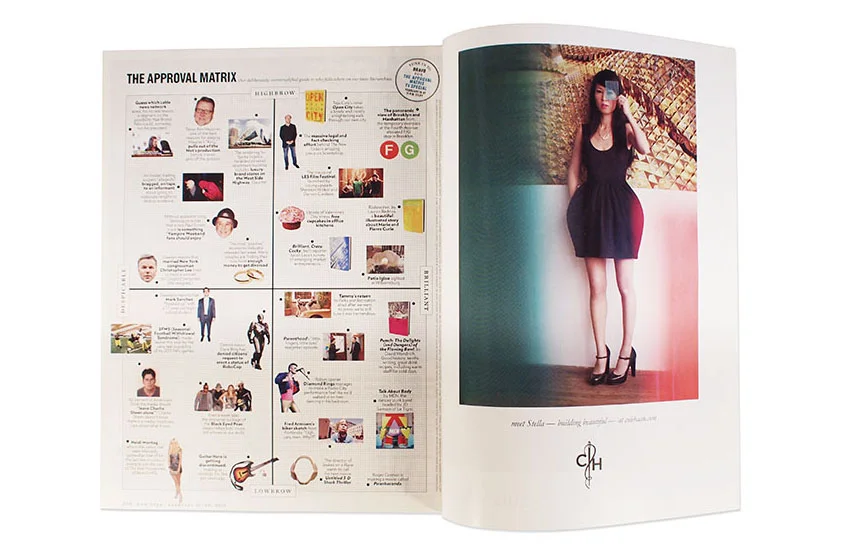
Stella Lee in New York Magazine

Stella Lee New York Magazine

My business partner, Stella Lee, appears on the last page of this month’s New York Magazine as part of our campaign for Cole Haan.

tags: Stella Lee, New York Magazine, Bureau V, Cole Haan
categories: Press
Tuesday 02.15.11
Posted by Alexander Pincus
 

Makers

Cole Haan Makers

Cole Haan selected Bureau V along with Bamboo Bike Studio, Dossier, Theophilus London, Kate Neckel, and Maria Sharipova to profile as part of their ‘Inspired Lives’ campaign. The profiles run nationwide next month in magazines such as Vogue, Elle, W, Vanity Fair, GQ, Harper’s Bazaar, T Style and InStyle.

tags: Cole Haan
categories: Press, Archive
Wednesday 02.02.11
Posted by Alexander Pincus
 

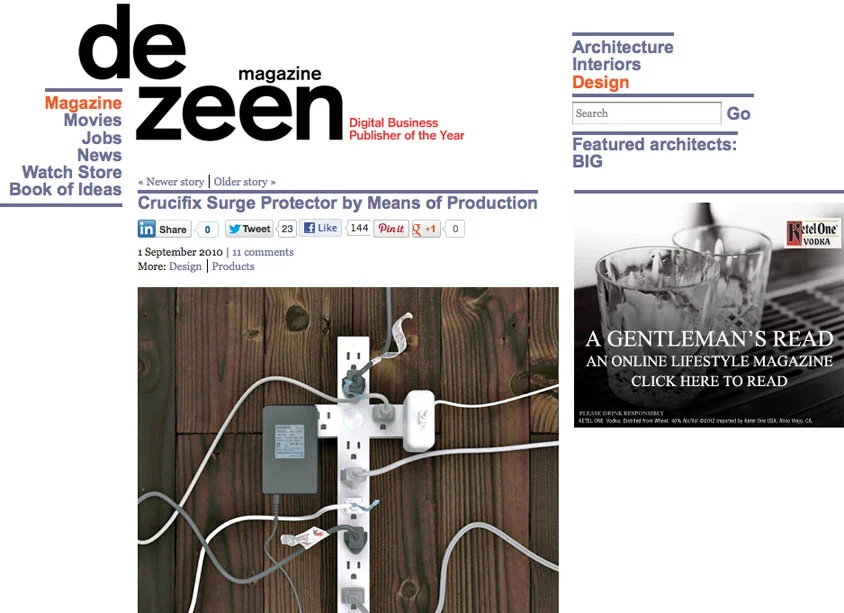
Crucifix Surge Protector

Alexander Pincus Dezeen

Dezeen features my Higher Power surge protector.

tags: Dezeen
categories: Press
Sunday 09.05.10
Posted by Alexander Pincus
 

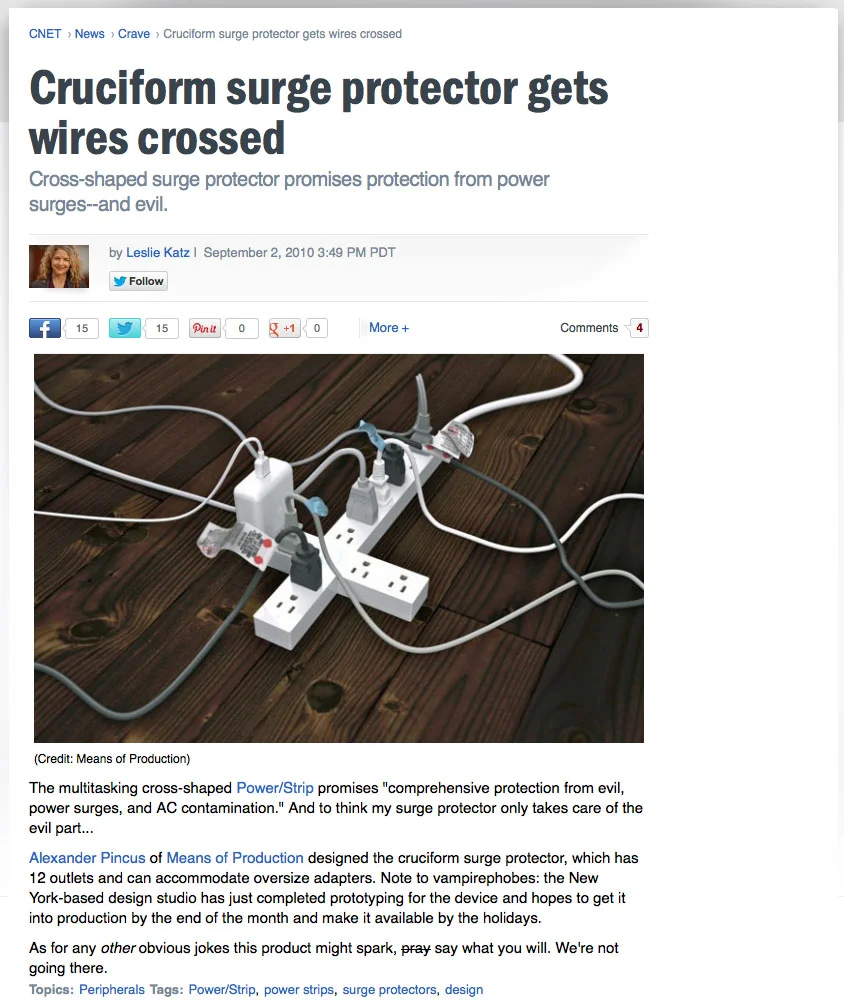
Cruciform Surge Protector Gets Wires Crossed

Cnet Surge Protector by Alexander Pincus

Cnet features my Higher Power surge protector.

tags: CNET
categories: Press
Friday 09.03.10
Posted by Alexander Pincus
 

Cruciform Power-Strip Makes Vampires Smile

Wired Magazine features Higher Power by Alexander Pincus

Via Wired, written by Charlie Sorrel:

I LOVE THE surprised-looking faces on this otherwise sinister crucifix-shaped surge-protecting power-strip. I imagine thrusting it into the face of a passing vampire (who one of my stupid flat-mates has guilelessly invited in) and seeing both hysterical fear and mild fondness battling in his yellowing, undead eyes. I also imagine dragging all my cord-tangled gadgets across the room to do it, but still, at least I’m safe.
And that’s not all the “Power/Strip” will save you from. The blurb, from designer Alexander Pincus, promises “comprehensive protection from evil, power surges, and AC contamination.”
The cross-shaped also keeps the bulky chargers away from the smaller-plugged cables, letting you plug in more items at once. Don’t fill up all the outlets, though, or you’ll never get to see a vampire smile.
tags: Wired
categories: Press, Archive
Wednesday 09.01.10
Posted by Alexander Pincus
 
Newer / Older