• Profile
  • Press
  • Contact

Alexander Pincus

  • Profile
  • Press
  • Contact

New CBD oyster bar will have New Orleans roots, a high-profile New York chef and sustainable seafood in the spotlight

Via The New Orleans Advocate, written by Ian McNulty:

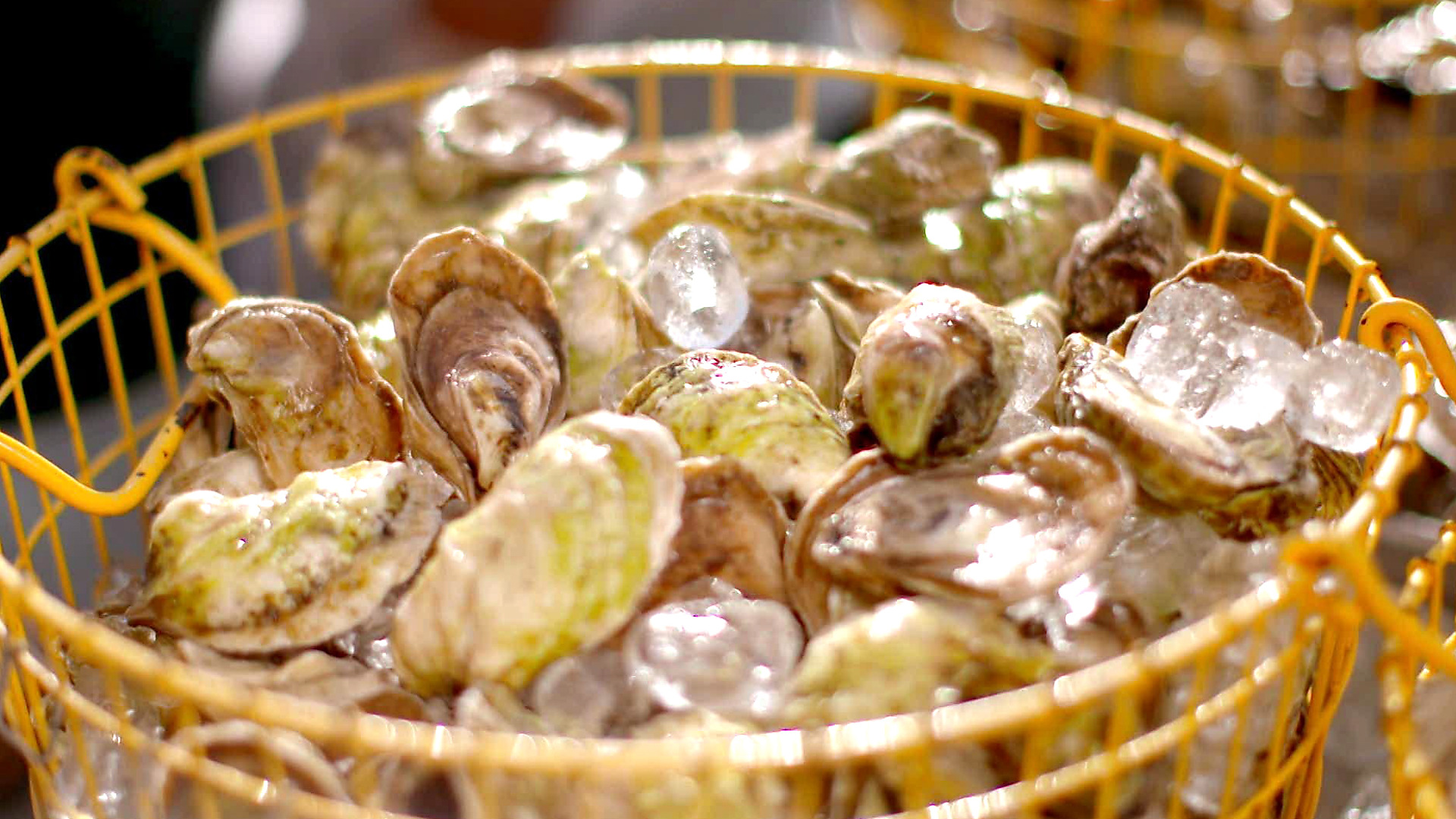
When brothers Alex and Miles Pincus were growing up in New Orleans in the 1980s, they knew no oyster but the Gulf oyster, and they loved it.
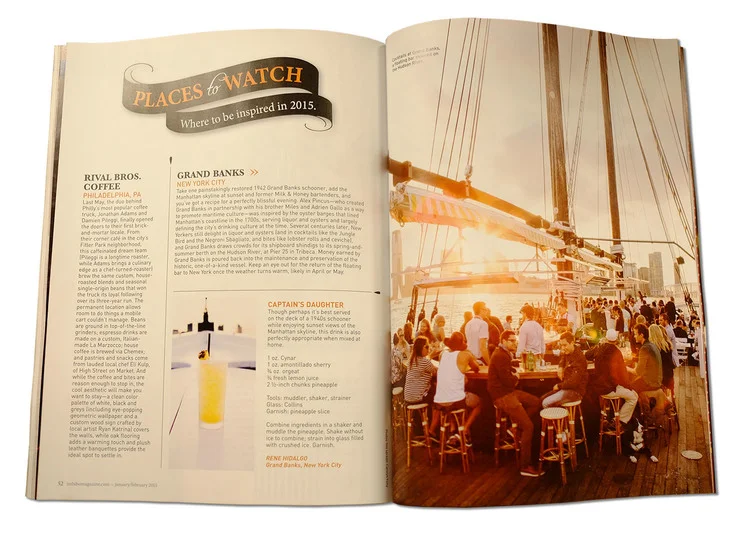
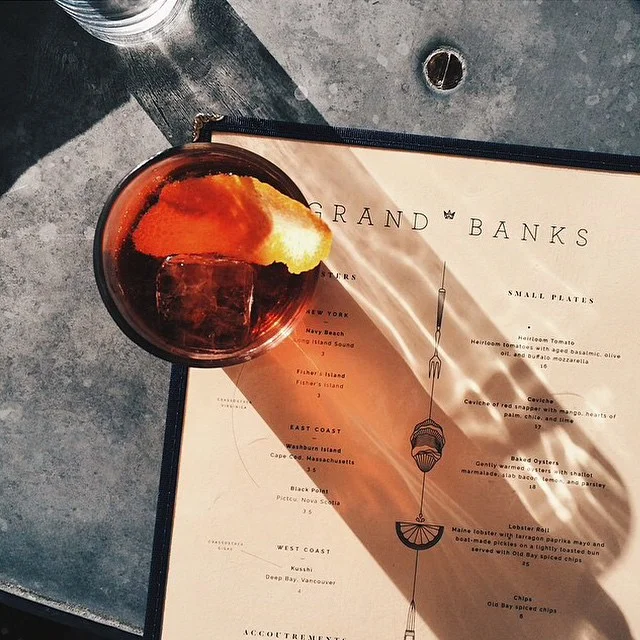
Their horizons have expanded since then, and they’ve made their mark in New York with Grand Banks, a one-of-a-kind floating oyster bar built on a historic sailing ship.
Now, the brothers and their business partner Adrien Gallo have a new project in the works for their hometown — a cocktail and oyster bar in downtown New Orleans that combines their first love with a different approach and some lessons learned along the way.
Miles Pincus described the concept as “an All-American oyster bar,” with oysters from across the Gulf coast and around the country, and a menu from a high-profile chef focused on a more diverse local catch.
“We’ll be serving sustainable seafood from fishermen that we know, species that are healthy, viable and abundant,” said Alex Pincus. “New Orleans is right in the middle of the best area for fishing, so why isn’t more of that variety on menus?”
The new oyster bar, which is yet to be named, is being developed in partnership with the new Ace Hotel, which opens next month in the CBD. It will occupy a separate building, a three-story townhouse adjacent to the hotel at 630 Carondelet St. The oyster bar is slated to open in May.
The chef is Kerry Heffernan, who is also chef at Grand Banks. He was previously executive chef and partner at Eleven Madison Park, the acclaimed restaurant from Danny Meyer and his Union Square Hospitality Group.
One of Heffernan’s claims to fame is developing that company’s Shake Shack burger. Now, he’s been known as a an outspoken advocate for sustainable fisheries and for bringing a broader range of seafood to restaurant menus.
As at Grand Banks, Heffernan’s New Orleans menu will be organized around a variety of oysters, small plates and just a few entrée-sized dishes. While it’s still taking shape, some likely dishes include ceviche of cobia and Spanish mackerel, fried frog legs and a lobster roll.
“We envision it as more of an ongoing session than a fixed dinner,” said Alex Pincus.
Lauren Schell, previously of the pioneering New York craft cocktail bar Milk & Honey, is directing the bar program at the New Orleans restaurant in conjunction with the local Ace Hotel’s beverage manager, Lucinda Weed.
“We spent a lot of time in New York and got to see New Orleans change from what we knew when we were growing up there. Now, we’re bringing back what we’ve learned, too,” said Miles Pincus.
Growing up in hotels
The hospitality business runs in the Pincus brothers’ family, and they say it’s in their blood. Their father, Ronald Pincus, managed the Royal Orleans Hotel (now the Omni Royal Orleans) for many years before taking the helm at the Hotel Monteleone, where he is chief operating officer.
“We grew up in hotels, we thought it was normal,” said Miles Pincus. “I thought everyone had a really charming maitre d’ around all the time.”
In New York, the oyster bar they developed with Gallo is anything but normal. In 2014, they opened Grand Banks aboard a 1940s-vintage schooner, a sailing ship that was once part of the region’s cod fishing fleet and later became a museum. Berthed on the Hudson River, it’s an open air eatery and lounge that is open seasonally and has become a coveted perch for summertime sunsets.
One of their design collaborators on Grand Banks was Eric Cheong, who is creative director of Atelier Ace, the in-house creative agency for the Ace Hotel. They began discussing ideas for a New Orleans partnership as the local hotel took shape. The designer for the new restaurant is the Brooklyn-based firm hOmE.
The oyster bar’s Carondelet Street address dates to the early 19th century and is part of a row of CBD townhouses that now includes the restaurant Balise. It was previously home to New Orleans Plating and Polishing Works. The new restaurant will have its main bar and oyster bar on the ground floor, a second dining room upstairs, a private dining area on the third floor and outdoor seating in a courtyard.
Ace Hotel is a Portland, Oregon-based brand known for its stylish redevelopment of vintage properties, and for cultivating its own popular dining and nightlife scenes.
The New Orleans hotel is scheduled to open March 14 in a nine-story Art Deco office building at Carondelet and Lafayette streets. It will have its own restaurant, an Italian eatery called Josephine Estelle, as nola.com first reported. It will be led by the Memphis-based chefs Andy Ticer and Michael Hudman.
The new oyster bar will function a bit differently, as a bar and restaurant developed with the Ace Hotel but physically separate from the hotel.
The setting of a CBD townhouse is of course much different from Grand Banks, with its outdoor allure and also its logistical challenges. But the Pincus brothers feel some fundamentals of their experience in the business thus far will transfer to the New Orleans project.
“If we’re bringing some of what we learned in New York home, I feel like we brought a lot of New Orleans to New York, too, especially what we learned from our dad,” said Alex Pincus. “It’s how you treat people and how you relate to people.”
tags: The New Orleans Advocate
categories: Press
Saturday 03.19.16
Posted by Alexander Pincus
 

Bureau V's National Sawdust has been born of a love of music, musicians and musical integrity’

Via The Architectural Review, written by Amelia Stein, Sophia Mitchell

AR Culture 2015 Commended: Ambitious in every sense, National Sawdust’s desire for impact results in a new typology that feels urgent in an increasingly top-heavy New York

A Saturday night at National Sawdust, a new contemporary music venue in Williamsburg, New York, opened with silence. The occasion was the fourth and final performance by the International Contemporary Ensemble (ICE) with French conductor Pascal Gallois, in homage to minimalist composer Pierre Boulez.

Gallois stood with arms raised, holding his orchestra – a pianist, guitarist, harpist, bassoonist and vocalist, among others – in a state of suspension. The audience, three deep and only a few feet away, shifted on black institutional- style chairs while others craned forward over a wraparound mezzanine balcony, peering into the starkly lit volume below. 

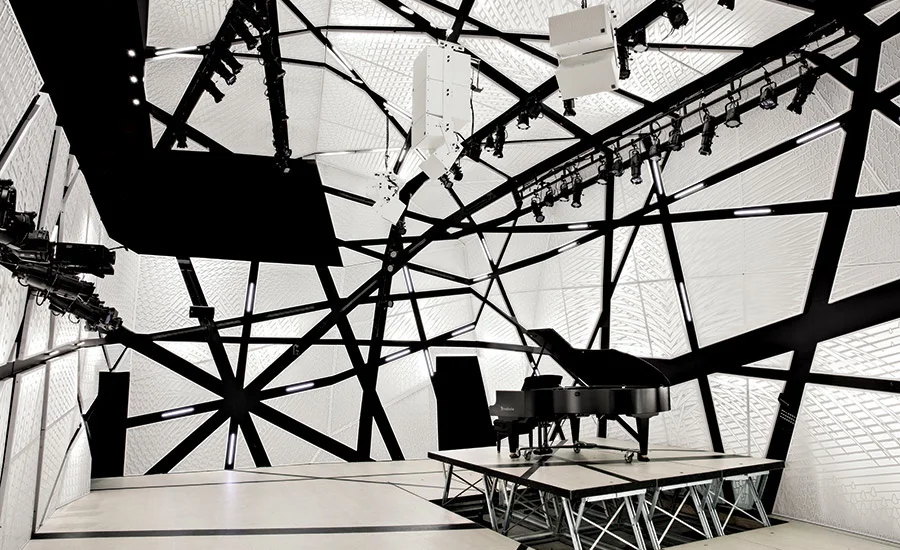
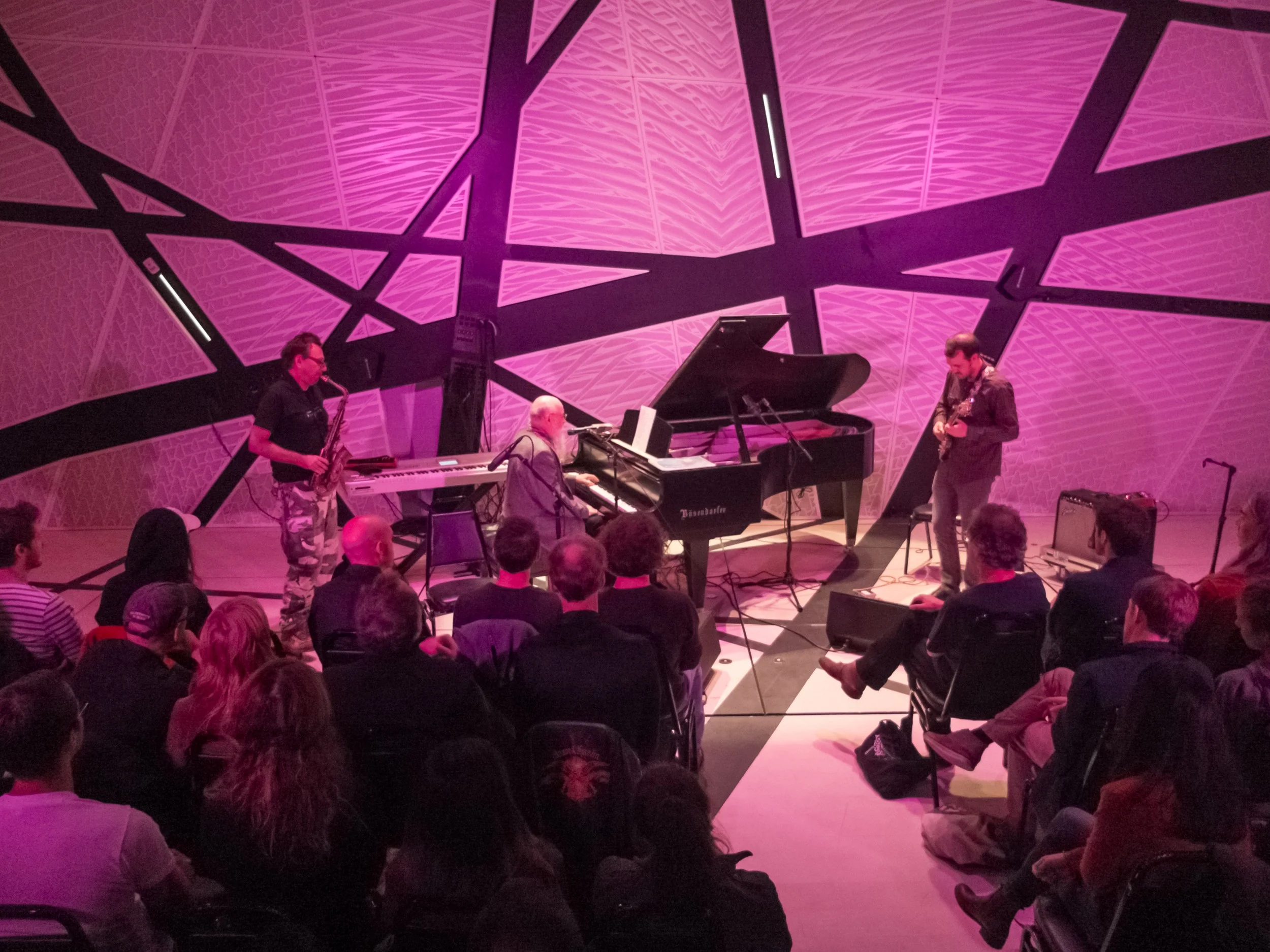
Already, the room was wrapped with noise: three walls and the roof bore glowing white panels spliced with black striations, an absurd roadmap of rectilinear fissures revealing a traditional black-box theatre beneath the white cube. Each recessed channel functioned as an electric artery, inset with switches, power boards and exposed strip lights. Panel surfaces, highly decorative yet highly engineered, mimicked the jumble of cables and music stands on the graphically patterned floor. At the first note some of the audience closed their eyes.

National Sawdust arose from the non-profit Original Music Workshop, founded in 2008 by Kevin Dolan, a former tax attorney, amateur organist and Williamsburg transplant. Dolan imagined a holistic space where musicians could not only perform, but also write, practise, record, edit and even broadcast. He wanted something smaller and more experimental but also acoustically comparable to BAM or Lincoln Center; he also wanted the venue to support a line-up that would attract a wider audience than some of New York’s existing independent venues. The only stipulation was that no compromises be made on sound; the rest was more or less left up to the lead architects, Bureau V – a Brooklyn-based architecture studio, known primarily for installation-based work, led by Peter Zuspan, Stella Lee and Laura Trevino – and an acoustic engineering team helmed by Raj Patel of Arup. All parties were intimately involved in the project from the outset.

‘I literally got on my bike and was biking around Williamsburg,’ says Zuspan, who also became one of 24 curators of the artist-led venue. ‘My partner, Stella, was living in Berlin and on Google Maps “walking” down the street, looking for facades larger than 50 feet and cold-calling people.  I was living two blocks away so when a sign popped up on this building we immediately called and, luckily, got it.’

‘[Dolan] didn’t start off with a programme, and he didn’t start off with a budget,’ says Patel. ‘He started with an aspiration for what he wanted us to do, and challenged us to make something that was different, new, unique – that hadn’t been tried before as a means to satisfy that vision.’

As well as the central performance venue, which doubles as a rehearsal room, the 13,000 sq ft structure, which cost around $16 million, contains production and recording spaces, a lobby bar and, by March 2016, will include a bi-level restaurant. The so-called ‘jewelbox’ was largely inspired by the 18th-century European chamber music room, traditionally situated at the centre of a grand home, accessed via a procession of smaller rooms and antechambers, and intended for informal recitals. Music was composed in, and for, the room itself, with musicians and audience brought into domestic proximity – an unusual feedback loop of live-ness whereby all aspects of musical production and performance were brought into simultaneity. 

National Sawdust aims to emulate this lack of divisionboth spatially and programmatically, collapsing creation, performance and reception into a sharedinterstice. But what is thismiddle ground? Does it truly accommodate production and performance, musician and audience? Beyond the undifferentiated space of the stage, people are often directed to cross at points of entry (there are currently only two street-facing doors, side by side) and points of transition (the mezzanine is serviced by a single public stairwell). Condensing the theatregoer’s rituals of passage – entry, convocation, circulation – could facilitate encounter and spontaneity, but the physical constriction and subsequent abruptness of these moments leaves one looking for gentler landings. The structure’s entryway, a trapezoidal black-walled passage, triangulates street, stage and bar, offering a place to gather but stopping short of intuitive places tostand.  The emphasis on surface (glossy, tile) and form (sculptural, protruding) means this space of sociality feels closer to an afterthought, the incidental inverse of imposing poché. 

Other moves based on choreographies of expansion and contraction feel like similarly missed opportunities: the entryway’s vertical reveal, hinted at from the street through an elongated window, promises a Libeskind-like crescendo, but the eye is ultimately met with two glary downlights recessed in black soundproofing fabric, scalloping the walls. Much more effective is the confluence of light levels and material finishes to foreshadow and ‘reveal’ the bright performance space from the darkened lobby, a neat reversalof the light modulation that accompanies a traditional theatre entry sequence. 

The large rectilinear portal between theatre and lobby opens vertically, garage door-style, playfully referencing the raising of the proverbial curtain. This shift in dimensionality – from flat, planar surface to volumetric threshold – creates drama that is also integral to the architecture. The complex tectonics of the stage, which has 12 individually operable inset pieces, could have worked similarly, rupturing the floor to draw out depth and density from the stage space – but while the structural intention was to accommodate the eclectic programme, the mechanics may read as vaudevillian in such a small footprint, adding to the visual clamour.  

‘Visually, I thought it was very interesting, very strong, and very opinionated,’ says Laura Kirar, a designer and audience member at the Boulez performance. ‘Maybe that’s what you notice at first, and then maybe you forget about it. I’m anxious to see another performance there, to see if the visual aspect really affects my impression of the music I’m hearing. Now I’ve seen one performance there, I have to say the architecture was a big part of my experience.’

Another audience member, Katherine Michaelsen, a Professor of Art History and Chair of the Art Market graduate programme at Fashion Institute of Technology, had a different reading: ‘Quite frankly, it’s not that weird. It’s very striking. To my taste, it’s a little over the top in terms of contrast. I would have toned it down a little bit. But it’s definitely an experience.’

All of which begs the question: how do you create a hermetic space that is charged but not restrictive or overwhelming? How do you design ‘casual’ without dissolving the pleasures of ritual? The problem seems to be one of scale: true to the city’s density and shrunken square footage, the first floor of National Sawdust doesn’t give much room for encounter that is fluid or unforced. The restaurant, under construction, sandwiched between the venue and the facade, not only suggests logic to the geometry of the lobby but is likely to release any pressure from the bottleneck. Another street-facing door will draw patrons off North 6th Street, generating both revenue for the programme and an increased porosity in the space, bringing the energy of the city into contact with the energy of the event.

Although so much goes on across National Sawdust’s various surfaces, the structure’s animating forces are often buried or hidden. Seated in the darkened mezzanine, surrounded by closed stairwell doors, you intuit – correctly – the network of corridors leading to the recording rooms, broom closets, the restaurant’s kitchen, the proximate yet inaccessible spaces of utility that envelop the central volume. Even the walls are not just walls; they’re casings, thick with levers, curtains and pulleys that manually tune the entire room. 

This sense of density adds to the feeling of bodily constraint that begins in the entryway, extends through the lobby into the visually chaotic performance area, reaching the narrow, somewhat rudimentary space of the balcony. Your inclination is to burrow, to tunnel, to penetrate the cave and discover its extents.However, only one group of users gain this access: musicians. 

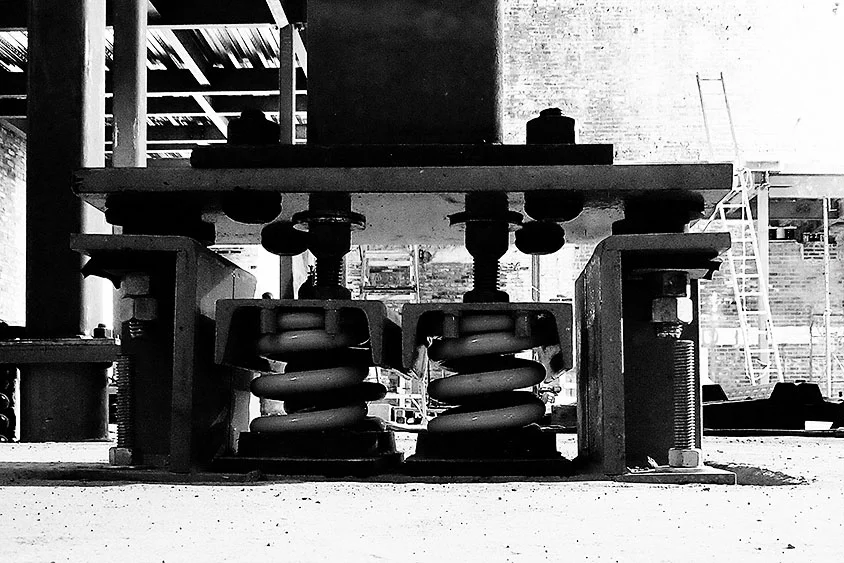
National Sawdust is a house for musicians. The programme’s holistic potential, the loop of production-performance-reception, is only made fully available to them. With this in mind, certain design decisions reveal their rationale: the custom chairs by Bureau V make the most sense as utilitarian props in a rehearsal space; limited public passage ensures the acoustic sanctity of the entire building. The main performance space is not only disconnected programmatically but also structurally from everything else: giant chassis springs, visible only from within the emergency exit stairwells, separate and suspend the room like a jack-in-the-box, mitigating the disruptive rumblings of the L train below.

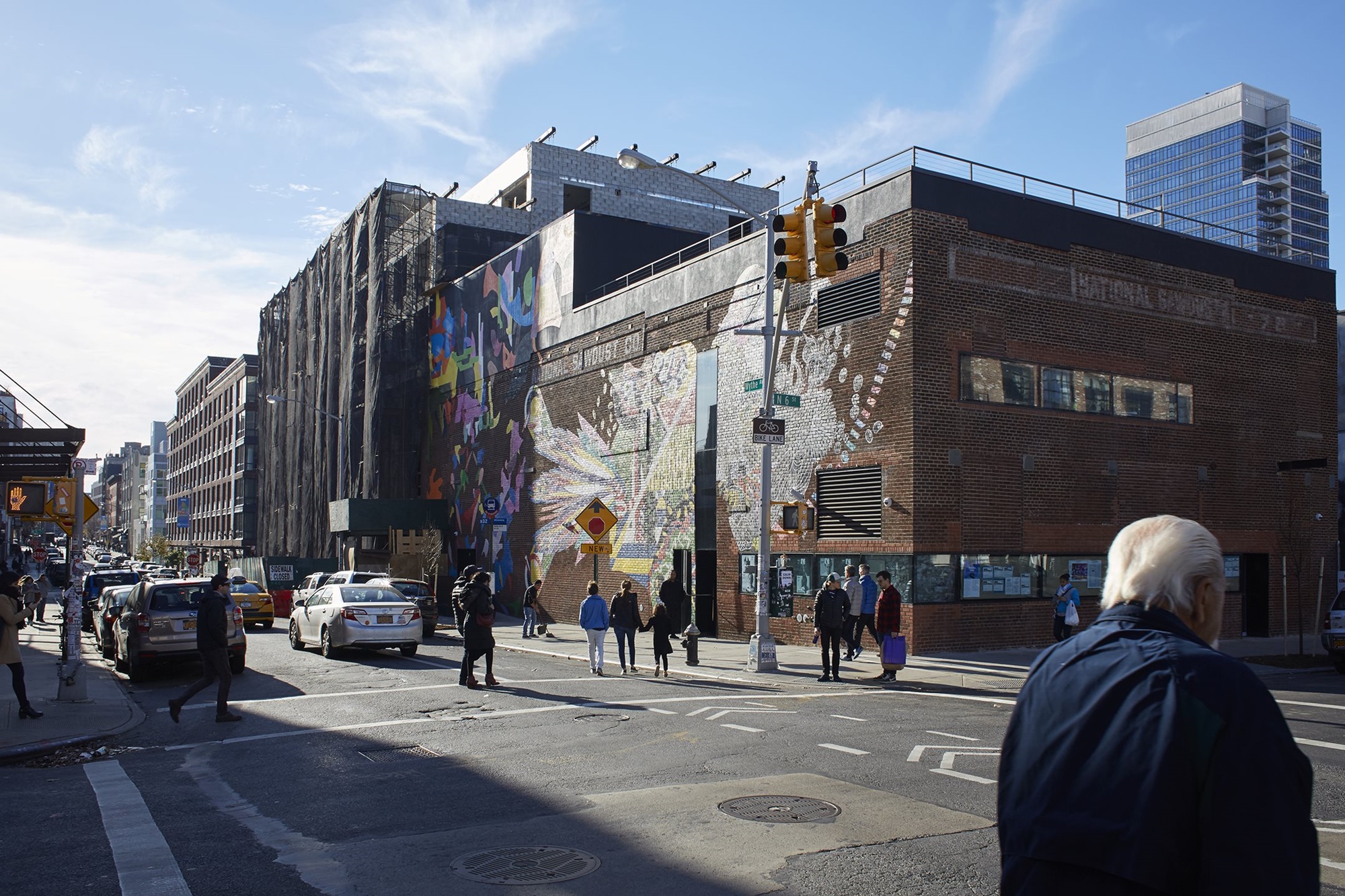
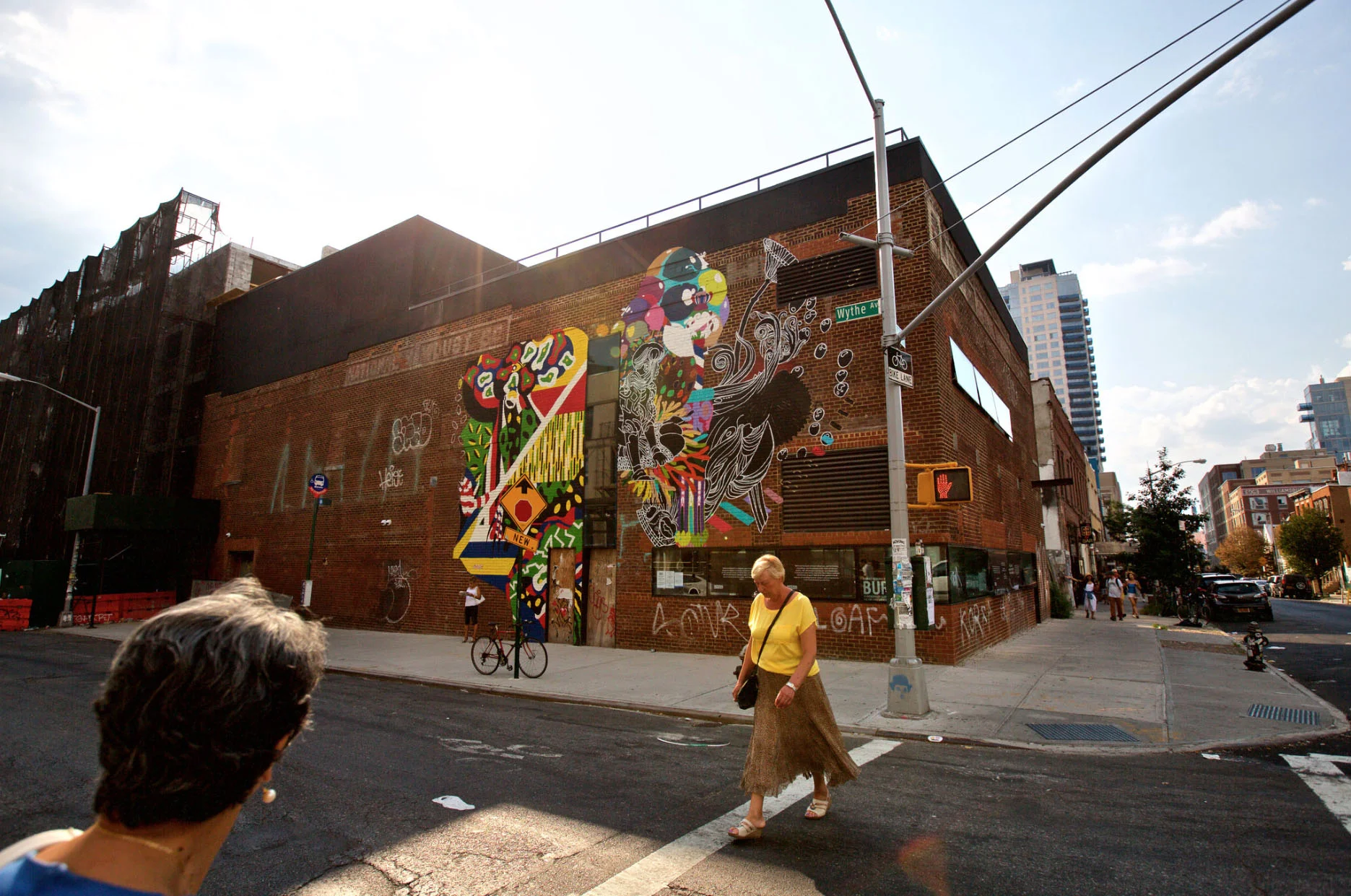
National Sawdust sits at the corner of North 6th Street and Wythe Avenue, effectively Williamsburg’s bedrock since its rezoning as a primarily residential neighbourhood in 2005. The building’s facade – a red brick shell, with bricked-up windows and large factory vents – belongs to the area’s previous iteration as an industrial outpost, that recent yet near-invisible past before the rash of luxury condos, start-ups and yoga moms made it difficult to discuss the neighbourhood without air quotes. Even the L train – from Chelsea and the East Village – has become a symbol of the metastasising of gentrified Manhattan across the East River.

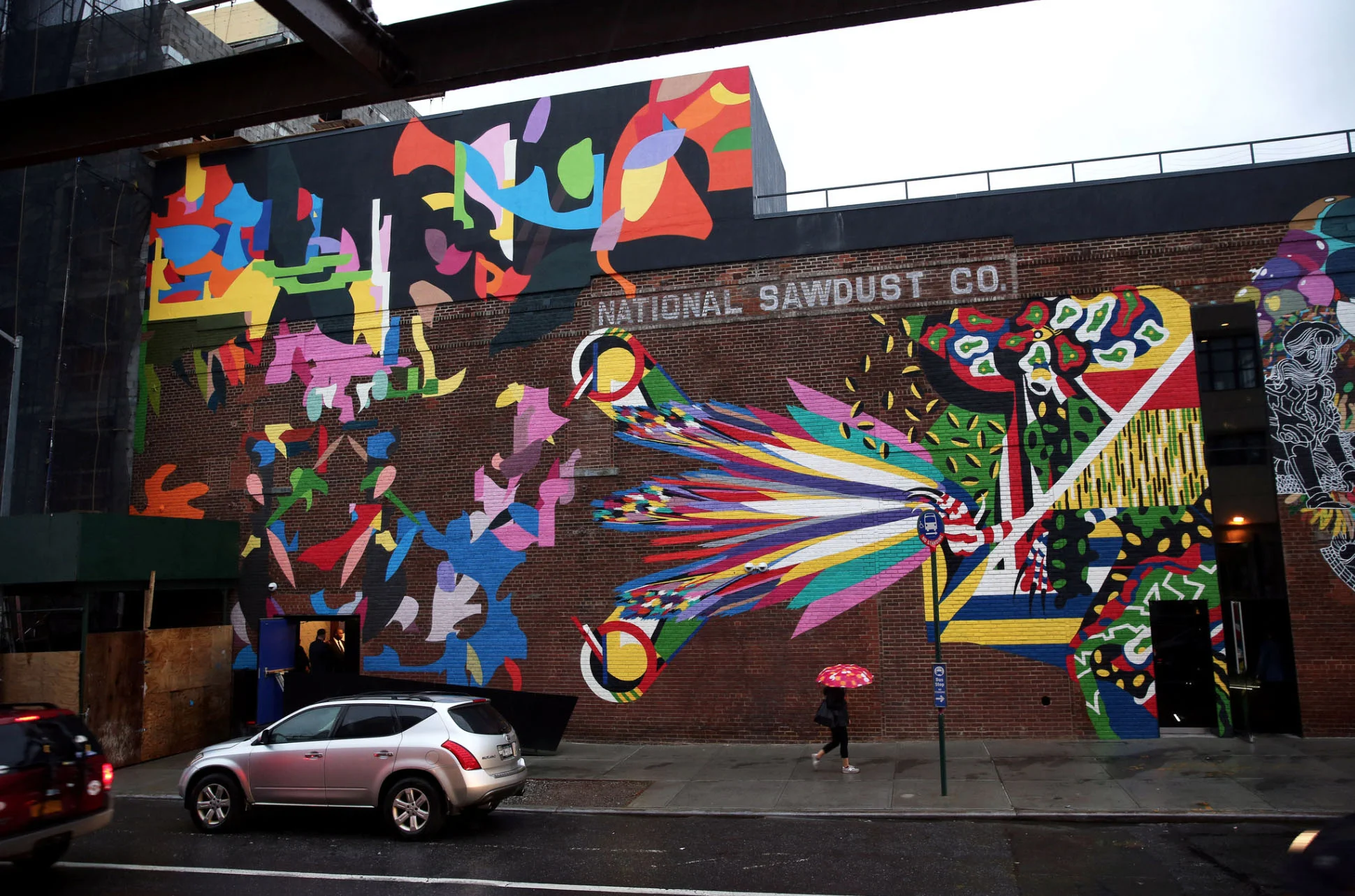
With no overt signage, the exterior is non-declarative save for three slices of glazing and a large mural in a style inviting the term ‘street art’. Williamsburg has long since painted over its history, but the partial resurfacing of the facade feels too much like an appeal to the packaged aesthetic of the neighbourhood, flattening the existing language into a palatable urban product. This all adds to the unshakeable feeling of retro; one can’t help but read the references to ‘contemporary’ from some imaginary point in the future, where an interminably expanding Williamsburg has begun to eat itself.

But National Sawdust’s agenda is not to critique; in fact, its position is fascinatingly fluid. If its aesthetic suggests an unquestioning relationship to context, this is because it relies on Williamsburg’s continued advancement for its survival. Dolan’s funding model is predicated on the ascendant cost of the area’s real estate. After an initial $8 million outlay, he leveraged the likely increase in the property value as a way to mitigate the perceived risk of investing in a new non-profit. He offered potential funders ownership interest in the building. These ‘philanthropic investors’ would then donate rent-free use of the space and, after a certain time, the non-profit can either buy the investors out or wait for them to donate their share.

‘One of two things can happen,’ Dolan says. ‘We’ll get a non-profit, rent-free use for five years and hopefully it will be an enormous success … If it fails, guess what: [investors] now have an ownership interest in a valuable piece of real estate. And if it succeeds, we have what we call “philanthropic investors”, because what we hope is that people, over time, would be able to donate at least a significant portion of their interest in the building or continue to allow it to be used rent-free.’ 

At the same time, National Sawdust’s funding model means its moneyed patrons and leisure-class neighbours – especially those who will frequent the restaurant – are directly financing alternative culture, usually lowon the list of priorities for commercial backers and developers in the area. As well as ensuring the venue’s day-to-day survival, the non-profit’s income will subsidise rehearsal spaceand support an experimental programme for a diverse audience in a district increasingly defined by the generic. National Sawdust at once epitomises American-style private investment and capitalistic models of ownership, and a Robin Hood-style redistribution of funds.

In every sense, National Sawdust is ambitious. Its desire for impact and distinctiveness, which reads as overpowering in the interior, has resulted in a new typology that feels urgent in an increasingly top-heavy New York. The venue not only attempts to address a gap in the landscape of the city’s performance venues, it also has the acoustic integrity, facilities and funding to foreground music and musicians. The ambition that threatens to smother National Sawdust is also the very quality that animatesit as it earnestly recasts the possibilities for a New York performance space. The place is loud, but it is also live, with all the apprehension, uncertainty and promise that live-ness brings. 
tags: The Architectural Review
categories: Press
Friday 01.08.16
Posted by Alexander Pincus
 

Ten Best Arts Centers of 2015

Via Architectural Record, written by Miriam Sitz:

These museums and performing arts centers by Rem Koolhaas, Bureau V, MAD, Thomas Phifer and Partners, Zaha Hadid, SOM, Renzo Piano, Tado Ando, and Carme Pinós earned their places in our year-end roundup.
Slideshow
tags: Architectural Record
categories: Press
Tuesday 12.22.15
Posted by Alexander Pincus
 

To Block Out The Cacophony of NYC, This Music Venue Rests On A Bed Of Springs

Via Fast Company, written by Diana Budds:

Aside from a kaleidoscopic mural and a slim ribbon of windows, National Sawdust, a new performance venue in Williamsburg, Brooklyn, looks almost like any other industrial conversion on the outside. But step inside the narrow entrance and that's where it comes alive. You'll find yourself in a tall lobby bracketed by two angular, tile-clad walls. The polished concrete floor and brick shell nod to the structure's past life as a factory, but the faceted surfaces and sculptural chandeliers signal its current incarnation as a creative space. Go another layer deeper and you're in the performance hall, a soaring white room criss-crossed with black bands.
Founded by Kevin Dolan, National Sawdust has been in the making for five years. More than just a place to see events, it's a nonprofit that's dedicated to exploring the entire creative process that goes into creating music, understanding how it sounds when it's performed, recording the piece, and finally experiencing it. On an aesthetic level, it needed to have a presence unlike any other space, something that would spark ideas and inspire creativity. On an acoustic level, it needed to sound damn good.
To accomplish the lofty challenge, Dolan hired Bureau V—a design firm from the neighborhood—to develop the architectural concept and Arup—a global consulting firm—to fine tune the aural characteristics.
"The project was at the highest level of complexity per square foot of anything we've worked on," says Raj Patel, principal of acoustic consulting for Arup. "We had to be tight, think efficiently, and be smart."
National Sawdust's daring visuals aren't just about creating a pretty package. Each element was purpose-designed to enhance the experience for the audience and performers. Moreover, the acoustics and architecture were considered in equal measure for every element in the structure.
One of the great challenges was how to make a cavernous building sound good and feel comfortable. Early on, the designers conceived of a box-in-box concept. While they would retain the historic shell, they would also build an entirely new form within it. This helped to ensure that no sound traveled inside the performance space and no sound escaped. Plus, this gave Bureau V and Arup nearly carte blanche do develop the structure.
"I didn't want to design a black-box theater," Peter Zuspan, principal of Bureau V, says as he and Patel guide me through the space. "It should be memorable and shouldn't just 'disappear' when the lights go down."
Though National Sawdust expresses a modern language, it's rooted in a very historic way of thinking. Up until the 20th century, music was often commissioned by (wealthy) patrons to be performed in a specific place. Architecture and music developed in tandem for years as composers would create pieces that responded to the aural qualities of a specific place. "The big edict was to create a space for creating music—not just for it to be about performance," Patel says.
The structure is a "retooling of an 18th-century chamber house," Zuspan says Estherhazy, a Hungarian estate where Joseph Haydn was an in-house composer, was one of the reference points for Bureau V.
That National Sawdust would house a variety of musical styles posed another acoustic-engineering challenge. As a starting reference, Zuspan and Patel knew that the founder purchased a Bösendorfer piano for the venue. They based the performance space's volume on that instrument—essentially the room was tailored so the piano could fill it with sound.
With that established, the next challenge was making the room flexible so that the performers could make it their own. "We had to create an architectural system that always looked the same, but could be changed," Zuspan says.
The space is very much about creating a bond between the performer and the audience. For flexibility, there's no rigid distinction to where the musicians set up shop. The could play in a corner, smack dab in the center of the room, and even in the balcony if they want (the architects made sure there was enough room upstairs to make this possible). Lighting and speakers hang from tracks in the ceiling. The equipment can be reconfigured anywhere in the room—hence the numerous tracks cutting across the ceiling—as there's no set "stage" on the floor. Should someone want to bring in a tall stage, they certainly could. Sections of the floor actually rise if the musicians want to be a little taller than the audience.
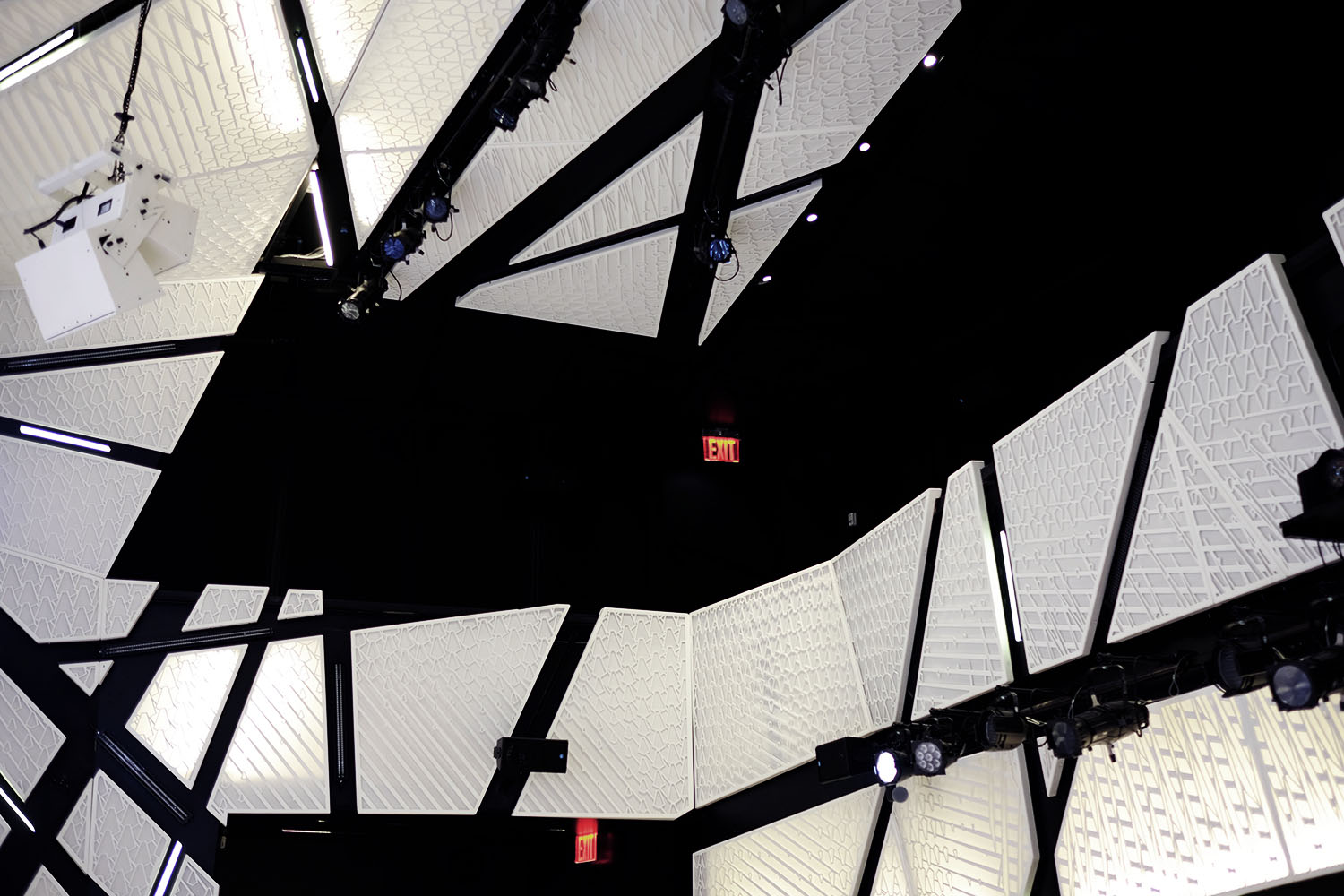
Custom "acoustically transparent and visually translucent" panels made from powder-coated aluminum and fabric clad the walls of the space. While the pattern is visually arresting, it serves a purpose: to ensure the walls are 65:35 ratio of solid-to-open surface to optimize resonance. Moreover, the panels become a canvas for projection mapping and speaks to how people are using AV to enliven performance, Patel says. "It's very much about the future."
Should the musicians need to dampen the sound further, they can drop down curtains hidden behind metal mesh on the second floor. If they wanted to enliven the room, they simple draw the curtains aside and the audience wouldn't be able to see the difference. These stealthy interventions ensure there aren't any visible changes to the space.
One of the stealthiest engineering measures comes in the form of hundreds of springs hidden beneath the building's floor. With a busy subway line rumbling underneath the building and lots of street traffic going past, the designers decided that the best way to acoustically insulate the design was to essentially lift the building on a bed of about 1,000 springs. Like shocks on a car, the springs dissipate vibrations and release the energy in the form of heat.
Lastly, the HVAC system posed another sonic hurdle. Ensure the air conditioning stayed quiet, required a very large fan and long ducts with as few bends as possible.
In the span of 24 hours, I had experienced two very different sides of National Sawdust. When I went to a show, the performers invited the audience to sit down on the floor and get comfortable. Nearly everyone obliged. Though the venue was packed with people—it has a capacity of about 300—it felt comfortable, like we were in someone's house. Later during the architectural tour, the whole performance space was being used for a rehearsal. The house lights were turned up, the floor was filled with chairs and instruments. And it still felt "right."
A nonprofit, National Sawdust's programming seeks to be an incubator for emerging musicians and artists and theme materializes in yet another way: this is Bureau V's first commissioned project.
"Rather than being bound by convention, it infuses the project with free thinking," Patel says of the collaboration. "Forcing questions about 'why can't this be done' resulted in solutions that aren't deployed elsewhere."
tags: Fast Company
categories: Press
Friday 10.30.15
Posted by Alexander Pincus
 

This Music Hall Is Pretty Much Star Wars Meets Bach

Via Wired, written by Liz Stinson:

It used to be that music was composed for the physical spaces in which it would be performed. Haydn had Esterhazy palace. Bach had St. Thomas Church. For these and other artists, sound and space were inextricably linked; architecture played a vital role in how the music was written and experienced.
Today, music is tailored primarily for digital distribution. There are exceptions, sure (David Byrne, for example, has talked about how architecture shaped his music and that of others), but composing music with a specific venue in mind has become less integral to the creative process. A new venue in Brooklyn wants to revive that lost tradition.
National Sawdust is a new non-profit space in the bustling Williamsburg neighborhood. From the outside, it looks like any other repurposed factory; from the inside, though, National Sawdust looks (and sounds) nothing like your typical music venue. The space is the work of architecture studio Bureau V and engineering firm Arup, and it’s full of design details that are meant to create a hyper-tailored acoustical experience. With bright white walls, strips of light, and angular sound panels, the venue looks like something out of Star Wars, though its acoustical properties are more aligned with those of an 18th century chamber hall.
[A shot of the space during a performance.] Click to Open Overlay Gallery
A shot of the space during a performance. Floto + Warner
The design process started with what sounds like an obvious observation: New York City is loud. It’s not just loud on the street, it’s loud underground, too. National Sawdust is three blocks from a subway line, which is great for concert-goers, but terrible for acoustics. If you’ve ever lived near a subway station, you know this. As a train passes, vibrations travel through the ground and into the steel frame of a building, creating an audible rumble. To solve this problem, Arup acoustical engineer Raj Patel says they made the venue a box within a box.
The 35 x 50-foot room where musicians play is actually nestled like a Matryoshka doll inside a bigger brick envelope and separated by layers of concrete, wood and giant springs that absorb vibrations and dissipate them as heat. “It’s entirely separated from the brick building and from the ground,” Patel says. It’s essentially a reconfigurable black box theatre, except it’s white.
The room has four white walls covered with fabric panels shaped like shards of glass. “The fabric is the equivalent of what you see outside of a speaker,” explains Peter Zuspan, a co-founder of Bureau V. After 3-D modeling the space, Zuspan and Patel realized that getting the proper level of reverberation in so small a space required making the panels around 65 percent permeable. That would allow sound to pass through the skin and either bounce off the concrete walls or be absorbed by curtains behind the panels.
Much of the intimacy you feel in a music venue depends on how quickly you sense sound reaching your ears. Patel says that, ideally, the sound coming from the stage and all its reflections should reach your ears in under 80 milliseconds. “If you don’t have the right sequence of reflections in that window the room architecture and the performers feel like they’re far away.” He likens it to hearing an announcement on a train. “Normally you understand the first word, maybe the second,” he says. “But soon after that the words get jumbled because of reverberation.” After 120 milliseconds is when the sounds begin mixing together and you can get a broader sense of the room’s architecture.
Not every type of music calls for the same level of reverberation, though. Contemporary music, with is sharp clarity, requires less than something like chamber music. For that reason, Zuspan and Patel designed the room without a fixed stage. “We very consciously said we’re not going to do that here,” says Patel. “We want to allow musicians to pick where they perform and compose work from a specific location.” Patel says there’s no right or wrong way to stage a concert, though he imagines more contemporary musicians will play along the long axis of the room, where the sound will be clearer and more direct to the audience, while a group like a string quartet might be interested in setting up on the short end of the room, to allow the sound to float more freely.
The space is doubling as a recording studio, which allows artists in residence to write and record music as it was intended to be heard live. Zuspan says the ultimate goal is to provide a space that works hand-in-hand with the musicians, subtly influencing the sound like a modern-day Abbey Road or Sound City. “Or maybe that’s my architectural arrogance thinking that it should be important,” he says with a laugh.
tags: Wired
categories: Press
Friday 10.16.15
Posted by Alexander Pincus
 

Williamsburg's Bright New Diamond National Sawdust Will Change the Way Modern Music is Made.

Via The Village Voice, written by Lindsey Rhoades:

In a new piece Terry Riley wrote for Grammy-winning experimental vocal ensemble Roomful of Teeth, eight voices rose and fell in polyphonic rounds of one repeated lyric: “You may not believe it, but it will happen.” Positioned amongst the angular paneled walls of National Sawdust, a brand-new Williamsburg venue wholly dedicated to contemporary classical music, the octet could have been singing the nascent space’s mantra. State of the art, but not-for-profit, National Sawdust is an ambitious undertaking, and its programs are curated and helmed by composers and musicians themselves. The idea is that it will serve as more of an incubator than simple concert hall, with the ultimate goal of ushering contemporary composers through the entire process of writing, performing, and recording specifically commissioned pieces all under one roof. Nothing quite like it exists in New York City, or anywhere else in the world, and it must be seen (and heard) to be believed indeed.
National Sawdust capped off its opening weekend with a festival honoring Riley, known for his pioneering minimalist synth works in the Sixties. Celebrating his eightieth birthday this year, Riley also composed many works for strings via his longtime association with Kronos Quartet, and his October 5 performance began with a tempestuous composition for eight cellos entitled “ArchAngels.” The three-day dedication to Riley’s varied career featured improvisations from the man himself, as well as appearances by his guitar-playing son Gyan, Matmos, John Zorn, and more across five unique performances – and a lecture. As an introduction to National Sawdust, the Terry Riley festival was certainly fitting, because no other venue would have dared to attempt such an undertaking, let alone been able to accommodate it. Now, it’s looking to give creative birth to a new generation of artists like Riley, while also celebrating other pioneers in the field.
After a recent tour, Gothamist said the interior of National Sawdust’s main performance room looked like a spaceship, but Creative Director Paola Prestini begs to differ. “Personally, I think it looks like a little diamond, the cuts of the light — that’s my perspective on it. It’s a little jewel,” she said proudly over the phone last Wednesday, just as construction crews were installing the final touches. Her description speaks more truly to its beauty and its rarity, as well as the process of change the space has undergone; as part of Williamsburg’s industrial waterfront at the turn of the century, it actually operated as a sawdust processing center, hence the name.
Redesigned by Bureau V Architects and Arup Theatrical Consultants, its acoustics are exquisite. i\Its interior is fluid, a box-within-a-box suspended on springs, wired for amplification or unplugged events, the whole room projection-mapped for audiovisual performances. In other words, it’s a modernized version of an eighteenth century chamber hall where almost anything is possible so long as someone is creative enough to come up with a concept befitting the space. “[Artists] can imagine the room in different ways,” Prestini explains, growing excited. “The seating is completely loose – for example, one artist is using the entire lower space, and the audience can only sit in the balcony. [Anyone] can play around with all these configurations.”
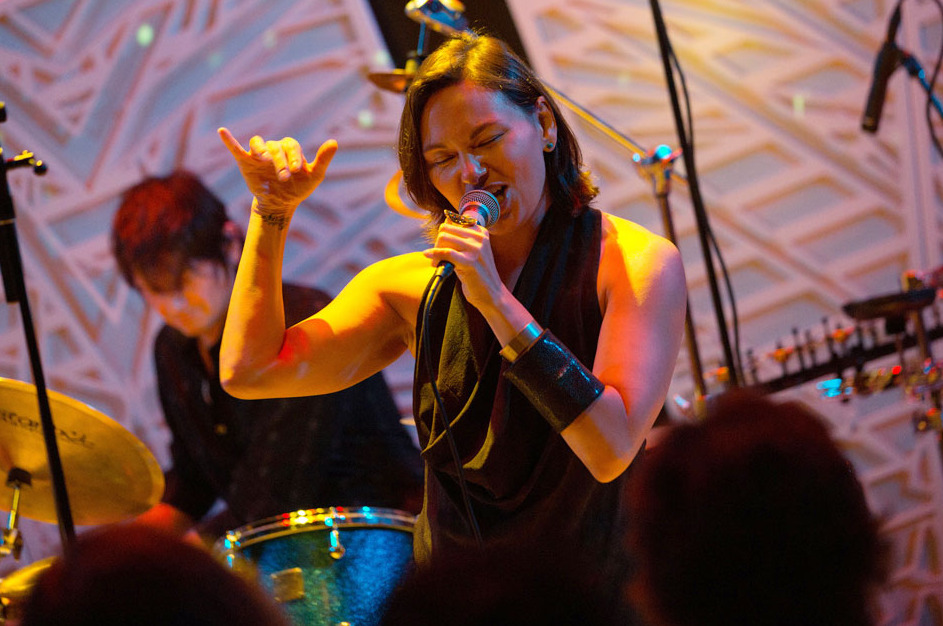
Performance art, modern dance, hip-hop, jazz, experimental choirs, Norwegian youth orchestras performing live re-scores, “extreme guitar” ensembles, and indie darlings Majical Cloudz all figure into October’s decidedly eccentric programming. There are artists- and curators-in-residence, but also a regular house series of one-off shows called In Situ, which serve as a kind of test-run partnership. “They’re coming in, we’re hearing them in our house space, and then deciding, 'You know, this is the perfect artist to come and develop an entire album here,'” Prestini elaborates. “What makes us unique in terms of a small organization is that we do give commissions from $2,500 to $15,000 to work with our artists in residence.”
If it seems lofty, that’s because it is, but these incredible goals are also very sincere. Prestini is also a composer, and she founded VisionIntoArt, an interdisciplinary music fostering program that has its own record label, in 1999. She has its logo tattooed on the nape of her neck; in many ways, VIA was a precursor to the work she’s doing now at National Sawdust, and likely what caught the attention of the project’s founding visionary and Vice President, Kevin Dolan. Prestini will also get the opportunity to develop her own works, and is presenting an “installation concerto” in February. 
“Because my work tends to be long-process multimedia work, it’s going to be extraordinary to have a home,” she admits. “But one of the things that’s always been part of the way I think is that you really have to help create the context in which you’re living as an artist. The beauty of the space is that it can offer artists so much. We are open 24/7. There are two shows a night. There’s an entire year of programming, and it’s entirely artist-led, curating their discoveries. I can dream forward now in a way that I didn’t have the luxury [of doing in the past], but it also is an extension of everything I’ve been working for over the past fifteen years.” 
'They’re coming in, we’re hearing them in our house space, and then deciding, "You know, this is the perfect artist to come and develop an entire album here."'
She came to National Sawdust five years ago, before a location had been found, and was “tasked with the idea of how to build an institution” that would serve emerging artists and be composer-centric, while also spearheading fundraising efforts alongside Dolan. But now that National Sawdust is open, it’s the unique programming that will keep it afloat, and Prestini turned to her extensive network of talented, taste-making cohorts to help flesh out the calendar. “It was a group that I felt could showcase the mission, the depth, and the variety, but at the same time, that I had trust in, that would support the institution though this incredible opening,” she says. “As a practicing artist, you’re constantly listening, and that’s what I’m looking for in the curators – people who are listening and discovering.”
Prestini could also be describing the neighborhood in which National Sawdust now makes its home. Williamsburg’s demographic of hip, affluent, and culturally curious residents will hopefully welcome its presence at North 6th and Wythe (and buy tickets to its performances). Though National Sawdust forges new territory, Prestini says the founders were not without inspirational blueprints. “Le Poisson Rouge and Subculture really opened the door in terms of clubs with that kind of relaxed atmosphere, where classical music and contemporary music and indie and rock and jazz and improv can live side by side in a very fluid way. So this is very much an outcome of all of these successes that we’ve had in the city,” she notes. “The thing about New York is that it’s a city of impermanence, so what you have to do is just constantly catch up. As a composer and as someone who understands how hard it is to make a career, I feel poised to just keep my ear to the ground and keep evolving.” With so much ahead for National Sawdust, their vision could be game-changing, so when Roomful of Teeth sang Terry Riley’s new composition, it felt prophetic. Believe it. It is happening.
tags: The Village Voice
categories: Press
Tuesday 10.06.15
Posted by Alexander Pincus
 

National Sawdust, a Music Space Years in the Making, Opens in Brooklyn

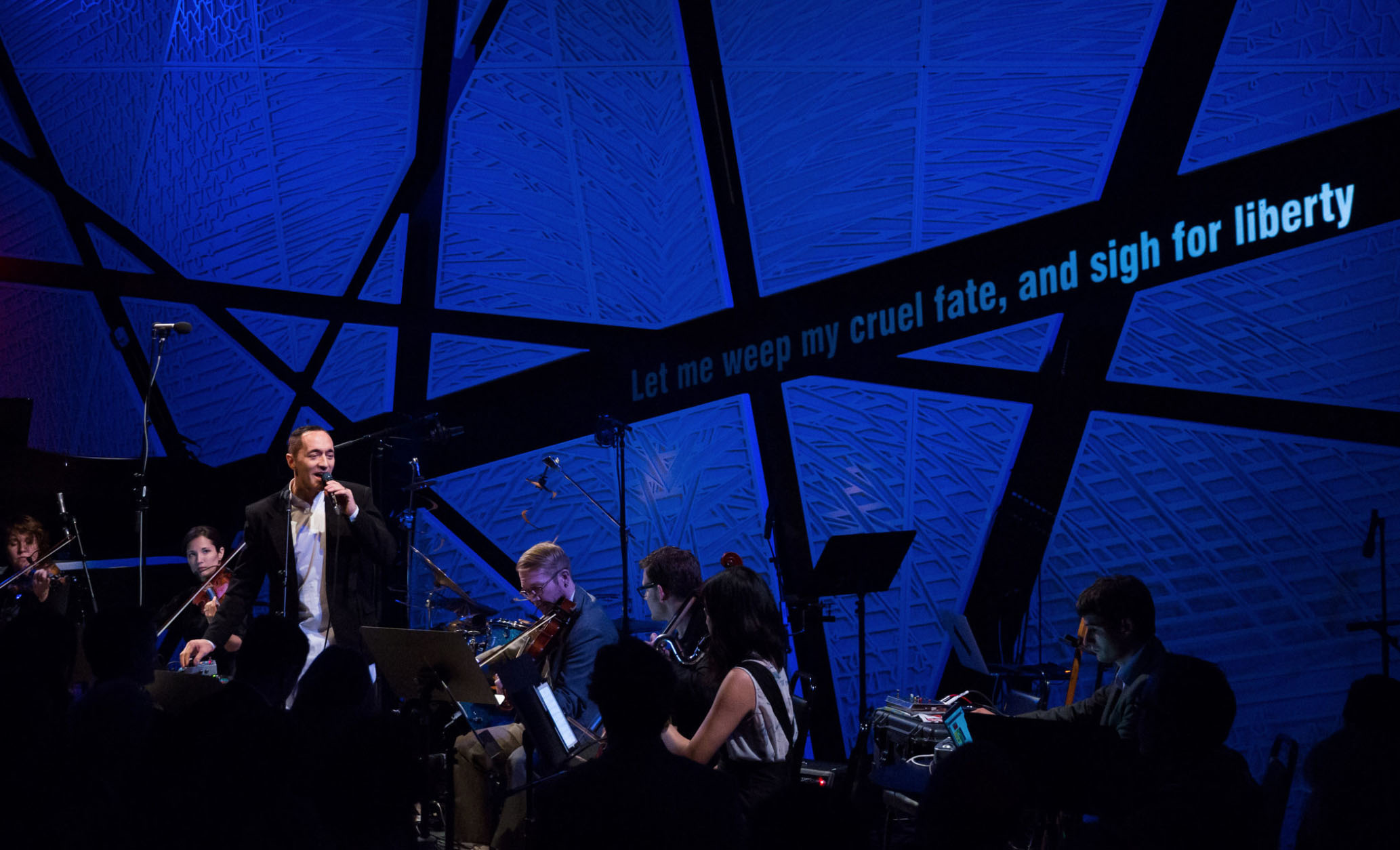
The vocalist Theo Bleckmann performed a Handel arrangement on Thursday at the opening of National Sawdust in Williamsburg, Brooklyn.

The vocalist Theo Bleckmann performed a Handel arrangement on Thursday at the opening of National Sawdust in Williamsburg, Brooklyn.

Via The New York Times, written by Zachary Woolfe:

Just over three years ago, a crowd gathered for a concert under the stars in the empty brick shell of an old sawdust factory in Williamsburg, Brooklyn. The program was a glimpse at the motley artistic philosophy behind the ambitious contemporary-music organization that was to grow within the shell: There were Syrian melodies and butterfly-shaped kites, flute duos and Mexican jazz singing. The building was to open in a year, and be called the Original Music Workshop.
Fund-raising hurdles being what they are, it took quite a bit longer than that. And by the time the $16 million space finally opened on Thursday, it had been renamed National Sawdust, in a nod to the original business.
National Sawdust, at the busy corner of North Sixth Street and Wythe Avenue, doesn’t give away its secrets all at once. It’s not unheard of, in condo- and design-filled 2015 Williamsburg, to encounter an old factory with some broad windows cut into the brick and a psychedelia-bright mural spreading across one side. At first glance the building could be … a tech firm? An avant-fashion boutique? An indie movie house?
But after you pass through a dark, glossy lobby, the main space comes as a soaring, distinctive surprise, vivid enough to mask the fact that it is, essentially, another black-box theater, which can be configured to fit an audience of 120 to 350. While New York knows black boxes well — a Sawdust competitor, BAM Fisher at the Brooklyn Academy of Music, opened in 2012 — this is a black-and-white box. Designed by the firm Bureau V, the intimate but airy, high-ceilinged space is lined with jagged white textured sound panels, separated to reveal thick black slashes of the wall beneath.
It feels, from the floor, like being in a futuristic forest clearing, and brings to mind what an experimental Brooklyn arts space might look like on a television show, all angular lines and moody lighting. The experience is even more disorienting up in the shallow balcony, with the angles of the walls seeming to stretch and crunch the room as you look at it.
National Sawdust in Williamsburg, Brooklyn.CreditRichard Perry/The New York Times

National Sawdust in Williamsburg, Brooklyn.CreditRichard Perry/The New York Times

Having raised money for construction costs, National Sawdust claims it will be solidly supported by what it says is a unique model of “philanthropic investors” who bought shares in the building that they can donate back to the nonprofit organization, which inhabits the space rent-free. (This is what you get when your founder, Kevin Dolan, is a tax expert.) Overseen by a creative and executive director, the composer Paola Prestini, and a team of artist-curators, the programming is still intentionally wide-ranging, poised at the intersection of pop, jazz and classical, of America and the world.
Heavy on Ms. Prestini’s own compositions and contributions from her husband, the cellist Jeffrey Zeigler (formerly of the Kronos Quartet), the mild, modest, even slapdash opening concert was a family affair that, at two-and-a-half hours, might better have been a more focused demonstration of the space’s possibilities. Instead it was a grab bag of harmless duos from the composer-pianist Nico Muhly and the violist Nadia Sirota; a muddled excerpt from Ms. Prestini’s “Yoani Songs”; a bit of propulsive percussion from Glenn Kotche; and the vocalist Theo Bleckmann’s lugubrious Handel arrangement.
The Gambian kora player Foday Musa Suso exuded gentle ease, backed by Mr. Zeigler and Philip Glass on piano; the Inuit throat singer Tanya Tagaq sounded like a satisfyingly demonic Björk. Most gala-ready was the charming mandolin virtuoso Chris Thile, confident as he alternated bluegrass songs and Bach arrangements: an apt summary of a typical young National Sawdust musician’s sprawling interests.
The acoustics, engineered by the firm Arup, were impressive in music both amplified and not, a difficult feat. When the pianist Stephen Gosling opened the concert with Ms. Prestini’s “Limpopo Songs,” the final note was radiantly clear as it died away. But just as lucid was the art-pop group Cibo Matto’s joyfully danceable yet easygoing set around midnight, with amplification that filled the space without overwhelming it.
National Sawdust’s next couple of months are jam-packed, with short festivals devoted to Terry Riley and John Zorn; an opera based on Bergman’s “Persona”; and a range of performances by searching musicians and ensembles like Emel Mathlouthi, Miranda Cuckson and Yarn/Wire.
The big Manhattan institutions, hungry for new audiences, are paying attention: National Sawdust will collaborate with Carnegie Hall and host installments of the New York Philharmonic’s Contact! new-music series. The challenge, with so many curatorial cooks hovering over the broth, will be making the offerings excitingly varied rather than merely scattered.
tags: The New York Times
categories: Press
Friday 10.02.15
Posted by Alexander Pincus
 

A Fantastic Opening for National Sawdust

Via Vulture, written by Justin Davidson:

A concert hall acquires magic slowly, as memories and music percolate into the walls. The process is fickle: Audiences and musicians revere certain shabby rooms, while other, more serviceable spaces remain generic receptacles. National Sawdust, a deluxe live-music pod floating inside an old brick box in Williamsburg, opened Thursday. Within minutes, it was already dispensing experiences of the kind that lodge in the mind: the vocalist Theo Bleckmann threading a Handel melody through buzzing clouds of electronic dissonance, Foday Musa Suso weaving a tapestry of kora patterns around Philip Glass’s piano, the Inuit singer Tanya Tagaq emanating walrus roars and eldritch howls. If that sounds like a lot of territory to cover in one night, consider it a preview of the range to come. The programming is thick with music, dizzyingly varied, directed not to one constituency but many.
My first impressions of National Sawdust were dominated by Chris Thile. Long and bendy as a bamboo switch, he curled around his mandolin, alternating his own avant-garde bluegrass compositions with Bach. The music rattled through him like a high-voltage current, emerging in a breakneck yet delicate performance of the Presto from Bach’s G-minor violin sonata. “There ain’t too many folks can play too many notes on a mandolin,” he sings in a self-mocking courtship song, an understatement he punctuates with a blizzard of pluckings. Indeed, there ain’t. And not many musicians can hold an audience rapt with so little gear.
The opening show gave the room a workout, from Nadia Sirota’s lovely viola solo by Nico Muhly to the electrified thunderings that backed up Tagaq. The acoustical engineers at Arup have produced a sensitive and versatile space, able to flatter the smallest peep and absorb an amplified assault. Some concert halls are designed to maximize a Mahler symphony or a string quartet. This one has to encourage whatever demented projects composers come up with down the line.
That sense of possibility and range informs the design. A bright, spray-painted mural on the exterior suggests that artists will create the institution, rather than the other way around. A vestibule lined with a herringbone pattern of black-glazed brick creates a buffer of handmade glamour between the street and the musical womb. Textured screens of various shapes and sizes, separated by black steel channels, clad the interior, making the space look at once improvised and calculated, patterned and kinetic — just like much of the music that filled it on opening night.
Kevin Dolan, the attorney, organist, and philanthropist who founded National Sawdust, gave the architects at Bureau V the task of letting audiences have their musical adventures in comfort. They got most of the way there, though, the movable chairs, like the programming, seem geared to the young. The place comes equipped with all sorts of flexible configurations, and producers will have to resist the temptation to pack as many people in as possible, even though that number will never reach 200. On opening night, the intimacy went a step beyond companionable, not just for the audience but also onstage. Performers sidled into position; stagehands had to extract music stands like sushi chefs deboning mackerel. Sitting in the front row, close enough to offer the guitarist Nels Cline a sip of my beer, I noticed that his cable had gotten wrapped around a laptop power cord. Should I reach over and unplug the computer to avert a disaster? (I didn’t; it was fine.)
These kinks will go, the kitchen will soon start accompanying sounds with food, and even musicians who usually appear at Carnegie Hall will want a taste of Williamsburg cool. (The New York Philharmonic has already signed up, for its new music series Contact!) Still, I worry. National Sawdust opened on the same night that Gotham Chamber Opera suddenly closed — one independent cultural firefly lighting up as another flickered out. The coincidence points out just how fragile musical institutions are, especially in a city as mercurial as New York. But a couple of hours into its existence, this one seemed tough and full of magic.
tags: Vulture
categories: Press
Friday 10.02.15
Posted by Alexander Pincus
 

Dust Bowl: Musicians get their hands dirty at Brooklyn’s National Sawdust.

Via The New Yorker, written by Russell Platt:

Before the turn of the century, there were two basic models for classical-music venues in New York: the concert hall (read Carnegie’s Stern Auditorium, or its little brother, Weill Recital Hall) and the alternative space (such as the Kitchen, the kind of place that offered opportunities to musicians that venues like Carnegie had little use for). Then Carnegie, in 2003, opened up Zankel Hall, a flexible midsized venue with a relatively relaxed ambience, and the traditional duopoly suddenly seemed outdated.
Enter the kids. (Le) Poisson Rouge, which opened in 2008, found success presenting all sorts of music in a club-style space on a for-profit basis. Then in 2013 came SubCulture, also run as a business, which has struggled financially despite besting its older competitor in its warm acoustics and living-room-style intimacy. Now a new Brooklyn space, National Sawdust, gets into the game, opening in Williamsburg on Oct. 1. Unlike its recent predecessors, it will operate proudly as a nonprofit, which will allow the creative process to come first.
“What kind of financial seed of support would I have needed in my twenties?” asks Paola Prestini, the dynamic composer and entrepreneur who is National Sawdust’s creative and executive director. The thirteen-thousand-square-foot space, a century-old former sawdust factory that has been radically reimagined by the Brooklyn-based architects of Bureau V, will serve simultaneously as concert hall, rehearsal room, record studio, and arts incubator, giving young musicians commissioning support and mentoring opportunities. What makes this all possible is a new financial model instigated by the venue’s founder, Kevin Dolan; he’s put together a team of “philanthropic investors,” who will co-own the building and benefit as it appreciates in value—essentially investing and donating at the same time. It’s also a great “insurance policy,” as Prestini calls it, for an initial month of concerts of breathtaking ambition and range. After an all-star opening night that features such influential musicians as Nico Muhly, Chris Thile, and Nadia Sirota, the venue will present festivals devoted to the music of John Zorn and Terry Riley, concerts by such acclaimed soloists as the pianist Alessio Bax and the violinist Johnny Gandelsman, an evening with the Inuit throat singer Tanya Tagaq, and the world première of Keeril Makan’s “Persona,” an operatic adaptation of the Ingmar Bergman film.
tags: The New Yorker
categories: Press
Thursday 10.01.15
Posted by Alexander Pincus
 

Can This Start-up With Cellos Shake Up Classical Music’s Business-As-Usual?

Via New York Magazine, written by Justin Davidson:

On a perfect summer night in 2012, the keening of a clarinet ricocheted off the century-old walls of a roofless sawdust factory and plumed out into the streets of Williamsburg. It was the first audible intimation of an unlikely dream: a tiny high-tech clubhouse where composers, musical adventurers, and classical-music performers could make as much noise as they wanted 24 hours a day. Three years, $16 million, and untold sleepless nights later, that brick shell enfolds a new hall and a new organization: National Sawdust. It’s the sort of place that makes a new-music aficionado want to bring a sleeping bag and move in for a few weeks. 
There’s nothing else quite like it in New York. Establishment venues like Zankel Hall have welcomed composers, the 28-year-old organization Bang on a Can has colonized virtually every concert space in the city, and (Le) Poisson Rouge has found a winning combination of eclectic programming, casual atmosphere, and poor acoustics. But new music has never had its own miniature Carnegie Hall, a space explicitly designed for musical experimentation.
Google the phrase “classical music is …” and you get a neurotic series of choices: “… dying,” “… the best,” and “… dead.” Options 1 and 3 are demonstrably false, but even so, plenty of music lovers feel the same mixed response, whipsawing between affection and pessimism. They don’t all have the energy of Kevin Dolan, a 63-year-old amateur organist, aspiring composer, and tax lawyer living in Washington, D.C. He could have simply written annual checks to the Kennedy Center and hoped the business would take care of itself. Instead, he says, he realized that young musicians “needed a place to record and rehearse —  a platform where they could help develop a broader, younger audience.”
At first, thinking he could simply convert a townhouse he owned in Brooklyn, Dolan started hunting for architects who were young enough to be both adventurous and cheap. He settled on Peter Zuspan, Laura Trevino, and Stella Lee of Bureau V. It quickly became clear that Dolan’s fantasy would not fit within his property or his budget. “He had three requirements,” Zuspan says. “The space had to be acoustically strong. Audiences shouldn’t have to subject themselves to discomfort. And there would be good food.”
Zuspan started biking around Williamsburg, looking for a commercial-size lot, at least 40-by-100 feet, close to a subway station. Once he located the empty sawdust factory, the architects figured out how to insert an acoustically insulated, visually exciting womb while leaving room for a small restaurant. “Kevin said we have to do this well or not at all,” Zuspan recalls, marveling at the amount of responsibility that Dolan entrusted to newbie designers. “He wanted us to get involved in honing the mission for the nonprofit, in fund-raising, and in coming up with the identity of the place. He only wanted people who were under 40 to vote on all decisions.” Some of the money, almost inevitably, was raised through a Kickstarter campaign; the rest, through conventional donations and patronage.
Building a hall is one thing; creating an institution is another, and for that Dolan turned to the young composer Paola Prestini, who had already developed a reputation as a formidable impresario even before she graduated from Juilliard. Rather than wait around for an opera company to call with a commission, she co-founded the production collaborative VisionIntoArt, which presents other composers’ work as well as her own. “I see it as a responsibility of every composer and musician to create dialogue between arts and opportunities for their peers,” she says. That reciprocity paid off: By the time she started booking National Sawdust, she had built up large stores of gratitude in the new-music world.
Prestini also turned out to be a networking virtuoso. She got a handful of governments to cover their artists’ travel expenses. She brokered partnerships with other organizations, like the Choir of Trinity Wall Street, the mini-opera festival Prototype, and a clutch of music ensembles. She roped in generous elders (Terry Riley, Philip Glass) and her own cohort (David T. Little, Nico Muhly) to help with programming. Even before the plumbing was in, the New York Philharmonic decided to move its roving Contact! series to National Sawdust, starting what the orchestra’s artistic planner Ed Yim describes as “emotionally and strategically a long-term commitment.”
There is some irony to opening a scrappy new-music venue in a neighborhood where most musicians can no longer afford to live. Williamsburg provides a steady stream of tourists, ticket-buyers with cultural curiosity and disposable income, and the kind of cred that the Philharmonic craves. But it’s clear that Prestini is hoping to establish an organization with a long, even global reach. Part of its power will lie in the volume of programming: After an opening frenzy, it’ll host two sets a night, every Wednesday through Sunday — more than 500 shows in the first year. (The place will be closed but not quiet on Mondays and Tuesdays, when musicians can rehearse and record.)
Prestini is determined that National Sawdust not be merely a showcase for her predilections. She’s lined up 27 “curators” with carte blanche to program whatever they can. So, for example, the season opens with a mini-festival devoted to Schubert’s Winterreise, including a multilingual rewrite by the jazz pianist Uri Caine and the vocalist Theo Bleckmann. For now, Prestini is leaning heavily on her friends — one curator is her husband, the former Kronos Quartet cellist Jeffrey Zeigler — but that will change as National Sawdust acquires its own identity.
The organization’s range mirrors Prestini’s experience. Born in Trento, Italy, she moved with her family to Nogales, Arizona; her father opened a woodwind factory just across the border in Mexico. After her parents split, she and her mother spent summers in Italy, leaving Prestini with a sense of half-belonging in several different worlds. “I didn’t find my Italy until I traveled to the south,” she says. “I did field recordings in a foster-care home in Lecce and asked the kids to sing a song from their childhood, which I used in a piece called Body Maps.”
For Prestini, organizing sounds and organizing people have never been entirely separate activities. “I see it as a really fluid interaction. The creativity of composing informs the creativity of running an organization.” She sets aside Mondays and Tuesdays, plus a few hours on weekends, for composing, and gives the rest of the week to National Sawdust. Until their offices are ready, she and her tiny staff have been working in a café down the street, sustained on caffeine, free Wi-Fi, and start-up adrenaline.
“Raising money doesn’t scare me,” Prestini says. “Still … I didn’t understand the magnitude.” Even Dolan was caught by surprise by the amount of energy National Sawdust continues to suck up. “It was going to be my post-retirement project,” he says, chuckling. As his vision has enlarged, he’s had to keep working to keep the money spigots open. Determined to keep ticket prices around $25, Prestini and her team spent the summer frantically raising the last of the $2.5 million in operating expenses that they needed.
As performing-arts start-ups go, this one has a spectacular collection of advantages. Dolan has significantly upped the institution’s chances by ensuring that it won’t need to pay rent for five years, and possibly not ever. In a scheme that only a tax lawyer could have thought up, he persuaded patrons to buy shares in the building. Five years from now, when its value has (almost assuredly) risen, his gang of philanthropists can donate the venue to the nonprofit that runs it — and write off more than they invested. Everybody wins.
“I never wanted it to be just my baby,” Dolan says. “The whole idea was to create an institution that has a life of its own and that will be around 100 years from now.”
tags: New York Magazine
categories: Press
Monday 09.07.15
Posted by Alexander Pincus
 

National Sawdust Prepares for an Oct. 1 Opening

Via The New York Times, written by Nate Chinen:

Paola Prestini, the creative and executive director of National Sawdust, stood in the space’s balcony one recent afternoon, looking over what would soon be a bustling concert hall. “The speakers just came in,” she said cheerfully, pointing at a rig hanging from the ceiling, still in its filmy protective covering. A geometric metal framework crisscrossed the room’s far wall, next to the hydraulic platforms that will make for a flexible stage.
National Sawdust, a nonprofit performance space, recording facility and creative hub in the shell of a century-old sawdust factory in Williamsburg, Brooklyn, opens on Oct. 1. It will be a significant addition to the musical landscape in New York — at least for a broadly defined constellation of artists working in the zone where compositional form, improvisational technique and global or technological savvy find ways to converge.
Founded by Kevin Dolan, a tax lawyer and amateur composer who contributed roughly $9 million to the project, National Sawdust has been in the works for years. (Its previous name was the Original Music Workshop.) Its centerpiece is an acoustically sealed theater, designed by the Brooklyn studio Bureau V with Arup, an engineering firm. A restaurant and lounge will be run by Patrick Connolly, a James Beard Award-winning chef.
The primary mission of National Sawdust is the incubation of new works through commissions, artist residencies and in-kind services like rehearsal space. Its first month of programming will include festivals devoted to the composers Terry Riley (Oct. 3-5) and John Zorn (Oct. 9-10 and 30-31); a screening of the silent film “Nanook of the North,” with a live score by the Inuit throat singer Tanya Tagaq (Oct. 2); the flex dancer Reggie Gray, known as Regg Roc, with the performance artist Helga Davis (Oct. 13); the mezzo-soprano Alicia Hall Moran (Oct. 19); and the vocal shape-shifter Theo Bleckmann, with the John Hollenbeck Large Ensemble (Oct. 22).
“It’s essentially artists who have very, very strong identities,” said Ms. Prestini, a celebrated composer herself. “They are more than just great performers; they’re auteurs. They’re bringing forward a very specific perspective on their field — and an international perspective, really treating New York as a bridge to different cultures.”
National Sawdust has held performances throughout construction, and Ms. Prestini seemed unfazed by the apparent unfinished business on site. She was looking ahead to an opening-night program, “Discover the Space,” whose early show would include performances by Ms. Tagaq, Mr. Bleckmann, the mandolinist Chris Thile and the composer Nico Muhly.
The late show will include the steel pan player Andy Akiho, the poet Roger Bonair-Agard, the explosive art-pop band Cibo Matto and a special unannounced guest.
“I feel really ready,” Ms. Prestini said. “Even if there’ll be some kinks to work out, we’re ready.”
 
tags: The New York Times
categories: Press, Archive
Monday 09.07.15
Posted by Alexander Pincus
 

Have You Discovered the Best Oyster Bars in New York City?

Via The New York Observer, written by Zachary Weiss:

In the last few moments of summer, reap the seasons rewards by enjoying the best foods on offer. While most consider raw oysters to be a tried and true aphrodisiac, I prefer to think of them more as a summer snack staple. Thus, rather than spending your last summer Friday packing into the Jitney with the masses, belly up to one of these awesome oyster bars. 
1. Grand Banks The “next big thing” in experiential New York bars, Grand Banks, takes guests aboard a schooner docked in Tribeca. Pay a visit to this hotspot before it becomes more sardine-packed than The High Line.
2. Grand Central Oyster Bar Brooklyn It may not be located inside the actual midtown transport hub, but Grand Central Oyster Bar’s Park Slope locale makes for an even better oyster-filled happy hour devoid of commuter (and tourist) traffic. 
3. The Bar Room The Bar Room, tucked uptown on 60th St between Park and Lexington, serves up quality cocktails and $2 every day from 4-6 PM. The earlier you arrive, the more likely you are the actually score some before they sell out.  
4. The Mermaid Inn The Mermaid Inn’s three locations in the Upper West Side, Greenwich Village, and The East Village are the brain child of restauranteur Danny Abrams, and have been known to pack to the gills on a summer Friday. The small spot also offers $1 oysters every Monday starting at 5 PM through the evening. 
5. Lure Fish Bar The subterranean Soho boîte, where Mets pitcher Matt Harvey once crafted a sushi roll for me, is a mecca for all things seafood-not just oysters! 
6. Blue Water Grill  This mainstay located on Union Square first opened in 1996, and formerly operated as the Metropolitan Bank, which is still visible in the eatery’s soaring ceilings and power lunches.
7. Hudson Malone Hudson Malone proprietor Doug Quinn is the master cocktail maker, formerly of PJ Clarke’s, who recently opened this new eatery with the eye for a no-frills dining experience.The bi-level space is slightly hidden on 53rd St, thanks to a sign that simply reads “Eva Dress Shop,” but keep an eye out for dim gas lanterns outside. He refers to it as “a real New York joint.” Mr. Malone also has a knack for remembering all of his customers. 
8. Maison Premiere This Williamsburg cocktail den and oyster bar offers an oyster happy Monday-Friday from 4-7pm, as well as on Saturday and Sunday from 11am-1pm. Maison Premiere’s selection of oysters changes daily, and a select 15 varieties are available for $1-$1.25.
tags: The New York Observer
categories: Press, Archive
Thursday 09.03.15
Posted by Alexander Pincus
 

Grand Banks Rings The Nasdaq Stock Market Opening Bell

Via NASDAQ

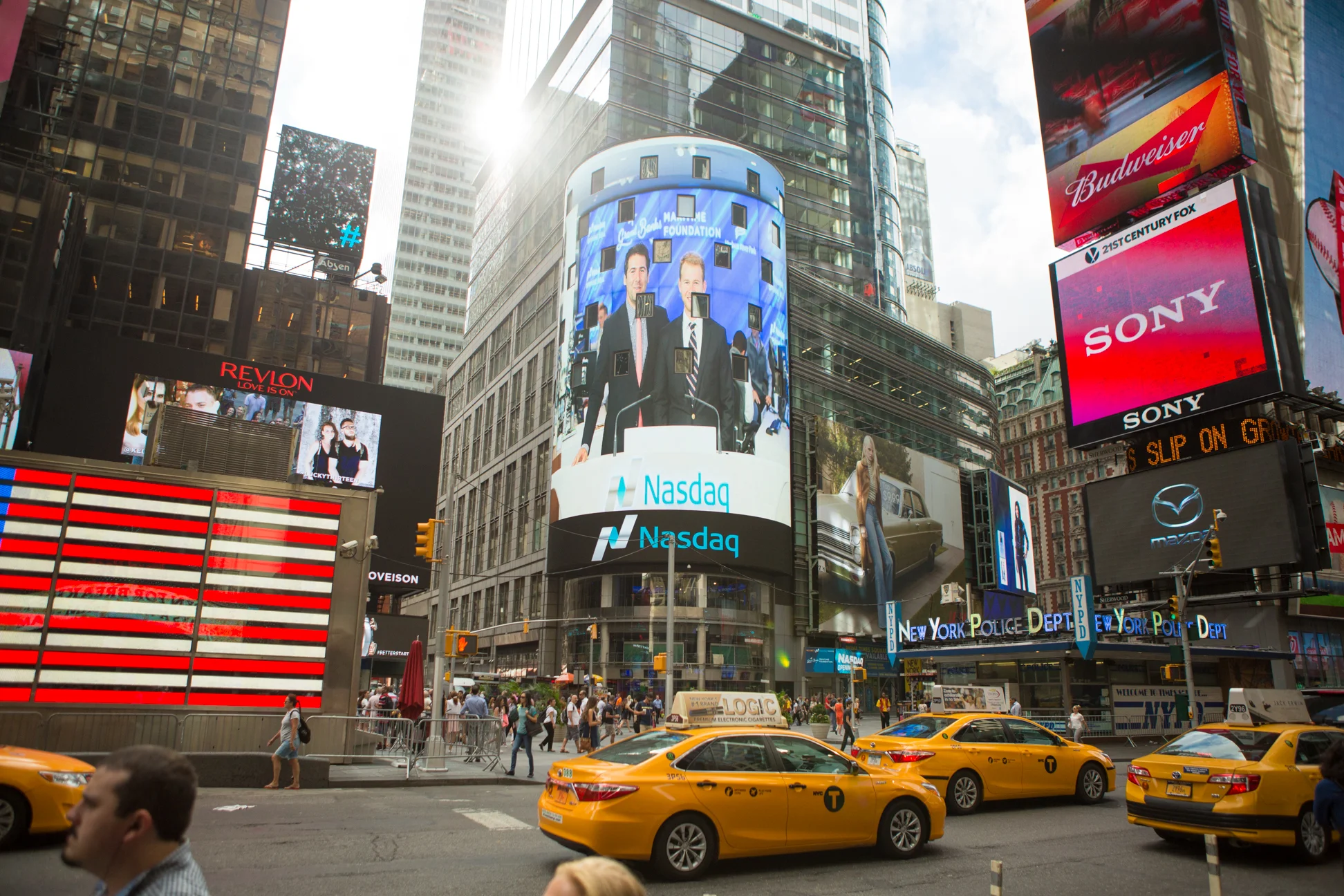
Grand Banks, an award-winning oyster bar aboard a historic ship - founded as a joint venture between the non-profit Maritime Foundation and the hospitality group Arts & Leisure - will visit the Nasdaq MarketSite in Times Square.

In honor of the occasion, Alexander Pincus, Co-Founder will ring the Opening Bell. 

tags: CNBC
categories: Press, Archive
Wednesday 08.19.15
Posted by Alexander Pincus
 

The Case for Eating Small Fish

Via The New Yorker, written by John Donahue

From the beginning of time, through the artist Bruegel’s day, and until relatively recently, little fish had only big fish to fear. Since the middle of the twentieth century, however, some little fish—forage fish, to be precise—have faced radically increased threats from humans, and, by extension, from the pigs and chickens that the fish are increasingly being fed to. Forage fish are now threatened worldwide, which has potentially troubling implications for the entire food chain. In conservation circles, the suggestion lately is that encouraging consumers to eat small fish might, ironically enough, be the best way to save them.
Last week, on the decks of the Grand Banks, an oyster bar situated inside a restored cod-fishing schooner moored to Tribeca’s Pier 25, the chef Kerry Heffernan and Paul Greenberg, the author of “Four Fish” and “American Catch: The Fight for Our Local Seafood,” considered this notion in detail, over a lunch, prepared by Heffernan, that consisted essentially of bait. The meal was there as a part of Sustainable Seafood Week, an annual series of events dedicated to responsibly sourced fish. A small crowd of adventurous, ecologically minded diners had assembled beneath the shade of the boat’s yellow-and-white-striped awning.
Forage fish, like many other kinds of fish, are in peril largely because of technological advances. The advent of synthetic fibres, in the nineteen-forties, allowed fishermen to create nets that were larger and longer-lasting than ones made of natural fibres such as hemp. Shortly thereafter, the rise of diesel engines permitted fishing farther offshore than ever before, and sonar, which had been refined to wage submarine warfare, was adapted to locate schools of fish. Factory trawlers made fish processing much more efficient, and fishing vessels became larger and larger. As a result of such developments, the world’s annual catch of fish quadrupled in the four decades after the Second World War. Despite stricter regulations and increased awareness of overfishing, many stocks remain in rapid decline.
From the perspective of small fish, the potential collapse of predatory species such as cod, tuna, and swordfish, which are popular with diners, would seem to be good news. However, as the larger, high-value fish became increasingly scarce, the fishing industry turned to farming, and those penned fish needed something to eat. Commercial fishermen have thus begun fishing down the food chain, and smaller fish behave in ways that make them very vulnerable, swimming in large, dense schools that are easy to spot from the air and require little fuel to pursue. “Fishing for these animals may be likened to shooting fish in a barrel,” a National Coalition for Marine Conservation report noted in 2006. Three years ago, a far-reaching analysis of forage fish, put out by the Lenfest Foundation and financed by the Pew Charitable Trusts, reported that thirty-seven per cent of global seafood landings recorded annually consist of forage fish, up from less than ten per cent fifty years ago. Of that thirty-seven percent, only a small fraction goes to the consumer market—mostly in the form of fish oils and supplements—while the bulk is processed into pellets and fishmeal, then fed to animals like salmon, pigs, and chicken.
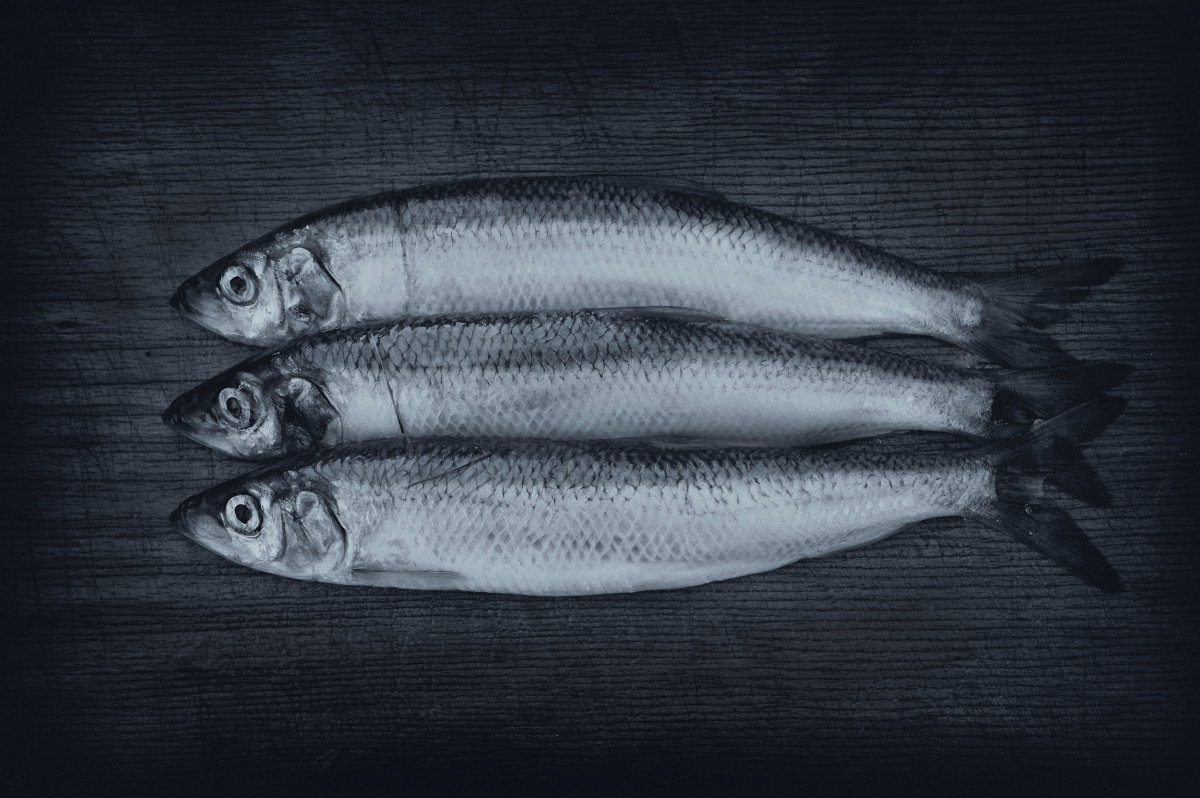
“We are grinding up a third of the ocean each year,” Greenberg told the diners at the Grand Banks, before the food was served. Greenberg was on hand to discuss the virtues of catches such as herring, mackerel, and butterfish, which, he said, are very high in omega-3 fatty acids (hence their value to the supplement industry), albeit bony and strongly flavored. “They are healthy to eat, but tricky to cook,” he said.
The meal had been organized in part to address one of the Lenfest report’s more radical conclusions: that forage fish, because they support swordfish, tuna, and other in-demand predators, are worth twice as much to us in the water than when transformed into animal feed. The authors suggested cutting the haul of forage fish in half each year. But of course this would also halve the income of the fishermen who depend on that catch, so other ideas began to circulate. “What if we cut the forage fish take in half and instead paid fisherman twice as much for that catch, since it would be sold as valuable human food rather than cheap animal feed?” Greenberg later mused to me. “By the reasoning of the Lenfest report we’d also have more wild big fish.” He added, “Of course this is all very sort of economics-in-a-bottle type thinking. What would happen to the market for forage fish if their price doubled? It could possibly incentivize more people to catch them. But I think it’s possible to engineer a management regime where they wouldn’t.”
This scenario would require creating a consumer market for forage fish—in other words, making fish like herring, mackerel, and anchovies seem tasty and desirable. A larger effort is also underway; recently, the conservation organization Oceana got twenty of the world’s top chefs, including Ferran Adrià, Massimo Bottura, Grant Achatz, and René Redzepi, to pledge to serve such fare.
In Tribeca, the task was left to Heffernan, the executive chef of the Grand Banks and a “Top Chef Masters” finalist in 2012. “He’s a genius with these fish, which are not the most popular in the media,” Alexander Pincus, the owner of the Grand Banks, said to the crowd. Duly introduced, Heffernan, wearing chef’s whites, shorts, and blue sneakers, told a story about a sport-fishing friend who had once brought his day’s haul of fluke and black sea bass to a sushi restaurant in Amagansett, on Long Island. The fisherman wanted the chef to prepare his catch, but instead he began cutting up the squid and other bait. It was delicious, the friend reported. “For a while now, I’ve been pondering how to do this,” Heffernan said.
He began by serving surf clams, which are used to catch codfish, and whelks, which, though small, aren’t typically used as bait. His clam preparation demonstrated a deft touch. He used to dig up surf clams as a kid on Cape Cod, he explained, and would cook them “forever,” in a chowder. At the Grand Banks, he’d sliced them thinly for a ceviche. Dressed with makrut lime and laid out delicately beside bright slices of avocado in half of its softball-sized shell, the clam was as attractive as it was crisp and refreshing. The whelk, which had been cooked in its shell, was slightly less successful. Rubbery by nature, it tasted less like bait than like a fishing rod’s grip.
The rest of the meal was highly whimsical. The herring, which is commonly used as bait in lobster traps, was paired with a lobster sauce. One diner said the herring was “delightfully mild”; another countered that the bones were “delightfully small.” To conclude the meal, Heffernan served butterfish—typically used as bait for tuna—with a tonnato sauce, which is made with canned tuna. “Today, the butterfish wins,” he declared, to laughter from the assembled diners. He proved correct: with a crisp and savory crust, the palm-sized fish was as addictive as French fries. It was delicious enough, even, to save a little fish from extinction.
tags: The New Yorker
categories: Press, Archive
Friday 07.03.15
Posted by Alexander Pincus
 

Waterways offer deeper insights into New York City

Via San Francisco Chronicle, written by Spud Hilton:

When you grow up with the notion of restaurants on tall ships being pirate-themed nightmares with little more than fish and chips and hush puppies slathered in tartar sauce, it’s difficult to reconcile a plate of fresh Black Point oysters from Nova Scotia and a well-made Negroni at a table on deck.
The wildly popular Grand Banks operates out of the 1942 fishing vessel Sherman Zwicker, a 142-foot schooner docked at Pier 25 in Hudson River Park (another waterfront rehabbed into a park and sports courts and fields). According to the owners, the restaurant was inspired by “the floating oyster barges that lined lower Manhattan’s waterfront in the 18th and 19th centuries.”
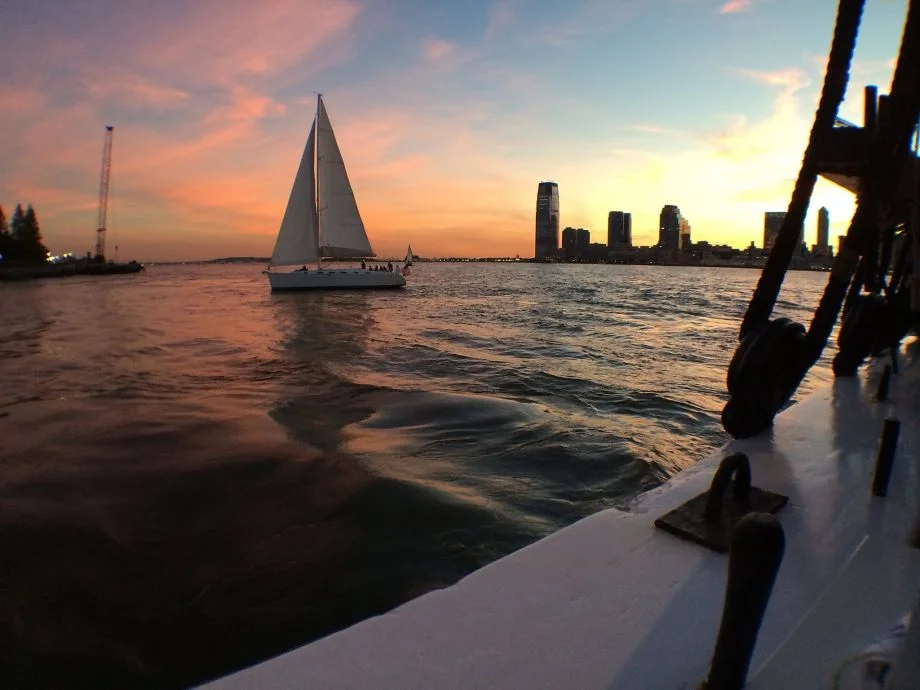
Looking across the deck on a Saturday night, however, it was a good bet that the young, hip crowd was not there for a history lesson so much as the simple upscale menu and drinks, the sea-level view of the new World Trade Center tower and the sunset over New Jersey (the only reason most Manhattanites gaze in that direction).
As simple a concept as Grand Banks seems, almost no one was doing it — at least not well, said David Farley, a New York friend who writes about food and travel.
“Even though Manhattan, specifically, is surrounded by water, it really doesn’t take full advantage of the water here,” Farley said over some baked oysters and ceviche. “There are very few water-centric places to eat and drink in New York City. It’s crazy.”
tags: The San Francisco Chronicle
categories: Press, Archive
Saturday 05.02.15
Posted by Alexander Pincus
 

Brothers Aim to Give Fair Haven’s Old Barge New Life

Via The New Haven Register, written by Mary E. O'Leary.  

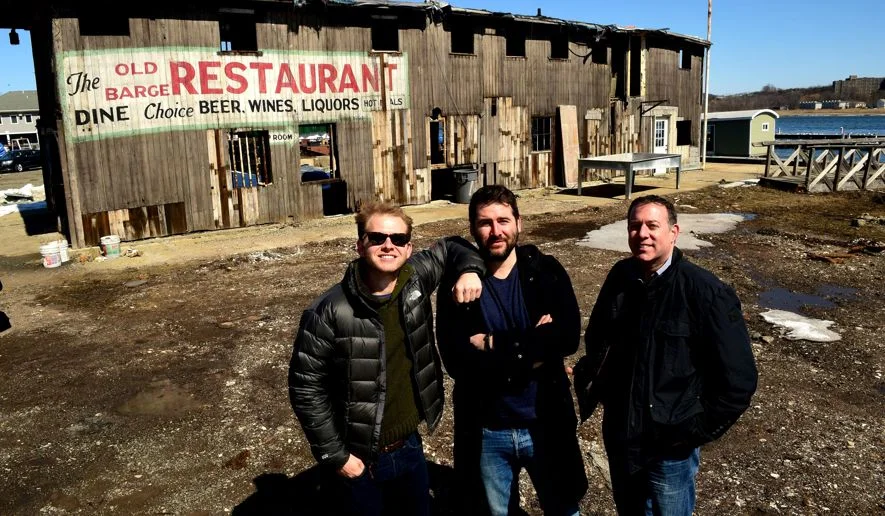
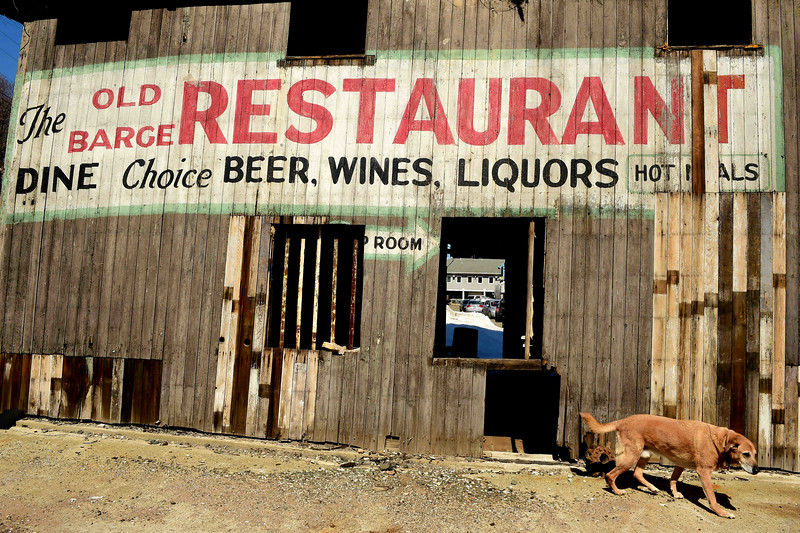
NEW HAVEN, Conn. (AP) - Fair Haven’s Old Barge, possibly the one remaining connection to America’s mid-19th century booming oyster industry in New York, is going home.
The vessel, which began life as a working oyster barge on the East River in Brooklyn when the industry was selling 6 million of the mollusks a week, has been on the shore of the Quinnipiac River at 289 Front St. since around 1921.
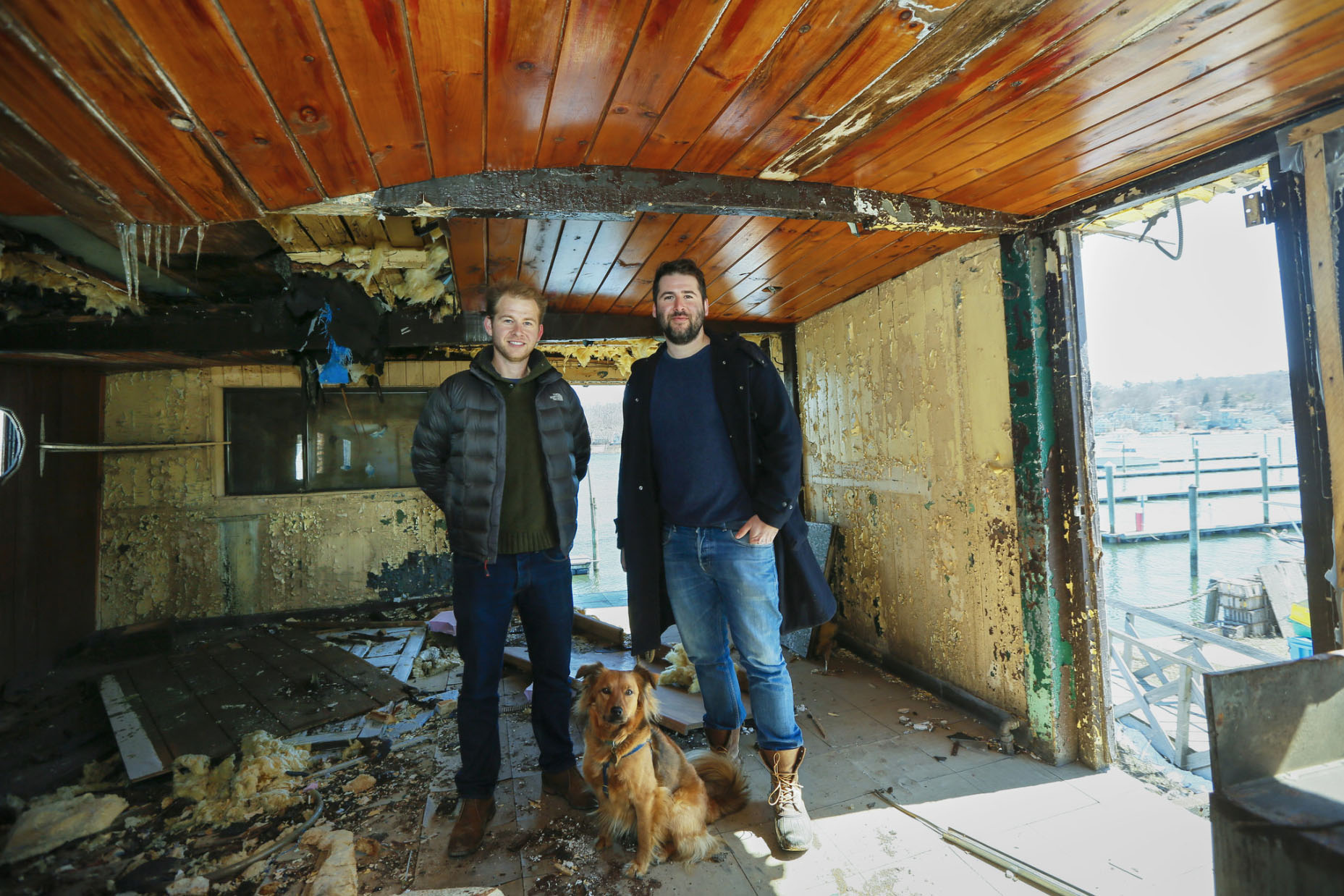
Alex Pincus and his brother, Miles, of the Maritime Foundation, are having the barge disassembled over the next few weeks and trucked to the Atlantic Basin, a marina in the Red Hook section of Brooklyn, where they hope it eventually will be restored and begin a new era.
There are no decisions on what that new chapter might be, but the brothers already have restored a 1942 Grand Banks all-wooden schooner, the Sherman Zwicker, at the Hudson River Park’s Pier 25 where they opened an outdoor oyster bar on the deck.
This is a source of revenue to make the schooner, which traveled the Eastern Seaboard fishing cod, a self-sustaining example of maritine history for a new generation to experience.
Alex Pincus, an architect with a love of boats, said the moving costs to Brooklyn are in the area of $25,000, while full restoration is around $500,000, necessitating a lot of private fundraising.
Miles Pincus, the younger brother, who has a masters in maritime science, is president of the nonprofit Maritime Foundation, while Alex is the vice president.
“We have been doing boating stuff from New York for the last ten years,” Alex Pincus said. He said Miles rebuilt the biggest passenger sailboat in U.S. The Clipper City is at the South Street Seaport in New York.
The old barge, possibly 76 years old by the time it arrived in New Haven, evolved into a full-service speakeasy during Prohibition, with accommodations for a brothel upstairs.
Starting in the early 1970s, New Haveners mainly remember it as the Old Barge Cafe, a storied watering hole run by John Tsilfoglou, who bought the Fair Haven Marina where the barge had landed some 50 years before on Front Street.
He closed that out in 1987 with no patrons at the bar for almost 30 years.
Preserving the Old Barge and finding the best home for it has always been the goal of its latest owner, Lisa Fitch, who took on that responsibility in 2007 after buying the property and renaming it the Quinnipiac River Marina.
“I think the destination is a positive one. It gives it justice, historical justice,” Fitch said of the Pincus brothers’ plan.
She said she managed to ignore the advice of family and friends for the past eight years to junk it, hoping a solution on how to preserve it would come along.
It’s a love match, with Fitch giving the barge to the care of the brothers at no cost.
There were many lovers of all things marine Monday to welcome the Pincus brothers and take another tour of the Old Barge.
Robert Greenberg, a New Haven history buff, has already rescued many examples of 1920s bottles that were found in the hull, as well as pieces of pottery and rusted components of a Model T car that he said was on the site.
Greenberg has a favorite place he wants to see the Old Barge call home: the Brooklyn Bridge Park. “I think that would be a fabulous location,” he said.
The Maritime Foundation, though a spokesman, agreed that that would be one of their first choices, but they don’t want to rule out any options at this point.
Greenberg said the Old Barge was built anywhere between the 1840s and ‘50s. By the early 20th century, the oyster industry was defunct, when some blamed it for a cholera outbreak. It went from 6 million eaten a week, to zero.
“It was the hot dog of its day,” said preservationist Ken Karl of the popular 18th century food.
John Kochiss, a retired Mystic Seaport researcher, was the first to realize the significance of the barge almost four decades ago. He tried to get the seaport to take it on as a project, but his brother, Joseph Kochiss, said it didn’t have the money.
Oyster barges, which are two-stories tall, have hulls that slant inward.
Joseph Kochiss, called it a “tumble” design, which makes it look like a miniature Noah’s ark.
On the East River, the barges were nestled tightly next to each other. The bowed sides kept them from being damaged when the water got rough.
The barges operated by receiving the oysters at one end of the lower level, where there also was a shucking room. A gangplank at the other end allowed customers to come in and purchase the oysters.
The product could be stored in the lowest part of the barge, where they would stay cool in the summer and not freeze in the winter.
Houses along Front Street in New Haven and some cross-streets had cellars that opened to the street, where workers would shuck the mollusks.
Originally, three of the barges were brought to the Quinnipiac River in the 1920s, but the other two were scuttled and their remains can be seen in the river.
The Quinnipiac River Marina will soon be for sale; Fitch expects it will be on the market next month with a $2.95 million asking price.
In the meantime, Fitch said once the barge is moved and the area is cleaned up, by June she hopes to lease an area to a rowing club that will later be part of the city’s boathouse project at Long Wharf.
That project won’t be finished until 2017, so Fitch offered her services to fill the gap.
The Long Wharf boathouse is being underwritten by the state as mitigation for demolishing the Yale Boathouse that was lost as part of the expansion of the Pearl Harbor Bridge.
tags: The New Haven Register
categories: Press, Archive
Saturday 04.04.15
Posted by Alexander Pincus
 

An 1850s-Era Oyster Barge Is Saved for Yet Another Life on the East River

Miles and Alex Pincus, brothers and maritime preservationists, on the second floor of the barge, which will be returned to and restored in New York City. Credit Ángel Franco/The New York Times

Miles and Alex Pincus, brothers and maritime preservationists, on the second floor of the barge, which will be returned to and restored in New York City. Credit Ángel Franco/The New York Times

Via The New York Times, written by Corey Kilgannon:

NEW HAVEN — For years, a shoddy shed of dilapidated wood has cluttered up the boatyard of the Fair Haven Marina, a hub for recreational boaters on this stretch of the Quinnipiac River, just east of Yale University.
Brought up from New York City nearly a century ago, it is an 1850s-era oyster barge that has had various incarnations — as a speakeasy, a restaurant called the Old Barge and, finally, as a dive bar before closing for good in 1987. It was then left to languish in the boatyard, too leaky even to use as a storage shed.
“Most people wanted me to tear it down, but I said, ‘That can’t happen,’ ” the marina’s owner, Lisa Fitch, said. “Everyone who grew up around here had a beer here.”
She drank there too, as a young adult, she said, and had eaten there as a child, when the barge was still a restaurant.
But for the yard’s manager, Brett Seriani, it was more of a headache than a local landmark, and he urged Ms. Fitch to bulldoze it.
“She kept saying, ‘No, it’s historical,’ ” Mr. Seriani said. “But come on, there’s historical and there’s hysterical.”
Mr. Seriani can smile now because the old barge is finally departing, and not in a Dumpster. Instead, it is being carefully dismantled to be taken by truck to the Brooklyn waterfront, where it will be rebuilt it to its original grandeur, and, if all goes well, will float in the East River off Lower Manhattan within a year.
That is the plan envisioned by the Pincus brothers, Alex and Miles, maritime preservationists and Manhattan restaurateurs who specialize in the restoration of old boats.
Alex Pincus said the barge could become a maritime museum or a dining establishment like Grand Banks, an oyster bar the brothers opened last summer on a historic schooner that they restored and docked on the Hudson River at Pier 25 in Manhattan.
Mr. Pincus said he had read a newspaper article last summer that mentioned Ms. Fitch’s desire to sell the marina. It also said she was hoping to find a taker for what was perhaps the last of the many oyster barges that docked as floating markets along the East River, near the Brooklyn Bridge, in the late 1800s and early 1900s.
“We saw that it was the only one left, and potentially available, and it was something we had to do,” he said.
Numerous attempts over the years to move and preserve the barge had sputtered. But the brothers’ background and vision impressed Ms. Fitch, she said, so she sold it to them for $1.
A local, amateur historian, Robert S. Greenberg, said that the vessel was probably built in the mid-1800s and that its structure seemed to match one of the barges in historic photographs he had found.
Oystermen during that era would steer their small sailboats up to the rear of the barges and offload their catch, which barge operators would sell wholesale or serve fresh on the piers to lines of customers, he said.
“The barges were like processing plants,” Mr. Greenberg said. “The oysters came in one end and went out the other very quickly.”
The barges sprung up when New York City was still the oyster capital of the world and lower New York Harbor had about 350 square miles of oyster beds, where hundreds of millions of bivalves were harvested every year.
Around 1920, as the oyster industry in New York began to decline, Mr. Greenberg said, the barge was bought by Ernest Ball, who owned the Fair Haven marina property at the time. It was towed to Fair Haven, which still had a thriving oyster industry along the Quinnipiac River.
The barge was floated onto the property via a short canal, which was then filled in. During the 1930s, it was a speakeasy.
PhotoOyster barges moored on the Hudson River in 1912, before the industry in New York City began to decline, around 1920. Credit The Oysterman and Fisherman
“The reason it survived is because it got landlocked,” Mr. Greenberg said, saving it from storms and a rotting hull.
It still bears “Old Barge” restaurant signs — “Choice beer, wines and liquors, hot meals” — painted decades ago but preserved under shingle siding for decades. According to local lore, the second floor may have featured a bathtub and a brothel for the oystermen.
Mr. Greenberg showed buckets full of bottles and pottery and china shards that he excavated from a section of the barge’s hold.
“It had all these lives,” Mr. Greenberg. “And now it’s going home to the East River.”
Alex Pincus said the barge, which is 17 feet wide and 70 feet long, would be reconstructed by a shipwright and a team of boat builders at the Atlantic Basin in Red Hook, Brooklyn.
Mr. Pincus said they hoped to use as much of the barge’s original materials as possible, especially the larger support timbers and beams. But, he added, much of the wood and cladding are in poor shape and will have to serve as models for new versions.
The barge will be rebuilt along the identical structural lines, including the tapered shape that allowed it to rock without its roof crashing into adjacent floating barges and the bowed floor that allowed proper drainage.
The brothers’ plan is to pursue a docking location in a “historically appropriate” spot near where the original oyster barges once floated on the East River, Mr. Pincus said.
Of the barge, he said, “It’s harder to relate to, in a marina in Connecticut, but if you bring it back to New York, it just sort of unleashes the potential.”
This made sense to Mr. Seriani, the yard manager, who laughed when asked if he patronized the barge when it was a dive bar.
“I spent a week there one afternoon,” he said, dragging on a cigarette. “It was a real bucket of blood. They had to put a cage around the back deck because of the fights — people would get thrown off the deck into the water.”
The floor was uneven, he remembered, and “you knew you were too drunk to drive when it seemed level to you.”
Ms. Fitch said she had been willingly paying an extra $6,000 each year in property taxes to keep the structure on the property because, “I knew it would all fall into place somehow.”
tags: The New York Times
categories: Press, Archive
Friday 04.03.15
Posted by Alexander Pincus
 

The Imbibe 75

Via Imbibe, written by Miranda Rake:

Take one painstakingly restored 1942 Grand Banks schooner, add the Manhattan skyline at sunset and former Milk & Honey bartenders, and you've got a recipe for a perfectly blissful evening. Alex Pincus – who created Grand Banks in partnership with his brother Miles and Adrien Gallo as a way to promote maritime culture – was inspired by the oyster barges that lined Manhattan's coastline in the 1700's, serving liquor and oysters and largely defining the city's drinking culture at the time. Several centuries later, New Yorkers still delight in liquor and oysters (and in cocktails like the Jungle Bird and the Negroni Sbagliatio, and bites like lobster rolls and ceviche), and Grand Banks draws crowds for its shipboard shindigs to its spring-and-summer berth on the Hudson River, at Pier 25 in Tribeca. Money earned by Grand Banks is poured back into the maintenance and preservation of the historic, on-of-a-kind vessel. Keep an eye out for the return of the floating bar to New York once the weather turns warm, likely in April or May.


tags: Imbibe
categories: Press, Archive
Tuesday 01.06.15
Posted by Alexander Pincus
 

Metropolis

Alex Pincus and Grand Banks are featured alongside notable New York City landmarks, institutions, and celebrities in the premiere of the Travel Channel's new series, Metropolis, Sunday January 4th at 9PM EST.

tags: The Travel Channel
categories: Press, Archive
Sunday 01.04.15
Posted by Alexander Pincus
 

A Negroni Summer

Via The New York Times, written by Alex Williams:

At the recent opening party for Grand Banks, a meticulously on-trend oyster bar on an old fishing schooner anchored at Pier 25 in Manhattan, all the colors of summer were on Technicolor display: the gold of the sunset, the steel-blue of the Hudson River and the red of the cocktails.
Yes, red. In every direction, partygoers fashionably clad in the season’s Vans slip-ons and Persol sunglasses could be seen sipping a fiery crimson Negroni, a bitters-based aperitif that is not only a signature cocktail of the restaurant, but also, it seems, of this summer itself.
“It’s like a pink polo shirt,” said Alex Pincus, an owner, who prowled the schooner’s decks that night, Negroni in hand. He explained further, “it’s sort of manly and colorful at the same time.”
Such enthusiasm for the Negroni is evident at craft cocktail bars, beach clubs and rooftop bars alike, where stylish tipplers have embraced this venerable Italian concoction as a latter-day Cosmo for the artisanal set.
The Negroni may look to the uninitiated like the stuff of Cancún spring-break frolics, with its Hawaiian Punch hue and festive shard of orange peel. But in classic form, it is a serious libation: a blend of Campari, gin and sweet vermouth with complex personality and unapologetic bitter finish that challenges you to love it.
The Negroni has also become a fashion statement of sorts for connoisseurs — a pledge of allegiance to la dolce vita, and a secret signal to fellow cognoscenti that you do not stoop to sozzle yourself in the fashion of the daiquiri-sipping masses.
Its nuance, in fact, is the basis of its charm, devotees say.
“The Negroni has this wonderful limpidity that few other cocktails contain: it’s cool without being too cold, and the mouth feel has this wonderful silk quality,” said Aaron Von Rock, the wine director at Lincoln Ristorante at Lincoln Center, which did its part to kick-start the current Negroni infatuation with a create-your-own Negroni bar featuring dozens of alternatives to the drink’s Holy Trinity of ingredients (a “training wheels” version for neophytes, for instance, features apple bitters, Lillet and blood-orange vodka).
The resurgence of the Negroni, a favorite of noted thinkers (and drinkers) like Kingsley Amis and Orson Welles, has been brewing for at least five years, said Jonathan Miles, the novelist and the former cocktail columnist for The New York Times.
Lately, it has reached the point that seemingly every self-respecting foodie haunt is expected to offer a signature Negroni (Parm, in SoHo, serves a beet version), if not a menu of them (see I Sodi in the West Village).
Pinterest boards are brimming with recipes of the ever-photogenic cocktail in seemingly infinite variations — the blood-orange Negroni; the amber Negroni, with amaro; the pomegranate Negroni; not to mention its first cousins the Boulevardier (mixed with bourbon) or the Americano (club soda). (Then there’s the popular Negroni Sbagliato at Grand Banks, which substitutes prosecco for gin.)
Will mass acceptance poison the esoteric air that helped propel the Negroni to prominence? During Negroni Week in June, a lounge in Los Angeles, the Varnish, whipped up Negroni Jell-O shots.
Cheeky, sure. But also, perhaps, a perilous step toward the Appletini.
tags: The New York Times
categories: Press, Archive
Thursday 08.21.14
Posted by Alexander Pincus
 
Newer / Older